

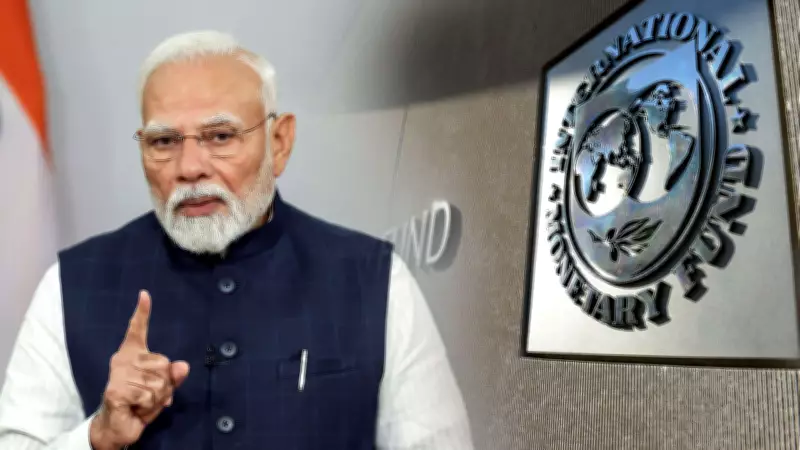
IMF Upgrades India's Economic Growth Projection for FY27 to 6.5%
The International Monetary Fund has delivered a significant vote of confidence in India's economic trajectory, raising its growth forecast for fiscal year 2027 to 6.5%. This upward revision comes at a time when global economic conditions are showing signs of deceleration, positioning India as a relative bright spot in the international landscape.
Strong Fundamentals Amid Global Uncertainty
Despite mounting concerns about slowing growth across major economies worldwide, the IMF's latest assessment suggests India's domestic economic engine remains robust. The organization's analysts point to several structural factors supporting this optimistic outlook, including demographic advantages, ongoing digital transformation initiatives, and continued infrastructure development.
This revised projection represents a notable improvement from previous estimates and reflects the IMF's assessment that India's economic policies and reform agenda are yielding tangible results. The timing of this upgrade is particularly significant given the challenging global environment characterized by trade tensions, monetary policy tightening in advanced economies, and persistent inflationary pressures.

Institutional Consensus on India's Economic Prospects
The IMF's positive assessment aligns with similar optimistic projections from other major financial institutions. The World Bank has maintained a favorable outlook on India's growth potential, while the Reserve Bank of India has consistently highlighted the economy's resilience and capacity to navigate external shocks.
This institutional consensus underscores a broader recognition of India's improving macroeconomic fundamentals, including relatively stable fiscal management, a strengthening banking sector, and progress on key structural reforms that have enhanced the business environment and attracted foreign investment.
Emerging Challenges and Risk Factors
Despite the upgraded growth forecast, the IMF has identified several potential headwinds that could test India's economic resilience in the coming months:
- Volatile energy markets: Rising global oil prices present a significant challenge for India's import-dependent energy sector and could pressure the country's current account balance.
- Inflationary pressures: While India has managed inflation relatively well compared to many peers, persistent price increases in food and fuel categories remain a concern for monetary policymakers.
- Geopolitical tensions: Ongoing conflicts and trade disputes could disrupt global supply chains and affect India's export performance and investment flows.
- Monetary policy divergence: The differing pace of interest rate adjustments between advanced economies and India could create capital flow volatility.
Policy Implications and Future Trajectory
The IMF's revised forecast carries important implications for economic policymaking in India. With growth expectations now set higher, authorities will need to maintain a delicate balance between supporting expansion and containing inflationary risks. Fiscal discipline will remain crucial, particularly as the government continues to invest in infrastructure and social programs while managing debt levels.
Looking ahead, India's ability to sustain this growth momentum will depend on several factors, including continued implementation of structural reforms, effective management of external vulnerabilities, and maintaining political stability that supports long-term investment decisions. The 6.5% projection for FY27, if realized, would position India among the world's fastest-growing major economies and significantly contribute to global economic expansion during a period of widespread uncertainty.






