

Himachal Pradesh's Economy Set for Robust 8.3% Growth in 2025-26
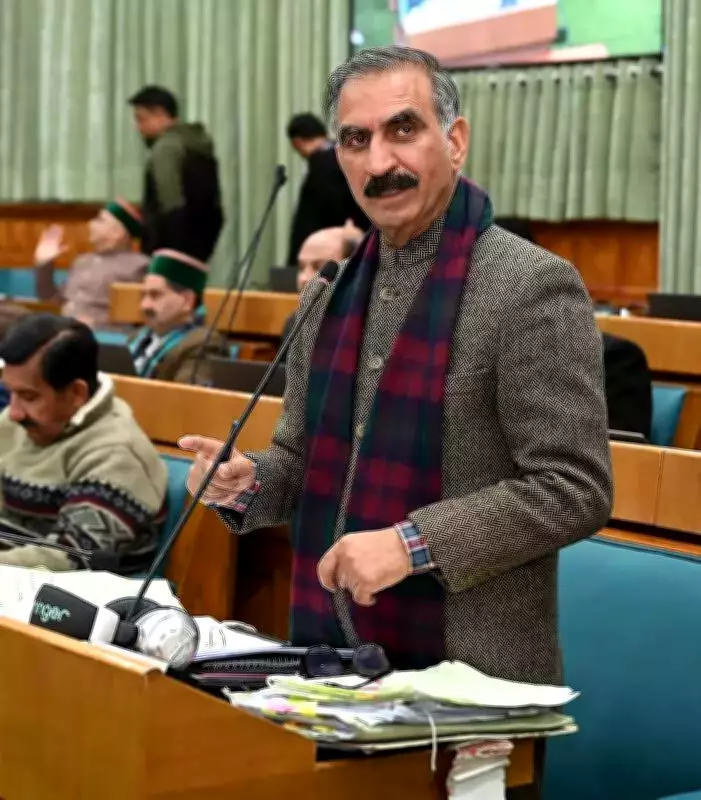
Shimla: In a significant development, Himachal Pradesh's economy is projected to expand at a robust rate of 8.3% in the fiscal year 2025-26, according to the 'Economic Survey 2025-26' report tabled by Chief Minister Sukhvinder Singh Sukhu in the state legislative assembly on Friday. This growth rate marks a notable increase from the 6.4% recorded in the previous year and outpaces the national GDP estimate of 7.4%, highlighting the hill state's accelerating economic momentum.
Structural Transformation and Sectoral Contributions
The report underscores a profound structural transformation in Himachal Pradesh's economy, which has evolved from being predominantly agriculture-driven to a more balanced mix of services and manufacturing. The service or tertiary sector continues to be the fastest-growing, accounting for 46.3% of the gross state value added (GSVA). This is followed by the secondary or industrial sector at 39.4% and the primary or agriculture sector at 14.3%.
Specifically, the GSVA of the tertiary sector is projected at Rs 62,581 crore in 2025-26, reflecting an 8.6% rise from Rs 57,643 crore in the previous year. The secondary sector is estimated to contribute Rs 66,324 crore, up 7.7% from Rs 61,561 crore. Meanwhile, the primary sector GSVA is expected to reach Rs 18,824 crore, registering an 8.4% growth over Rs 17,362 crore in 2024-25.

Key Economic Indicators and Performance
The economic survey reveals that the state's real gross state domestic product (GSDP) at constant prices for 2025-26 is estimated at Rs 1.56 lakh crore, compared to Rs 1.44 lakh crore in the previous year, exhibiting the 8.3% growth rate. Per capita income is estimated at Rs 2.83 lakh in 2025-26, registering a growth of 9.8% over the previous year. Since 2011-12, when per capita income was Rs 87,721, it has achieved a compound annual growth rate of 8.7% by 2025-26.
Tourism has rebounded strongly post-pandemic, with domestic tourist arrivals rising from 32.13 lakh in 2020 to 3.11 crore in 2025, including religious tourists. The tourism, hotel, and restaurant sector contributed 7.77% to the state's GSVA in 2024-25, underscoring its vital role in the economy.
In the energy sector, the state government's entitlement from 143 power projects totals 1,574 megawatts (MW) of saleable power, with revenue earnings of Rs 1,668 crore till December 2025 and an additional Rs 249 crore expected by March 2026. The Himachal Pradesh State Electricity Board Limited (HPSEBL) operates 28 hydro projects (589 MW), generating 1,973 million units (MU) up to December 2025, projected to exceed 2,200 MU by March 2026.
Major Challenges and Structural Imbalances
Despite the positive outlook, Himachal Pradesh faces several pressing economic challenges. Capital expenditure has been declining due to limited revenue sources and a reduction in central assistance, including the discontinuation of the revenue deficit grant (RDG), which earlier contributed nearly Rs 8,000 crore annually. Over the past four years, the state has incurred losses of about Rs 46,000 crore due to natural disasters, amounting to nearly 4% of its GSDP each year.
The Rs 4,500-crore apple industry has been adversely affected by reduced snowfall and fewer chilling hours. Apples contribute around 76% of horticulture gross value added (GVA) and occupy nearly half of the total fruit cultivation area, indicating a high level of sectoral dependence that poses risks.
Youth unemployment remains a concern, with a rate of 16.3% for ages 15-29, significantly higher than the national average of 10.2%. Structural imbalances are evident as the manufacturing and utilities sector account for a substantial share of GSVA but employ only 22% of the workforce. In contrast, the agriculture or primary sector contributes just 14.3% of GSVA but provides employment to 53.9% of the workforce.
Fiscal pressures are also mounting, with salaries, pensions, and interest payments together making up 57.59% of the state government's total expenditure, estimated at Rs 33,697 crore for financial year 2025-26. The reintroduction of the old pension scheme has further increased long-term fiscal liabilities, adding to the state's economic challenges.






