Supreme Court Halts Rajasthan's Chambal Sanctuary Denotification, Slams Illegal Mining
The Supreme Court of India has taken a firm stand against the Rajasthan government's decision to denotify a significant portion of the National Chambal Sanctuary. On Thursday, a bench comprising Justices Vikram Nath and Sandeep Mehta issued a stay on the state's notification that aimed to remove 732 hectares from the protected area, citing serious legal and environmental concerns.
Court Criticizes State's Actions as Illegal and Dangerous
During the hearing, the bench did not mince words, labeling the denotification a "serious issue" that failed to meet statutory requirements. Justice Mehta explicitly stated, "They (state) could not have done it on their own. That is illegal," addressing Shiv Mangal Sharma, the additional advocate general representing Rajasthan. The court emphasized that the state is "in hot water" over this move, which it views as a threat to fragile ecosystems and endangered species.
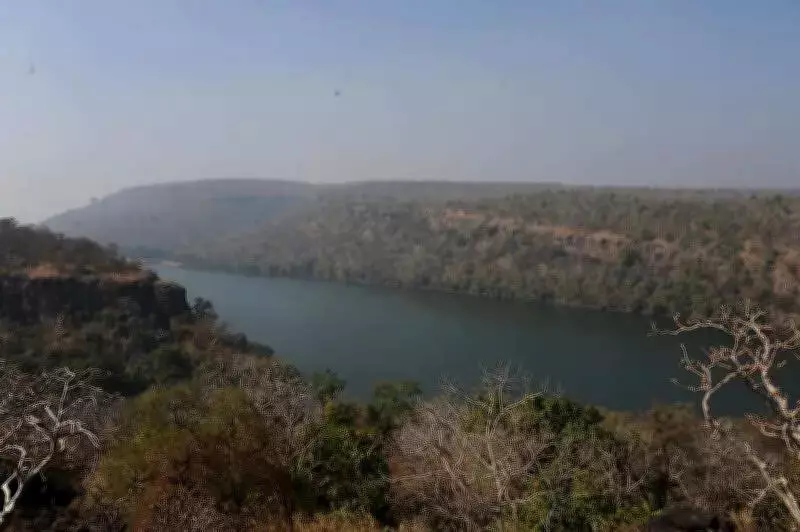
The National Chambal Sanctuary, also known as the National Chambal Gharial Wildlife Sanctuary, spans approximately 5,400 square kilometers across Rajasthan, Madhya Pradesh, and Uttar Pradesh. Established as a protected area in Madhya Pradesh in 1978, it now serves as a critical eco-reserve co-administered by the three states, providing habitat for numerous aquatic animals.

Illegal Sand Mining and Mafia Activities Under Scrutiny
In a scathing rebuke, the court accused Rajasthan of "facilitating illegal mining" and drew parallels between modern mining mafias and traditional dacoits of the Chambal region. Justice Mehta remarked, "Now these are the dacoits, these mining mafias. That traditional mode of dacoity is replaced by this." He further highlighted the severity of the situation, noting that these groups often carry "better weapons than the police" and operate with impunity, killing those who oppose them.
The bench pointed to tragic incidents where several Sub-Divisional Magistrates (SDMs), police officers, and forest department officials were killed by mining mafias in Rajasthan. Justice Mehta criticized the state government for neglecting preventive detention laws, citing a similar collapse in Jaisalmer where windmills were destroyed by such mafias, pushing the system to the brink.
State's Defense and Court's Response
Rajasthan's additional advocate general, Shiv Mangal Sharma, defended the denotification as a limited and scientific "boundary correction." He argued that the affected area constitutes only about 1% of the sanctuary's land in the state, is already urbanized, and does not support wildlife. Additionally, Sharma claimed that no mining leases have been issued within the sanctuary.
However, the bench remained unconvinced, refusing to accept these arguments and scheduling the next hearing for May 11. The court has directed the central empowered committee (CEC), which operates under the Ministry of Environment, Forest and Climate Change, to conduct a detailed review of the issue. This move underscores the court's commitment to ensuring proper oversight and adherence to environmental laws.
Broader Implications for Wildlife and Conservation
The court expressed deep concern over the potential extinction of gharials and other aquatic species in the sanctuary. Justice Mehta urged officials to visit the location, stating, "Have you seen that location? Have you been to that location? Go and see how fragile it is. Gharials are now virtually on the verge of extinction. Not only gharials, so many aquatic animals." This highlights the urgent need for robust conservation efforts in the face of human activities like mining.
Amicus curiae Nikhil Goyal also played a role in the proceedings, calling for states to address issues raised in his report filed with the court. The CEC has submitted its own report, adding to the body of evidence against the denotification.
This case not only challenges Rajasthan's actions but also sets a precedent for wildlife protection across India, emphasizing that reserve lands for protected species cannot be denotified without rigorous scrutiny and compliance with legal frameworks.