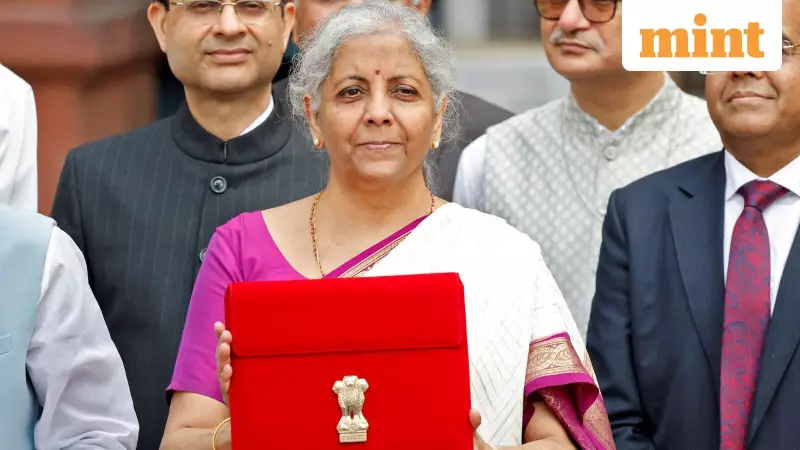
India's governance machinery is gearing up for a significant push towards economic liberalisation, with the upcoming Union Budget for fiscal year 2027 (FY27) set to be anchored on two core principles: deregulation and decriminalisation. According to informed sources, these themes are being strongly emphasised within the government to transform the budget into a blueprint for accelerating economic growth over the medium term.
Mission Mode: A Whole-of-Government Approach
With Finance Minister Nirmala Sitharaman poised to present her ninth budget, the preparatory work is in full swing. A person privy to the developments revealed that every ministry and department has been instructed to submit proposals aimed at deregulating and decriminalising existing laws, rules, and procedures. These proposals are reportedly being reviewed and refined at high levels within the government at regular intervals of ten days.
The push aligns with the vision outlined in the Economic Survey 2024-25, which stressed that India needs to sustain a growth rate of around 8% for a decade or two to achieve its goal of becoming an advanced economy by 2047. Enhancing economic freedom, particularly for individuals and small businesses, was highlighted as a key policy priority.

"Old rules and regulations that are no longer relevant can be either dropped or reformed," noted D.K. Srivastava, EY India’s chief policy advisor. "These changes are aimed at improving the administrative and economic efficiency in the system, which will have a beneficial impact. The impact is likely to be more in the medium term."
Legislative Changes and Sectoral Reforms on the Anvil
The budget session of Parliament is expected to witness legislative action to cement this reform agenda. The government plans to introduce amendments to two key laws: the Companies Act, 2013, and the Insolvency and Bankruptcy Code (IBC).
The proposed changes to the Companies Act are intended to further improve the ease of doing business in India. Concurrently, the amendments to the IBC will focus on making the process of debt resolution faster and more efficient, providing relief to both creditors and distressed companies.
Beyond legislation, the government's reform drive spans multiple sectors aimed at boosting overall productivity. This follows a series of reforms already implemented in 2025, including cuts in income tax rates, liberalisation of foreign investment in insurance, opening up of the nuclear power sector, and the notification of new labour codes. Finance Minister Sitharaman has indicated that the next major reform will be in the customs regime.
New GDP Series and Industry Wishlist
A notable technical change accompanying the FY27 budget will be the introduction of a new GDP series with the base year 2022-23, set to be released by the statistics ministry on February 7. While the absolute numbers in the budget will remain unchanged, key macro ratios like the debt-to-GDP and tax-to-GDP ratios will be recalculated based on the revised GDP estimates. The government has set a target to reduce the debt-to-GDP ratio to 50% by FY31 from 56.1% in FY26.
Meanwhile, industry bodies have presented their expectations to the government. The Confederation of Indian Industry (CII) has advocated for reforms in the power sector, including ending the cross-subsidisation of consumer tariffs by industries and encouraging greater private participation in power distribution. Other recommendations include building domestic manufacturing capacity for import-dependent goods, deeper global supply chain integration, and expanded disinvestment in public sector enterprises to fund infrastructure spending.
The reform priorities were recently discussed in a high-level meeting chaired by Prime Minister Narendra Modi with FM Sitharaman, NITI Aayog vice chairman Suman Bery, and chief economic advisor V. Anantha Nageswaran. The PM stressed the need for mission-mode reforms to build global capabilities and deepen India's integration with international markets, ensuring the nation remains a vital hub for the global workforce.

Reflecting on the reform momentum, Prime Minister Modi stated in a social media post, "India has boarded the Reform Express! 2025 witnessed pathbreaking reforms across various sectors which have added momentum to our growth journey." The upcoming FY27 budget is poised to keep this express firmly on track.