

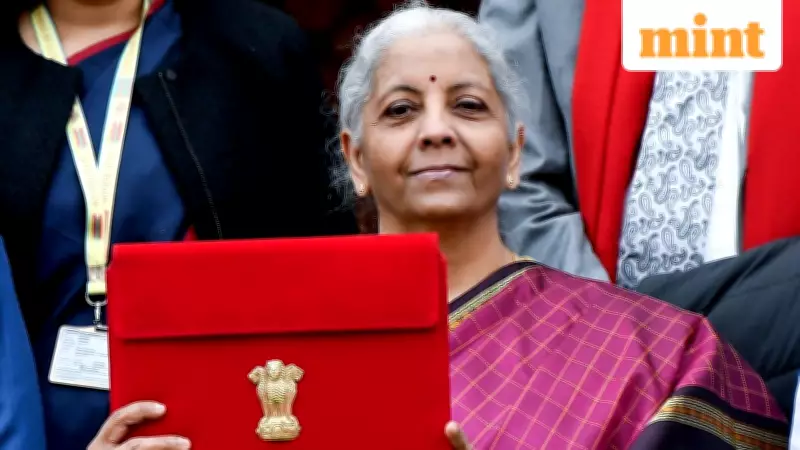
Budget 2026: A Comprehensive Look at Sitharaman's 9th Consecutive Fiscal Plan
Finance Minister Nirmala Sitharaman made history on Sunday by presenting her record ninth consecutive budget, a significant milestone in Indian fiscal policy. Budget 2026 arrives at a crucial juncture for the Indian economy, which is currently enjoying a rare goldilocks period characterized by robust growth and low inflation. However, this domestic optimism is tempered by an unpredictable and disruptive external environment that poses ongoing challenges. The central question remains: has the finance minister delivered the necessary measures to sustain and accelerate economic momentum? This detailed analysis provides a thorough snapshot of Budget 2026, highlighting major announcements, critical budget numbers, sectoral impacts, and implications for various stakeholders across the nation.
Key Components and Strategic Focus Areas
The budget outlines several pivotal initiatives designed to enhance economic resilience and improve the quality of life for citizens. A primary focus is on simplifying the tax system to reduce compliance burdens and foster a more business-friendly environment.
Improved Ease of Living Through Tax Reforms
The new Income Tax regime is set to take effect on 1 April 2026, introducing a significantly simpler framework that will make filing IT returns more straightforward for taxpayers. This overhaul aims to minimize litigation and reduce penalties, creating a more transparent and efficient tax administration system. Additionally, the tax on buyback of shares will be lowered as it will be treated as capital gains, providing relief to corporate entities and investors. However, investors engaged in futures trading will face increased transaction taxes, reflecting a calibrated approach to market activities. For travel enthusiasts, the tax collected at source (TCS) on overseas tour packages has been reduced, making international holidays more affordable and easing cash flow pressures for households.

Boost to Manufacturing and Industrial Growth
To accelerate and sustain economic growth, the government is scaling up seven strategic and frontier sectors, including bio-pharma, semiconductors, electronics component manufacturing, rare-earth magnets, and capital goods. This initiative is complemented by efforts to rejuvenate legacy sectors, enhancing their cost competitiveness and integrating them into modern supply chains. The focus on manufacturing is part of a broader strategy to reduce import dependence and build domestic capabilities in critical areas.
Enhanced Support for MSMEs
In a bid to support micro, small, and medium enterprises (MSMEs) and facilitate their scaling up, the government will enhance equity support to small and medium businesses. Liquidity support will also be strengthened through expanded credit guarantees and other financial measures, ensuring that MSMEs have the necessary resources to thrive and contribute to job creation and economic diversification.
Fiscal Consolidation and Infrastructure Investment
Fiscal consolidation remains a priority, with the government committing to reduce the fiscal deficit to 4.3% of GDP in 2026-27, down from 4.4% in 2025-26. Concurrently, capital expenditure continues to rise, with plans to spend ₹12.2 trillion in 2026-27, compared to the 2025-26 budget estimate of ₹11.2 trillion. This increased investment in infrastructure is expected to drive growth, create employment opportunities, and stimulate private sector participation. The finance minister has assured that India's Reform Express will maintain its momentum, emphasizing the ongoing commitment to structural reforms critical for long-term economic acceleration.
Budget Numbers That Matter
The budget assumes a nominal GDP growth of 10.0% in FY27, reflecting confidence in the economy's trajectory. Key financial metrics include:

- Total receipts (excluding borrowings): Projected to increase by 7.2% from ₹34.06 trillion in FY26 (Revised Estimates) to ₹36.52 trillion in FY27 (Budget Estimates).
- Net tax receipts: Expected to rise by 7.2% from ₹26.75 trillion to ₹28.67 trillion.
- Total expenditure: Anticipated to grow by 7.7% from ₹49.65 trillion to ₹53.47 trillion.
- Capital expenditure: Set to increase by 11.5% from ₹10.96 trillion to ₹12.2 trillion.
- Fiscal deficit (% of GDP): Targeted to decrease from 4.4% to 4.3%.
- Centre’s debt-to-GDP ratio: Projected to improve from 56.1% to 55.6%.
Sectoral Gainers and Losers
As of 1:30 pm on 1 February 2026, market reactions highlighted several gainers and losers. Notable gainers included Neuland Laboratories (up 4.1%) due to the proposal to launch Bio-Pharma Shakti, Global Health (up 5.9%) benefiting from the push to medical tourism, and Zensar Technologies (up 4.4%) following regulatory simplifications and infrastructure boosts for the IT sector. Conversely, losers included Multi Commodity Exchange of India (down 11.2%) after an increase in securities transaction tax, Hindustan Copper (down 12.5%) and Hindustan Zinc (down 9.3%) both facing sharp selling pressure after silver futures tumbled on Friday.
Key Announcements and Their Impact
For Consumers
The finance minister announced multiple measures to ease tax compliance and reduce upfront cash outgo. Tax collected at source on overseas tour packages has been cut to a flat 2% from previous rates of 5% and 20%, while TCS under the Liberalised Remittance Scheme for education and medical expenses abroad has been reduced to 2%. The Income Tax Act, 2025, will come into effect from April 1, 2026, featuring simplified rules and redesigned forms. Taxpayers can file revised returns until 31 March with a nominal fee, and non-disclosure of foreign assets below ₹20 lakh will attract immunity from prosecution. Additional benefits include tax-exempt interest on motor accident awards, customs duty exemptions on select cancer drugs, and clarified baggage rules for international travellers.
Impact: Lower TCS reduces cash-flow pressure for households planning foreign travel, education, or medical treatment abroad. Families booking overseas tour packages will now pay far less tax upfront, freeing liquidity for spending. Simpler tax laws, extended timelines, and targeted exemptions should also reduce compliance anxiety and litigation for small taxpayers.
For Infrastructure and Cities
Capital expenditure has been raised to ₹12.2 lakh crore for FY27, up from ₹11 lakh crore in FY26, reinforcing the government’s infrastructure-led growth strategy. The minister announced seven high-speed rail corridors linking major economic centres, a new dedicated freight corridor between Dankuni and Surat, and plans to operationalise 20 national waterways over five years, with a continued focus on tier-2 and tier-3 cities as emerging growth hubs. States will receive ₹1.4 lakh crore in Finance Commission grants for local bodies and disaster management.
Impact: Higher public capex should support growth, employment, and private investment beyond major metros. Faster rail links and improved waterways can reduce logistics costs for manufacturers and traders in tier-2 cities, making these locations more attractive for factories, warehouses, and service hubs. The scale of impact will depend on execution speed and state-level coordination.
For Manufacturing and Electronics
The Budget sharpened its industrial push with India Semiconductor Mission 2.0, allocating ₹40,000 crore to deepen semiconductor manufacturing, equipment, and materials, and develop Indian intellectual property. It announced a ₹10,000 crore container manufacturing scheme, dedicated rare-earth corridors in mineral-rich states, and new support for chemical parks, capital goods, and construction equipment through cluster-based, plug-and-play manufacturing models. Customs duty exemptions on items manufactured domestically will be rationalised to correct inverted duty structures, while a tax holiday till 2047 was announced for global cloud service providers using data centres in India, subject to local participation.
Impact: The measures signal a shift towards deeper manufacturing capabilities and supply-chain resilience. Domestic production of semiconductor equipment, containers, and rare-earth components can lower import dependence for electronics, electric vehicles, and infrastructure projects. Data centre incentives could attract long-term digital infrastructure investment, though most benefits will accrue over the medium term.
For MSMEs and Women Entrepreneurs
A dedicated ₹10,000 crore SME Growth Fund was announced to support scale-up, innovation, and job creation. The Lakpati Didi programme has been expanded to help women move from credit-linked livelihoods to enterprise ownership, supported by ‘She MARTS’, which are community-owned retail outlets run by self-help groups. Khadi, handloom, and handicrafts will also receive branding, skilling, and structured market access support. To ease liquidity and compliance, CPSEs will be mandated to use TReDS for payments, a credit guarantee will support invoice discounting, and Corporate Mitras will assist MSMEs with regulatory requirements.
Impact: Targeted capital, faster payments, and market access could help viable MSMEs and women-led enterprises scale beyond subsistence. Growth funding combined with SHG-run retail outlets and quicker receivable settlements can improve margins, cash flows, and hiring capacity. Outcomes will depend on access to finance and sustained demand.
For Farmers and the Rural Economy
The Budget announced support for high-value agriculture, including coconut, cashew, cocoa, nuts, and sandalwood, to diversify farm output and raise incomes. Fishery value chains will be strengthened through reservoirs and improved market linkages involving startups, women-led groups, and producer organisations. Animal husbandry will be modernised through credit-linked subsidies, skill development initiatives, and integrated livestock, dairy, and poultry clusters. Dedicated programmes were announced to rejuvenate orchards and promote high-density cultivation of walnuts, almonds, and pine nuts. An AI-based Bharat-VISTAAR platform will provide customised advisory support to farmers.
Impact: Diversification into high-value crops and allied activities could improve farm incomes and rural employment. Better processing, branding, and advisory support for cashew, coconut, or fishery products can help farmers and fishers move away from low-margin raw sales. Infrastructure, cold chains, and price stability will be critical to sustaining income gains.
For Youth, Tourism, and Creative Economy
Tourism was positioned as a key employment engine, with proposals to upgrade the National Council for Hotel Management and Catering Technology into a National Institute of Hospitality, train 10,000 tourist guides, develop eco- and wildlife tourism trails, and create a National Destination Digital Knowledge Grid. The Budget also announced Animation, Visual Effects, Gaming, and Comics (AVGC) and content creator labs in schools and colleges, a new National Institute of Design in eastern India, five university townships near industry corridors, and one girls’ hostel in every district.
Impact: The measures aim to align education and skilling with employment opportunities in tourism and creative industries. Trained tourist guides, eco-tourism trails, and digital documentation of heritage sites can generate local jobs, while creator labs and design institutes support emerging careers in media, gaming, and design-linked services.





