

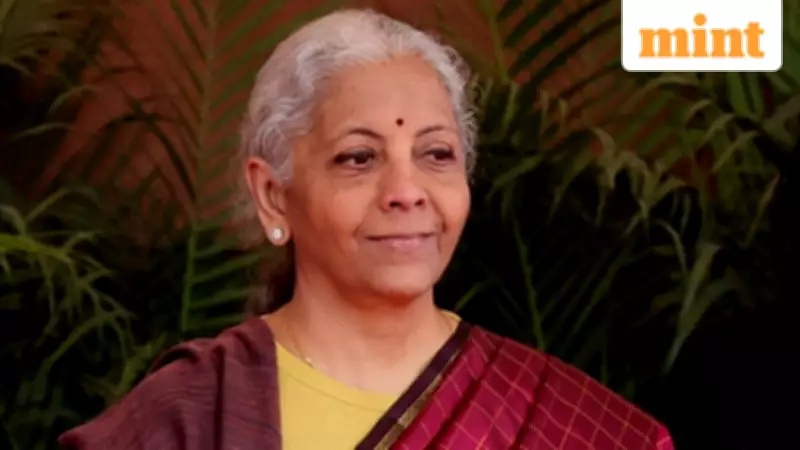
Budget 2026-27: Sitharaman Charts Path for Services Sector Growth and Creative Economy
In a significant move aimed at transforming India's economic landscape, Finance Minister Nirmala Sitharaman, during her Union Budget 2026-27 speech on Sunday, announced the establishment of a high-powered 'Education to Employment and Enterprise' standing committee. This strategic initiative is designed to position India as a global leader in the services sector by 2047, with an ambitious target of capturing a 10 per cent share of the global market.
High-Powered Committee to Drive Services Sector Expansion
Sitharaman emphasized that the newly proposed committee will play a pivotal role in recommending measures to optimize growth, employment, and exports within the services sector. The committee's mandate includes a thorough assessment of the impact of emerging technologies, such as artificial intelligence (AI), on job markets and skill requirements. It will propose actionable strategies to address these challenges and harness opportunities.
"I propose to set up a High-Powered Education to Employment and Enterprise Standing Committee to recommend measures that focus on the Services Sector as a core driver of Viksit Bharat," Sitharaman stated in her budget address. The services sector is a critical component of India's economy, contributing over 50 per cent to both the country's exports and Gross Domestic Product (GDP).

Fostering an 'Orange Economy' for Creative Industries
In a parallel initiative to boost innovation and cultural capital, Sitharaman introduced the concept of an 'orange economy' to provide robust support for India's creative industries. This framework aims to create future-ready jobs in fields that derive value primarily from ideas, artistic expression, and cultural assets.
Highlighting the rapid growth of India's Animation, Visual Effects, Gaming, and Comics (AVGC) sector, Sitharaman noted that the industry is projected to require approximately 2 million professionals by 2030. To capitalize on this potential, she announced support for the Indian Institute of Creative Technologies in Mumbai to establish AVGC Content Creator Labs in 15,000 secondary schools and 500 colleges across the nation.
This educational push is expected to cultivate a next-generation creator workforce, stimulating job creation, fostering startups, and enhancing India's global competitiveness in the creative domain.
Employment Initiatives in Animal Husbandry and Agriculture
Sitharaman also outlined targeted measures to generate quality employment in rural and peri-urban areas through the animal husbandry sector. The government plans to implement a credit-linked subsidy programme to scale up and modernize livestock enterprises. This includes creating integrated value chains for livestock, dairy, and poultry, as well as encouraging the formation of livestock farmer producer organizations.
For high-value agriculture, the budget proposes extending support to crops like coconut and sandalwood. This initiative aims to diversify farm output, increase productivity, boost farm incomes, and create new employment opportunities, thereby strengthening the rural economy.
National Destination Digital Knowledge Grid and Tourism Boost
Further enhancing India's digital and cultural infrastructure, Sitharaman proposed the establishment of a 'National Destination Digital Knowledge Grid'. This digital platform will document all places of significance across the country, including cultural and spiritual sites, in a comprehensive and accessible manner.
In the tourism sector, which plays a vital role in employment generation, foreign exchange earnings, and local economic expansion, Sitharaman announced several key initiatives:

- Development of ecologically sustainable mountain trails in Himachal Pradesh, Uttarakhand, and Jammu and Kashmir.
- Upgradation of the existing National Council for Hotel Management and Catering Technology into a 'National Institute of Hospitality', which will function as a bridge between academia, industry, and government.
- Transformation of 15 archaeological sites, including Lothal, Dholavira, Rakhigarhi, Sarnath, Hastinapur, and Leh Palace, into vibrant experiential cultural destinations to attract tourists and preserve heritage.
These multifaceted proposals underscore the government's holistic approach to driving economic growth, fostering innovation, and creating sustainable employment opportunities across various sectors, aligning with the vision of a developed India by 2047.





