

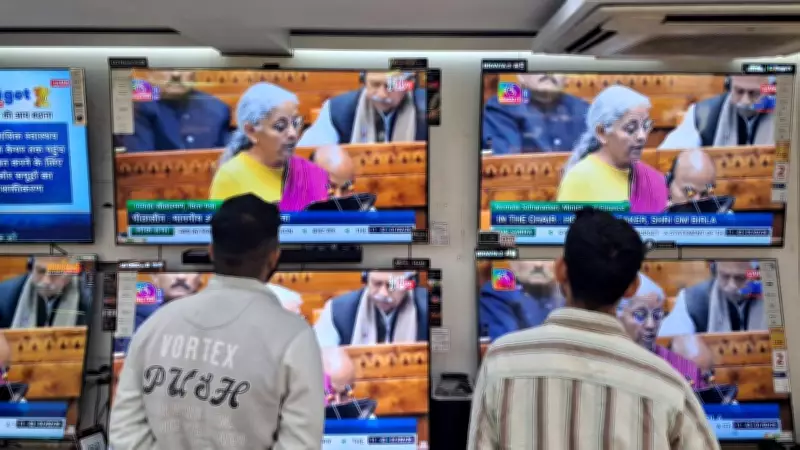
Finance Minister Nirmala Sitharaman's Union Budget for the fiscal year 2026-27 has taken a strategic approach by emphasizing structural infrastructure projects and resource development over poll freebies. The budget specifically targets five states—Assam, Tamil Nadu, West Bengal, Kerala, and Puducherry—which are set to hold elections this year, aiming to boost economic growth and connectivity.
Budget 2026: Rare Earth and Railway Initiatives for Southern States
The southern states, particularly Tamil Nadu and Kerala, have received significant attention in this budget, with a focus on high-tech sectors and improved connectivity. In a bid to reduce import dependency, the Centre has announced the establishment of rare earth corridors. Tamil Nadu and Kerala, along with Odisha and Andhra Pradesh, are designated as beneficiaries, receiving support for mining, processing, and manufacturing rare earth permanent magnets. These components are crucial for the electric vehicle and electronics manufacturing industries.
On the connectivity front, Tamil Nadu stands to gain substantially with the proposal of seven new high-speed railway corridors. Two of these corridors, Hyderabad-Chennai and Chennai-Bengaluru, are expected to enhance economic integration in the region, turning it into a more cohesive economic hub.

Budget 2026: Logistics Boost for West Bengal and Northeast
West Bengal, a key focus for the BJP-led NDA, is set to benefit from logistics improvements aimed at reducing trade time and distance. The budget includes a proposal for a new dedicated freight corridor connecting Dankuni in West Bengal to Surat in Gujarat. This infrastructure project is designed to link Bengal's industries directly with markets in western India.
Additionally, a Varanasi-Siliguri high-speed rail corridor has been announced, which is expected to impact both North Bengal and the Northeast. Siliguri, known as the 'Chicken's Neck' corridor, serves as a vital gateway to Assam and the broader Northeast region, making this rail project strategically important.
Coastal Economy Enhancement in Budget 2026
The 'Blue Economy' receives a significant push in the budget, benefiting the coastal belts of Kerala, Tamil Nadu, West Bengal, and Puducherry. In a major relief for deep-sea fishermen, the government has declared that fish caught by Indian vessels in the Exclusive Economic Zone or high seas will be duty-free. Furthermore, landing this catch at foreign ports will now be treated as an export, simplifying accounting for larger fishing operations.
To reduce road traffic, a Coastal Cargo Promotion Scheme has been introduced, aiming to increase the share of inland waterways and coastal shipping from 6% to 12% by 2047. Incentives for indigenizing seaplane manufacturing and a new Viability Gap Funding scheme for operations are also proposed, potentially opening new tourism circuits in the backwaters and coastal towns of Kerala and Tamil Nadu.
Manufacturing and Textiles Industry Support
While not state-specific, the expansion of the textile sector through initiatives like the "Tex-Eco Initiative" and "Samarth 2.0" is expected to have trickle-down benefits for textile hubs in Tamil Nadu, West Bengal, and Assam. These measures aim to bolster manufacturing and create employment opportunities in these poll-bound states.
Overall, Budget 2026 reflects a calculated move by the government to invest in long-term infrastructure and economic development, rather than resorting to short-term populist measures, as these states prepare for crucial elections.






