

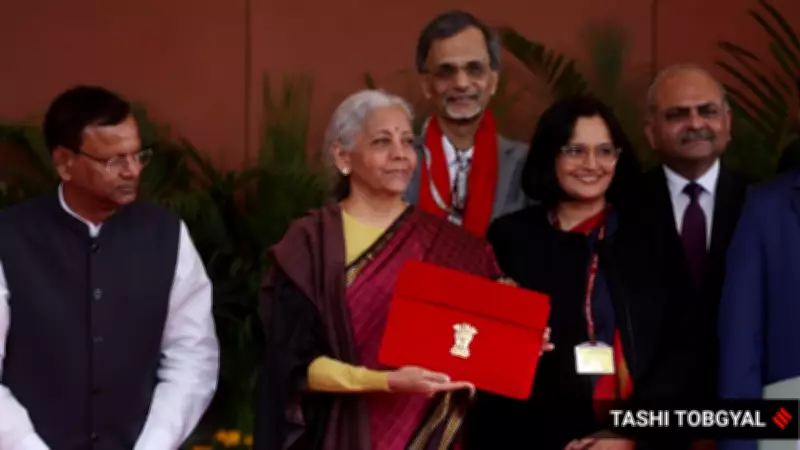
Union Budget 2026-27: A Cautious Yet Prudent Fiscal Balancing Act
The Union Budget for the fiscal year 2026-27 has been unveiled, presenting a statement of accounts that aligns closely with expectations while maintaining a delicate equilibrium between fiscal prudence and economic growth. In a global environment that remains fragile, the government's assumptions, particularly regarding growth projections, have been deliberately cautious to minimize the risk of fiscal slippages.
Fiscal Discipline and Market Implications
From a market perspective, the fiscal roadmap outlined in the budget holds paramount importance. The fiscal deficit for FY26 was targeted at 4.4 percent of GDP, with plans to gradually reduce it toward the ideal 3 percent mark. The current budget maintains this commitment, with the deficit marginally lowered to 4.3 percent of GDP.
Given the projected GDP growth rate of 10 percent and the tax cuts implemented last year, incremental revenue is expected to show reduced buoyancy. Consequently, the fiscal numbers appear pragmatic rather than overly optimistic, reflecting a realistic assessment of economic conditions.

While the fiscal deficit remains stable, market reactions will likely hinge on borrowing figures. The gross borrowing amount of Rs 17.2 lakh crore could potentially lead to hardening yields. However, a significant portion of this stems from high redemptions totaling Rs 5.5 lakh crore. The net borrowing remains stable at last year's level of Rs 11.7 lakh crore, which should provide some reassurance to market participants.
Taxation and Customs Reforms
On the taxation front, expectations were modest for direct taxes, as major benefits had already been delivered in the FY26 budget. Similarly, indirect taxes saw limited changes, following the rationalization of GST rates in 2025, which, although outside the budget's formal scope, was a significant development nonetheless.
Customs tariffs emerged as a notable area of reform. With several Free Trade Agreements recently signed, a degree of rationalization in customs rates was anticipated and has now been achieved. However, two expected omissions remain: the withholding tax on Foreign Portfolio Investments (FPIs) and the differential taxation of interest on deposits compared to equity gains. The Finance Minister may have deemed the timing inappropriate for these changes, though addressing the former could have enhanced FPI inflows, particularly in the debt segment.
Households may need to wait longer for tax reforms concerning the treatment of bank deposits, as no immediate changes were announced.
Expenditure Priorities and Capital Focus
A strong point of the budget is the continued emphasis on capital expenditure. The central government has been a primary driver of capex post-pandemic, compensating for slow and narrow-based private investment. The projected outlay for capital expenditure stands at Rs 12.2 lakh crore, with a focus on critical infrastructure sectors: roads, railways, and defense.
The telecom sector has also seen steady increases, reflecting the government's emphasis on artificial intelligence and related technological advancements. Additionally, a significant allocation of Rs 2.26 lakh crore has been directed to states, recognizing the importance of decentralized execution and last-mile connectivity for localized projects, thereby re-energizing state-level capital expenditure.
Subsidies and Agricultural Allocations
Subsidies remain a persistent challenge, and the budget adopts a cautious approach in this area. The fertilizer subsidy has been reduced by approximately Rs 15,000 crore, while the food subsidy has been retained. This step is crucial, and a roadmap for gradually phasing out free food schemes may be needed in the coming years.
The issue with food subsidies is that increases in Minimum Support Prices (MSP) often lead to corresponding rises in subsidy components, creating ongoing fiscal pressures.
Agricultural and rural development allocations have seen a nearly 20 percent increase, from Rs 3.64 lakh crore to Rs 4.36 lakh crore. This addresses the needs of less privileged sections through schemes like PM-Kisan and new initiatives such as VB-G RAM G.

MSME Reforms and Business Environment
The budget rightly targets the Micro, Small, and Medium Enterprises (MSME) segment, which has been deeply affected by tariff issues. Key measures include the creation of a Rs 10,000 crore SME growth fund to enhance operational capabilities.
Additionally, linking the Trade Receivables Discounting System (TReDS) platform to purchases by central public sector enterprises and introducing a credit guarantee support mechanism through the Credit Guarantee Fund Trust for Micro and Small Enterprises (CGTMSE) for invoice discounting on TReDS will help streamline operations and improve liquidity for MSMEs.
Conclusion: A Balanced and Pragmatic Approach
The Union Budget 2026-27 represents a careful balancing act between maintaining fiscal discipline and providing incentives across various economic segments. Unlike the FY26 budget, which focused more on income measures, the current budget emphasizes expenditure-side initiatives.
Given the fragile global environment, cautious growth assumptions have been adopted to reduce the likelihood of fiscal deviations. The thrust is on easing the business environment and delivering tangible results, which ultimately matters most for economic progress.





