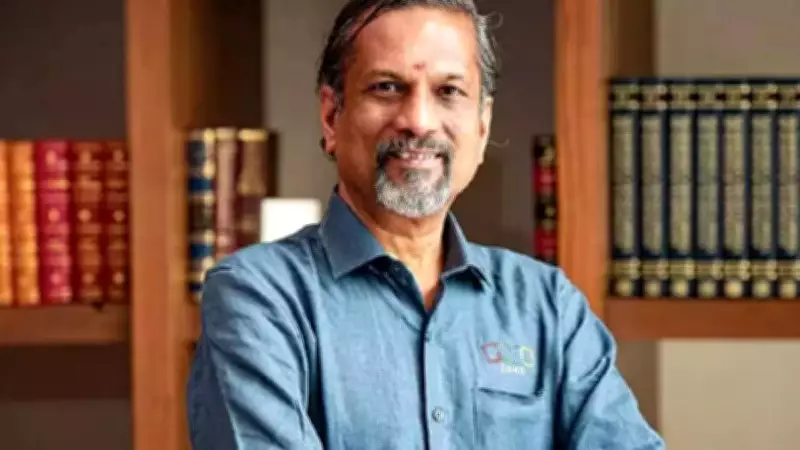
Zoho Founder Sridhar Vembu Counters 'Perform or Perish' Theory for Indian Success in US Tech
Zoho founder Sridhar Vembu has strongly pushed back against the prevalent idea that Indians achieve success in the United States technology industry primarily because of an extreme pressure to "perform or perish." This theory, often circulated in discussions about Indian professionals abroad, suggests that India's vast population creates intense competition, forcing only the top performers to survive and excel. However, Vembu argues that this perspective overlooks crucial cultural and social factors that play a more significant role in explaining the prominence of Indians in Western corporations.
Loyalty and Long-Term Continuity as Key Drivers
In a detailed response to a post on X (formerly Twitter), Vembu offered an alternative explanation, emphasizing that loyalty to organizations and long-term continuity are far more influential than mere survival pressure. According to Vembu, Indian employees tend to remain with their organizations for much longer periods compared to other demographic groups. He elaborated, "Over time, cultural continuity in an organization tends to be with those who stayed long term, and it is those people who get promoted. That would explain why Indians are at the top in so many companies in America."
Vembu provided a concrete example to illustrate this point. When considering a cohort of employees who joined a company in a specific year, such as 2000, a significantly higher proportion of Indians would still be with the same organization two decades later, even after adjusting for factors like IQ and educational background. This steadfast loyalty, Vembu contends, stems from deep-rooted cultural values in India.

The Role of Immigrant Drive and Cultural Values
Beyond loyalty, Vembu highlighted the concept of "immigrant drive," a historical pattern where new immigrant groups often outperform those already established in a country. He noted that this trend is not unique to Indians but has been observed across many immigrant communities in the United States. The combination of organizational loyalty, which Vembu attributes to Indian culture, and this universal immigrant drive, provides a more comprehensive explanation for the success of Indian professionals.
Vembu also addressed the psychological aspects often overlooked in the pressure theory. He pointed out that India's social safety net, primarily the extended family network, offers significant psychological security. This safety net, which remains largely intact except in some highly westernized urban circles, contradicts the notion of relentless pressure. "Indians tend to view their organizations in a similar way, as extended family networks, and the organizational loyalty arises from this cultural value system," Vembu explained. For many Indians, corporate slogans like "We are one family" resonate deeply and are not merely lip service.
Broader Implications for Society and Economy
Reflecting on his personal experiences, Vembu shared insights from running a school with over 200 children, many from impoverished backgrounds. He observed that these children benefit from the psychological safety net of extended families, with economic support for education being a more straightforward challenge. Vembu emphasized, "Poverty is fixable as a purely economic phenomenon, but once the foundations of society that offer the psychological safety net crumble, it is much harder to recover."
This perspective leads Vembu to express strong resistance against political ideologies that promote social atomization, which he believes could undermine India's spiritual and cultural core. By advocating for the preservation of these values, Vembu underscores the importance of cultural continuity not only in corporate success but also in societal resilience.

In summary, Sridhar Vembu's analysis challenges simplistic narratives about Indian success in the US tech industry. Instead of attributing it to cutthroat competition, he points to a blend of cultural loyalty, long-term commitment, and the inherent drive of immigrant communities. This nuanced view offers a deeper understanding of the factors driving Indian professionals to the top of global corporations, while also highlighting the enduring strength of India's social structures.