In a significant move to simplify regulatory frameworks, the Indian government has prepared the third edition of the Jan Vishwas Bill as part of its ongoing effort to ease compliance burdens for businesses and citizens alike.
From Virasat to Vishwaas: A New Governance Model
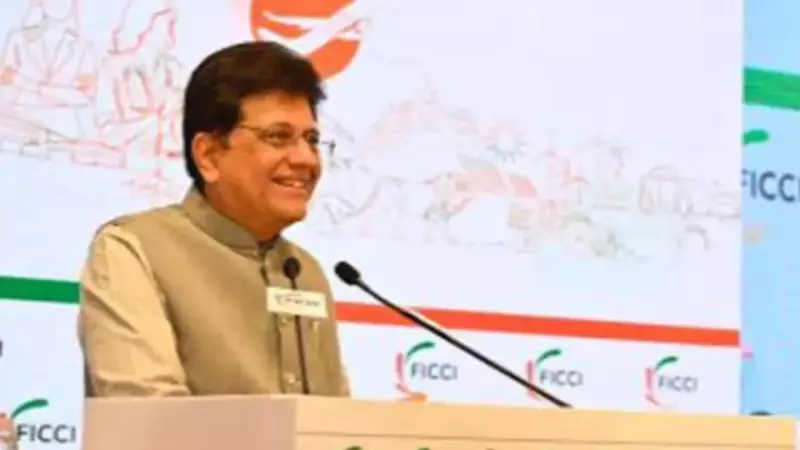
Commerce and Industry Minister Piyush Goyal, speaking at the curtain raiser for FICCI's 98th Annual General Meeting, articulated a fundamental shift in governance philosophy. The administration's performance has evolved from Virasat (legacy) to Vikas (development) and now to Vishwaas (trust), marking a transformative journey toward trust-based governance.
Goyal emphasized that this politics of trust is fundamentally driving India's ambitious goal of becoming a developed nation. He confirmed that while two editions of the Jan Vishwas Bill have already been implemented, the third version is now ready and aims to systematically decriminalize various legal provisions to make life simpler for both businesses and common citizens.

Four Pillars for Viksit Bharat
The minister outlined four critical priorities that will shape India's journey toward becoming Viksit Bharat (Developed India). These include establishing a robust domestic manufacturing foundation, enhancing workforce capabilities through skill development, creating an investment-friendly ecosystem, and embracing cutting-edge technological innovations.
Goyal praised FICCI for its nearly century-long commitment to policy advocacy, noting that self-reliance has consistently remained central to the organization's work. Looking ahead to FICCI's centenary in 2027, he set an ambitious national target: India must aspire to become the world's third-largest economy by 2027.
Industry Called to Action
The minister delivered a compelling message to industry leaders, urging them to adopt more ambitious approaches. Set bold targets. We can't be satisfied with incremental growth, and we need to venture out of the ordinary, Goyal emphasized, specifically calling for increased domestic capital in startups and research & development.
Goyal presented five specific expectations from industry bodies:
- Conduct thorough audits of advocacy impact
- Establish higher performance goals
- Study successful international models from countries like Korea and Sweden
- Mentor emerging entrepreneurs
- Expand presence beyond major metropolitan centers
Industry bodies should not remain confined to elite business circles but must widen their engagement to support growth across the country, he added, challenging FICCI to become what he described as an uncomfortable leader driving meaningful change.
Economic Momentum and Future Vision
FICCI President Harsha Vardhan Agarwal highlighted India's impressive economic trajectory, noting the country continues to expand at more than 7 percent while contributing nearly one-sixth of global growth. He emphasized that the current economic phase is distinct because domestic capability building, supported by policy stability, has become the primary growth driver.
As FICCI enters its 98th year, we reaffirm our commitment to partner with the Government in accelerating domestic capabilities, building global competitiveness, and strengthening India's position as a trusted and resilient economic powerhouse, Agarwal stated.
President-Elect Anant Goenka reinforced FICCI's dedication to advancing Atmanirbharta and Make in India initiatives through scaled manufacturing, increased R&D investment, quality job creation, and export promotion, signaling a unified approach toward achieving India's economic aspirations.