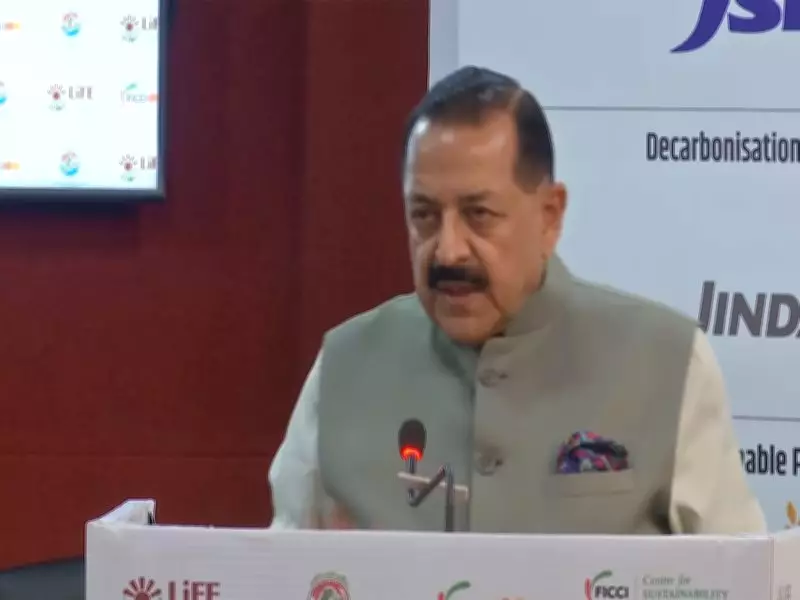
Shanti Act Democratizes Nuclear Energy Sector, Says Union Minister Jitendra Singh
In a landmark address at the 10th Sustainable Business Futures Summit 2026, Union Minister of State for Science and Technology Jitendra Singh emphasized that India's Shanti Act is creating unprecedented opportunities not only for large corporations but also for small players and budding entrepreneurs in the nuclear energy sector. This strategic move aims to integrate robust economic growth with sustainable clean energy solutions, marking a significant shift in national policy.
Breaking Taboos and Fostering Inclusivity
Singh described the Shanti Act as "one of the most landmark legislations" focused on the sustainable harnessing of nuclear energy. He noted that this decision was proactive, as "nobody asked us to open the nuclear sector to private players. Even the industry didn't ask." This reflects a bold readiness to break past taboos and move beyond siloed functioning. The age of silos is over, we have to work in synergy... the private sector has to be as much prepared as the public sector, he asserted, highlighting the need for collaborative efforts between public and private entities.
Empowering Small Players and Entrepreneurs
The minister detailed how the Act opens doors for diverse participants, including young innovators. "Even young boys and girls can come together, form a group, raise money and set up small reactors," Singh stated, underscoring the democratization of the sector. Regulatory norms have been structured to encourage broader participation, with liability for small reactor accidents capped at less than Rs 1,000 crore. Additionally, foreign direct investment provisions and funding support mechanisms have been liberalized to facilitate entry.

Nuclear Energy's Critical Role in Future Demand
Singh stressed that nuclear energy will play a pivotal role in meeting future demands for reliable clean power, especially from emerging sectors like data centers and artificial intelligence. "When we talk of data centres and AI centres, they would require 24x7 green source of energy... even renewable sources may not be ideally suited," he explained, pointing to the unique advantages of nuclear power in providing consistent, low-carbon energy.
Broader Economic and Environmental Context
Placing the reform in a wider economic perspective, Singh highlighted India's transformation from being among the "fragile five" economies in 2014 to now ranking fourth globally, with aspirations to reach third place soon. He cited improvements in the Global Innovation Index, where India now holds the 38th position, and noted the vibrant startup ecosystem, with over 2 lakh startups generating 21-22 lakh jobs, nearly half from Tier 2 and Tier 3 cities and 35-40% women-led.
However, he cautioned that future growth must transcend "jugaad" (improvisation) and align with environmental priorities. "To become a respectable economy, besides being a sustainable economy, you will have to ensure that you do not disturb environmental stability but also endeavour to add to it," Singh emphasized. He introduced the concept of "green critical infrastructure," which integrates economic growth, technological innovation, and climate responsibility through investments in energy storage, grid management, climate modeling, and advanced materials.
Commitment to Sustainability and Circular Economy
Referring to India's climate commitments, Singh mentioned Prime Minister Narendra Modi's net-zero target for 2070 and the Lifestyle for Environment (LiFE) initiative, stating, "If you don't have life, it would be of no use to have green buildings or green roads." He also highlighted the shift towards a circular economy, where "nothing is waste today," citing initiatives that convert waste into economic value and have earned about Rs 4,000 crore through nationwide campaigns.
Programs spanning electric mobility, water security, and recycling reflect India's holistic approach to inclusive and sustainable growth. "Unless you have a mass movement, you cannot grow as green as you think you can grow," Singh concluded, underscoring the need for collective action in achieving environmental goals.