

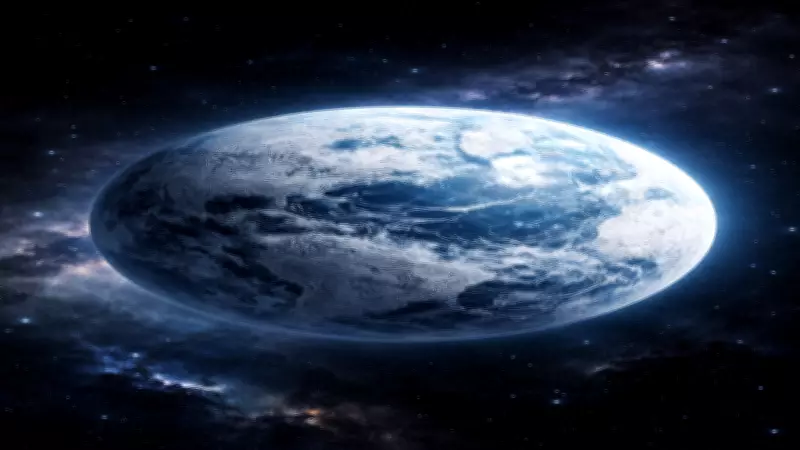
Snowball Earth: When Our Planet Was a Frozen World
Imagine a time when Earth looked nothing like the vibrant blue planet we know today. A period when oceans were frozen solid, continents were buried under thick ice sheets, and sunlight reflected off a world almost entirely white. This is not science fiction but a real chapter in Earth's distant past, known as the Snowball Earth period. Scientists estimate that between 700 and 600 million years ago, Earth experienced extreme glaciation events that covered the globe in ice. New research is shedding light on how our planet endured these harsh conditions and how this frozen era may have paved the way for the emergence of complex life forms.
Understanding the Snowball Earth Hypothesis
The Snowball Earth hypothesis, proposed by Caltech geologist Joe Kirschvink, suggests that during the Cryogenian period, global glaciations occurred so extensively that ice sheets reached as far as the equator. This theory originated from the discovery of glacial deposits in regions now considered tropical, which would be unlikely under normal climatic conditions. Geological studies indicate that once ice expansion began, a powerful feedback cycle took hold. Ice has a high reflectivity, or albedo, meaning as more of the planet froze, more solar energy was deflected back into space, causing temperatures to plummet further. This ice-albedo effect likely triggered runaway glaciation, turning Earth into a planetary icebox, as researchers at Utah State University have noted.
Causes of the Deep Freeze: New Scientific Insights
The exact triggers for Snowball Earth have sparked significant scientific debate, but recent findings are providing clearer answers. One prominent theory points to a sudden reduction in atmospheric carbon dioxide levels. As a key greenhouse gas, CO2 is essential for warming the planet, and its decline could have initiated cooling. Studies published in Aeon suggest that climate instability, with extreme fluctuations between high and low CO2 concentrations, played a major role. According to Phys Org, new research from 2026 indicates unusual factors may have contributed to the extreme cold, with evidence from ancient rocks showing glaciers at low latitudes, confirming the Snowball Earth scenario. This has led to discussions between a fully frozen Snowball Earth and a partially thawed Slushball Earth, where some ocean areas might have remained ice-free, allowing limited climate activity.

Life's Struggle and Survival During the Ice Age
A global ice age on this scale raises a critical question: How did life manage to survive? Scientists believe life persisted in refuges such as under ice cover or in deep ocean environments, where organisms adapted to extreme conditions. Microbes, for example, could have evolved to thrive in these harsh settings. Far from extinguishing life, Snowball Earth may have been a crucial catalyst for evolution. Research on EBSCO indicates that such extreme environments acted as an evolutionary filter, allowing only the most adaptable life forms to survive. After the ice melted, nutrients from glacial erosion likely fueled a marine life boom, potentially leading to more complex organisms.
Escaping the Ice: How Earth Warmed Up
One of the greatest mysteries of Snowball Earth is how the planet eventually thawed. If Earth was locked in a global ice age, what caused the ice to melt? The answer lies in volcanoes. Despite the deep freeze, volcanic eruptions continued, releasing carbon dioxide into the atmosphere. Over time, this CO2 accumulated because reduced rainfall limited its removal, eventually creating a greenhouse effect that warmed the planet. A study in Nature Geoscience explains that this buildup likely triggered a greenhouse spike, rapidly melting the ice and ending the Snowball Earth period. Geological evidence, such as cap carbonates found above glacial deposits, supports this, indicating a sudden shift from icy to warm oceans, as noted by Harvard University research.

Why Snowball Earth Matters Today
Snowball Earth is not just an ancient event; it offers valuable lessons for understanding Earth's climate system. It highlights the sensitivity of our climate to greenhouse gas fluctuations and the potential for instability due to feedback mechanisms. Additionally, it demonstrates life's resilience in extreme conditions. As scientists grapple with modern climate change, Snowball Earth provides insights into how drastically Earth's climate can transform under certain conditions, helping predict future behaviors. Ultimately, this frozen chapter in history teaches us about the dynamic, fragile, and resilient nature of our planet's climate.





