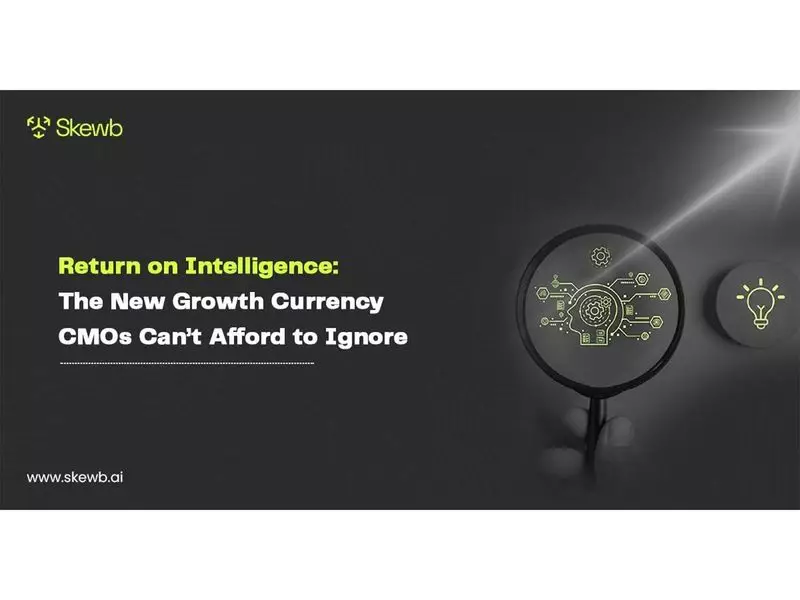
In the rapidly evolving landscape of Indian business, a new paradigm for measuring marketing success is taking center stage. Chief Marketing Officers (CMOs) across the country are being urged to shift their focus from traditional metrics to a more potent and insightful currency: Return on Intelligence (ROI). This concept, which emphasizes the strategic value derived from data, insights, and artificial intelligence, is fast becoming the critical driver of sustainable growth.
Why Return on Intelligence is the Future
The traditional marketing playbook, heavily reliant on broad demographic targeting and generic campaigns, is losing its edge. In today's hyper-competitive, digitally-native Indian market, consumers expect personalized, relevant, and immediate engagement. This is where Return on Intelligence makes its mark. It moves beyond simply calculating the financial return on a marketing spend (Return on Investment) to evaluating the strategic value generated by intelligent data utilization.
This new approach compels CMOs to invest in building a robust data intelligence engine. The goal is to transform raw data from various customer touchpoints into actionable insights that predict behavior, personalize experiences, and optimize marketing efforts in real-time. The core idea is that intelligence, when effectively harnessed, becomes a self-reinforcing asset that continuously fuels better decision-making and customer connection.

The Building Blocks of an Intelligence-Driven Strategy
Adopting a Return on Intelligence model is not an overnight shift. It requires a foundational change in strategy, technology, and talent. Experts point to several key components that Indian CMOs must integrate.
First, there must be a commitment to breaking down data silos within the organization. Customer information from sales, customer service, social media, and website interactions must flow into a unified system. Second, investment in AI and machine learning tools is non-negotiable. These technologies are essential for processing vast datasets, identifying patterns, and automating personalized interactions at scale.
Third, and perhaps most crucially, marketing teams need to develop or acquire analytical talent. The modern marketer must be as comfortable with data dashboards as they are with creative briefs. Cultivating a culture that values testing, learning, and iterating based on data insights is fundamental to realizing a positive Return on Intelligence.
The Tangible Impact on Indian Businesses
The shift towards measuring Return on Intelligence is more than a theoretical exercise; it delivers concrete business outcomes. For Indian companies, this focus can lead to significantly higher customer lifetime value through improved loyalty and retention. Marketing budgets are deployed with greater precision, reducing waste and improving overall efficiency.
Furthermore, an intelligence-led approach allows for real-time campaign optimization. Instead of waiting for a campaign to end to analyze results, CMOs can use live data to tweak messaging, channels, and targeting for better performance while the campaign is still running. This agility provides a substantial competitive advantage in a fast-paced market like India.
Ultimately, championing Return on Intelligence elevates the role of the CMO from a spender of budgets to a strategic growth driver. It provides the empirical evidence needed to secure board-level confidence and investment. In an economy where data is abundant but wisdom is scarce, the ability to convert information into intelligent action is the ultimate currency for growth. CMOs who ignore this shift risk being left behind, while those who embrace it will define the future of marketing leadership in India.