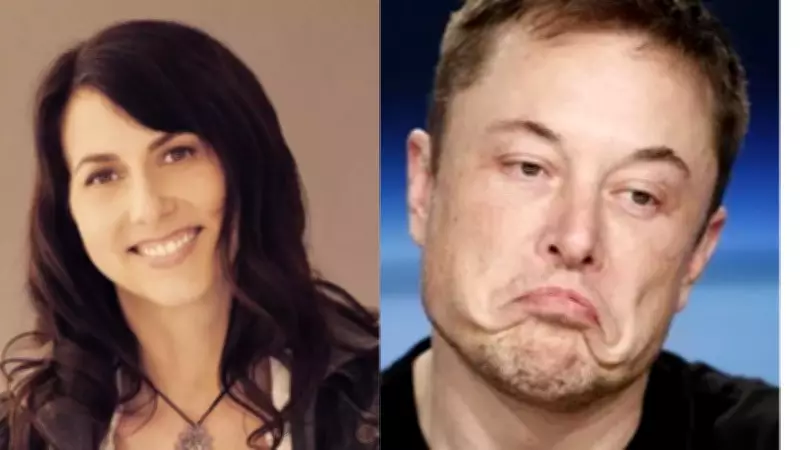
Mackenzie Scott's Unprecedented Philanthropic Pace Draws Criticism from Tech Leader
Mackenzie Scott, the philanthropist and former spouse of Amazon founder Jeff Bezos, has achieved a remarkable milestone in charitable giving, distributing wealth at a speed unmatched in history. Since 2019, after divesting over 75% of the Amazon shares she obtained from Bezos, Scott has contributed an astounding $26.4 billion to more than 2,500 organizations. In 2025 alone, her donations reached $7.2 billion, a sum that surpasses the lifetime philanthropic contributions of some of the world's wealthiest individuals, including Elon Musk, Larry Page, Larry Ellison, and even Bezos himself.
Garry Tan's Controversial Stance: Labeling Donations as 'Bad'
However, this rapid-fire generosity has not been universally applauded. Garry Tan, the CEO of Y Combinator, has voiced a starkly different perspective, sparking a heated debate in the philanthropic community. In a recent post on X, formerly known as Twitter, Tan described Scott's donations as 'bad', arguing that her approach lacks essential oversight and accountability. He likened it to 'pouring sugar on the floor', suggesting that such unchecked giving attracts chaos and mismanagement.
Elon Musk, CEO of Tesla, appeared to endorse this view by simply replying 'Yup' to Tan's post, adding weight to the criticism. Tan elaborated in his post, stating, 'MacKenzie Scott has given away $26B faster than anyone in history — with no oversight, and no accountability for the chaos that follows. This is not stewardship. Real philanthropy requires real care and attention. Pour sugar on the floor? You get ants.'

Allegations of Inadequate Vetting and Unintended Consequences
Tan further criticized Scott's methodology by highlighting a lack of vetting in her donation process. He shared a blog post where he contended that 'Big money giving has big bad effects', citing an example involving Harvard University. According to Tan, a Harvard spokesperson informed Fortune that the institution learned about an $80 million grant from Scott only through an email from her Yield Giving team, with no prior relationship or discussion about the school's capacity to manage such a large sum.
In contrast, Tan praised Warren Buffett's philanthropic approach, noting that Buffett, with lifetime donations of $68.3 billion as per Forbes, builds decades-long relationships with organizations like the Gates Foundation. Tan emphasized that Buffett 'understands what they do. He watches outcomes', whereas Scott's method is described as 'spray and pray at a scale nobody has ever attempted'.
Case Studies: Whittier College and San Francisco Community Land Trust
To illustrate the potential downsides of Scott's rapid donations, Tan pointed to specific instances of alleged mismanagement. A report by The Free Press detailed how a $12 million donation from Scott to Whittier College, a small Hispanic institution, led to significant internal turmoil. The college president reportedly used part of the funds to hire her son for a six-figure role with an unclear purpose, resulting in leadership changes, a drop in freshman enrollment from about 490 to fewer than 300, and a subsequent $10 million budget shortfall.
Additionally, Tan mentioned the San Francisco Community Land Trust, which received $20 million from Scott. He noted that some board members have adopted strong stances on contentious issues like housing and policing, potentially complicating the organization's operations.
The Broader Implications for Philanthropy
This debate raises critical questions about the balance between speed and stewardship in modern philanthropy. While Scott's donations have undoubtedly provided substantial support to numerous causes, critics like Tan argue that without proper oversight, such generosity can lead to unintended negative outcomes. The discussion underscores the need for philanthropists to consider not only the amount of money given but also the methods and long-term impacts of their contributions.
As the conversation continues, it highlights evolving standards in charitable giving, where transparency, accountability, and careful planning are increasingly viewed as essential components of effective philanthropy.