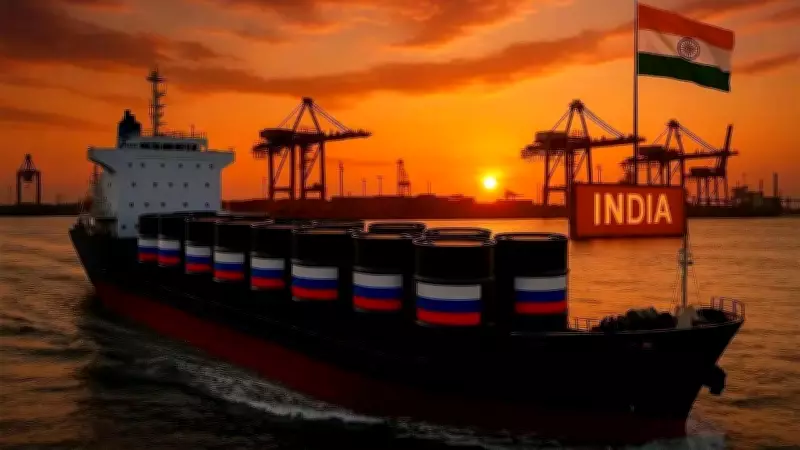
India's Russian Crude Imports Quadruple in March Amid Global Tensions
India's crude oil imports from Russia experienced a dramatic surge in March, with purchases skyrocketing to nearly Rs 5.3 billion (approximately $6.2 billion). This represents a staggering increase from the Rs 1.4 billion ($1.6 billion) recorded in February, according to recent data analysis. The sharp rise coincides with ongoing military conflicts in West Asia and the critical closure of the Strait of Hormuz, a vital maritime chokepoint for global oil shipments.
Analysis Reveals Second-Highest Importer Status
In its latest comprehensive analysis of Russian fossil fuel exports and international sanctions, the Centre for Research on Energy and Clean Air (CREA) reported that India imported a total of Rs 5.8 billion worth of Russian hydrocarbons in March. This positioned India as the second-largest importer globally, trailing only China, as both import volumes and prevailing market prices increased substantially during this period.
Crude oil dominated these imports, accounting for a commanding 91% of the total value. The remaining portion consisted primarily of coal and various oil products, highlighting India's continued reliance on Russian energy resources despite geopolitical pressures.

Contrasting Trends in Overall Import Figures
Interestingly, while India's total crude oil imports from all global sources declined by 4% in March, imports specifically from Russia rose fourfold. This indicates a strategic shift in sourcing, with Russian barrels becoming increasingly attractive to Indian refiners under current market conditions.
State-Owned Refineries Lead the Surge
The CREA report emphasized that state-owned refineries were the largest buyers of Russian fuel, driving the overall increase. "The biggest shift was in state-owned refineries' imports from Russia, which saw a massive 148% month-on-month increase," the analysis stated. "Their imports were in fact 72% higher than in March 2025, presumably due to Russian barrels being more available in the spot market."
Private refineries also registered significant growth, with more than a 66% month-on-month increase in their Russian crude purchases, demonstrating a broad-based trend across India's refining sector.
Historical Context and Price Dynamics
In February, India held the position of the third-largest importer of Russian hydrocarbons globally, following China and Turkiye. Purchases during that month were valued at Rs 1.8 billion, with crude oil constituting nearly 81% (Rs 1.4 billion) of the shipments. It is important to note that the reported value and actual physical volume of imports may differ due to fluctuating prices and logistical factors.
Historically, Russian Urals crude was available to India at a significant discount, making it an economically favorable option. However, prices have surged recently, largely due to the closure of the Strait of Hormuz, which has disrupted supply routes and increased transportation costs.
Sanctions Waiver Facilitates Increased Purchases
India has been importing Russian crude oil in substantial volumes over the past four years, establishing a robust energy partnership. However, shipments experienced a noticeable dip in January and February before rebounding sharply in March. This resurgence followed the United States granting a one-month sanctions waiver, specifically designed to ease global oil prices and ensure market stability during a period of heightened geopolitical uncertainty.
The waiver provided a temporary window for increased transactions, allowing Indian refiners to secure larger quantities of Russian crude at a critical time when alternative supplies were constrained by regional conflicts and maritime disruptions.