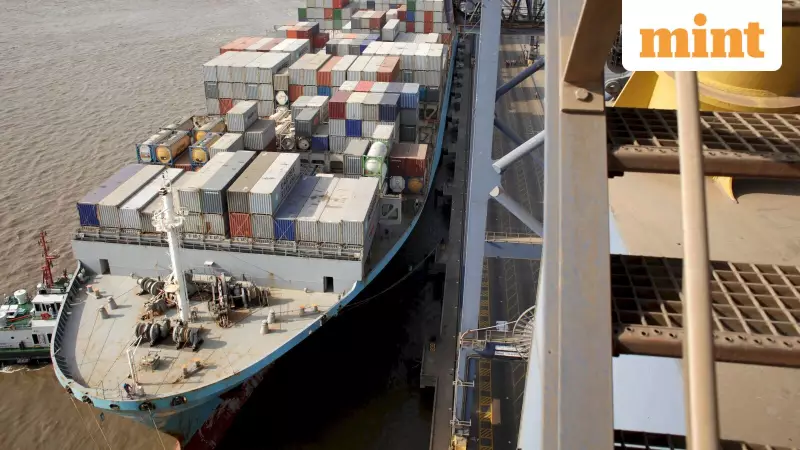
Budget 2026 Poised to Inject ₹9,800 Crore into Maritime Development Fund
The Indian government is gearing up to operationalize the ambitious ₹25,000 crore Maritime Development Fund (MDF) by earmarking a substantial ₹9,800 crore as its central contribution in the forthcoming Union Budget. This strategic financial infusion aims to catalyze the nation's maritime sector by significantly lowering capital costs and attracting long-term, low-cost investments into critical areas such as shipyards, coastal infrastructure, and inland waterways.
Vision for Global Maritime Leadership
Announced by Finance Minister Nirmala Sitharaman during the 2025-26 budget proposals and subsequently approved by the cabinet in September alongside a comprehensive ₹70,000 crore package for shipbuilding and maritime sectors, the MDF is designed to mobilize a staggering ₹1.5 trillion in investments by 2030. This initiative is a cornerstone of India's aspiration to ascend from its current sixteenth position to rank among the top five shipbuilding and ship-owning nations globally by 2047.
Pushpank Kaushik, CEO and Head of Business Development at Hyderabad-based Jassper Shipping, emphasized the fund's transformative potential. "Long-term financing through MDF will empower Indian shipowners with access to essential capital for purchasing ships, modernizing fleets, and developing port-ready logistics infrastructure," he stated, highlighting its role in mitigating the higher financing costs that often challenge domestic shipping companies compared to their international counterparts.

Structural Framework and Financial Mechanics
Recent structural refinements have delineated the MDF into two distinct components: a ₹20,000 crore Maritime Investment Fund (MIF) and a ₹5,000 crore Interest Incentivisation Fund (IIF). The government's share in the MIF is pegged at 49%, amounting to ₹9,800 crore, with the remaining 51% to be mobilized from ports, public sector undertakings, private financiers, private equity funds, pension funds, and sovereign wealth funds.
The fund will deploy a variety of financing instruments, including concessional debt, equity participation, guarantees, viability support, ship acquisition, yard modernization, and cluster projects. It will be synergized with other fiscal incentives such as customs duty waivers and tonnage tax benefits for inland vessels to enhance commercial viability.
Operational Execution and Strategic Impact
Sagarmala Finance Corporation Ltd (SMFCL), India's inaugural state-owned NBFC dedicated to the maritime sector, has been designated as the nodal agency for establishing and coordinating the MDF. SMFCL will manage the government's contribution to the alternate investment fund set up for the MIF and oversee the ₹5,000 crore IIF, which aims to subsidize interest rates by 3% for projects fostering domestic shipbuilding.
Bhavik Vora, Partner and Transport & Logistics Industry Leader at Grant Thornton Bharat, noted that allocating ₹9,800 crore reflects a decisive shift from framework creation to tangible execution. "Early government capital is pivotal to establish credibility, de-risk projects, and attract participation from ports, financial institutions, and private investors," he explained, underscoring its role in addressing liquidity barriers and signaling unwavering governmental commitment.
Broader Economic and Policy Implications
The MDF is poised to address the capital-intensive nature of shipping and shipbuilding, where Indian entities frequently grapple with high borrowing costs, short loan tenures, and stringent collateral requirements. By providing affordable, long-term financing, the fund aims to reduce India's annual expenditure of approximately $75 billion on foreign ship leases, boost the share of Indian-flagged tonnage to 20% by 2047, and enhance domestic value addition.

Nilachal Mishra, Partner and Head of Government and Public Services at KPMG in India, affirmed that the MDF, coupled with supportive measures like the revamped Shipbuilding Financial Assistance Policy and tonnage tax extensions, will propel India toward becoming a major maritime nation. "This initiative is expected to foster consolidation in the sector through mergers and acquisitions, which have been limited due to capital intensity," he added, envisioning a more self-reliant maritime ecosystem over the next decade.
Developed through extensive consultations with over 100 stakeholders, including global investors and financial institutions, the Maritime Development Fund stands as a testament to India's strategic push to reclaim its maritime prowess, drive economic growth, and solidify its position on the global shipping map.