

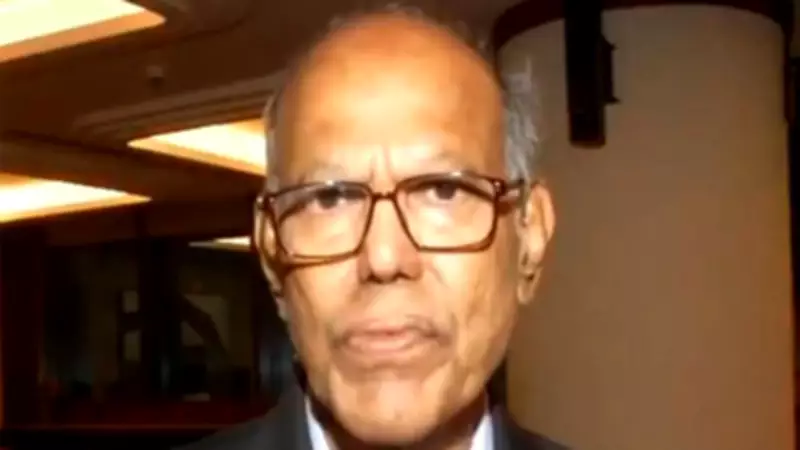
Former Reserve Bank of India (RBI) Governor Duvvuri Subbarao has stated that the central bank should permit the rupee to depreciate further as a mechanism to absorb external shocks. He emphasised relying on liquidity management measures rather than immediate interest rate hikes if inflation pressures intensify, according to a PTI report.
His remarks come ahead of the RBI's Monetary Policy Committee (MPC) meeting scheduled from June 3 to June 5, where policy rates will be deliberated amidst rising crude oil prices and inflation concerns triggered by the ongoing West Asia crisis.
Rupee as a Natural Shock Absorber
"The rupee should be allowed to adjust rather than be rigidly defended because the current pressures reflect a deterioration in India's external balance. A weaker rupee acts as a natural shock absorber," Subbarao told PTI in an interview.

The Indian currency has been under significant strain due to geopolitical tensions and elevated crude oil prices. It touched a record low of 97.15 against the US dollar earlier this month.
Market data indicates that the rupee has depreciated by approximately 5 per cent since the onset of the West Asia crisis, over 6 per cent since the beginning of 2026, and more than 10 per cent over the past year.
Confidence and Communication
Subbarao highlighted that exchange-rate management during periods of volatility is fundamentally about maintaining confidence. "Exchange-rate crises are ultimately crises of confidence. If investors, importers and households begin to believe the rupee will weaken further, they behave in ways that actually make it weaken further," he said.
He added, "That is why communication becomes as important as intervention. Policymakers must act decisively, but without appearing panicked or defensive."
Balancing Growth, Inflation, and Currency Stability
The former RBI governor acknowledged that the central bank faces a difficult balancing act between supporting growth, controlling inflation, and ensuring currency stability. According to him, cutting rates further to boost growth could exacerbate inflation and currency pressures, while aggressive rate hikes might hamper economic activity and GDP growth.
"A pause in interest rate tightening may be appropriate at this stage because the situation is unusually complex, involving a simultaneous balancing of growth, inflation and exchange-rate stability," Subbarao said.
Monetary Policy as Last Resort
Subbarao emphasised that monetary policy should be used only as a "last resort" to defend the currency. "RBI may of course tighten monetary policy if it believes that to be justified by inflation concerns," he noted.
He further added that if inflation begins to rise sharply, the RBI should first tighten liquidity conditions rather than directly increasing policy rates. "In that case, the tightening could first come through liquidity management rather than outright rate hikes," he said.
The RBI had maintained policy rates unchanged in its April meeting after reducing the repo rate by 1.25 percentage points since last year to support growth. The repo rate currently stands at 5.25 per cent.






