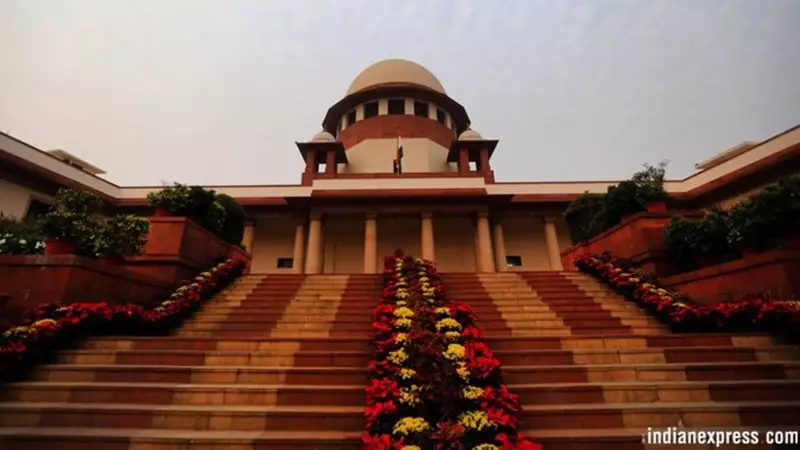
The Supreme Court of India delivered a sharp rebuke to market regulator Securities and Exchange Board of India (Sebi) on Wednesday, November 19, 2025, accusing it of employing double standards in its investigation into Indiabulls Housing Finance Limited, now known as Sammaan Capital Limited.
Court Questions Sebi's Contradictory Stance
During a hearing on a petition filed by the NGO Citizens Whistle Blower Forum, Justice Surya Kant heading a three-judge bench strongly criticized Sebi's inconsistent approach to different cases. The court specifically questioned why the market regulator was reluctant to investigate serious allegations including round-tripping of funds, violations of the Companies Act, and siphoning of money by Indiabulls promoters.
Justice Kant pointed out the apparent contradiction in Sebi's positions: When the question of taking over properties and selling comes, then you say we are the only authority in the country with jurisdiction. But when the question of investigation comes... Because your officers have some vested interest?

Allegations Against Indiabulls Housing Finance
The core allegations against IHFL involve providing questionable loans to companies with minimal net worth, with the funds allegedly being funneled back to businesses owned by the promoters to enhance their personal wealth. This sophisticated financial arrangement has raised serious concerns about corporate governance and regulatory oversight in the housing finance sector.
Justice Kant expressed his frustration with Sebi's selective application of authority, noting: Every day, we see double standards of Sebi. In one of the matters where I constituted a high-powered committee, your stand was that only Sebi has the right to auction the properties. And what you have been auctioning, we know that! Rs 30 crore property, you have sold for a few lakhs of rupees.
CBI's Unusual Approach Under Scrutiny
The court also turned its attention to the Central Bureau of Investigation, expressing surprise at what it described as the agency's cool attitude in handling the matter. Justice Kant observed: Very surprisingly, CBI has a very cool kind of attitude and approach in this case. We have never seen such a friendly attitude as we find in this case.
Emphasizing the public interest dimension of the case, the judge added: This is ultimately public money, it is not somebody's private self-earned money that is being circulated. There is a strong element of public interest.
Court's Rationale for FIR Registration
The Supreme Court made a compelling argument for the registration of a First Information Report, stating that even if only 10% of the allegations are correct, they would still represent large-scale dubious transactions. Justice Kant explained the importance of formal investigation: Once doubt is created, you register an FIR. It need not be against A person, B person. During investigation, somebody may or may not be found involved. But registering an FIR will strengthen the hands of the ED, SFIO, Sebi.
The court also questioned why the Ministry of Corporate Affairs had compounded approximately 100 violations mentioned in a Sebi report, asking pointedly about the ministry's interest in closing matters in this manner.
Legal Proceedings and Responses
Advocate Prashant Bhushan, representing the petitioner, argued that responses from both CBI and Enforcement Directorate provided sufficient grounds for filing an FIR and urged the court to direct its registration. Additional Solicitor General S V Raju, appearing for CBI and Serious Fraud Investigation Office, assured the court that the CBI director would convene a meeting of officials from all concerned agencies to examine the issue thoroughly.
Following this assurance, the court directed the agency to file a fresh affidavit. During previous hearings, senior advocates Harish Salve and A M Singhvi had defended IHFL, with Salve describing the petition as a cut-and-paste of a similar petition dismissed by the Delhi High Court and terming it a case of blackmail.

The Supreme Court's strong observations highlight the growing judicial concern over regulatory consistency and the protection of public funds in financial sector investigations. The case continues to develop as regulatory agencies reassess their approach following the court's critical remarks.