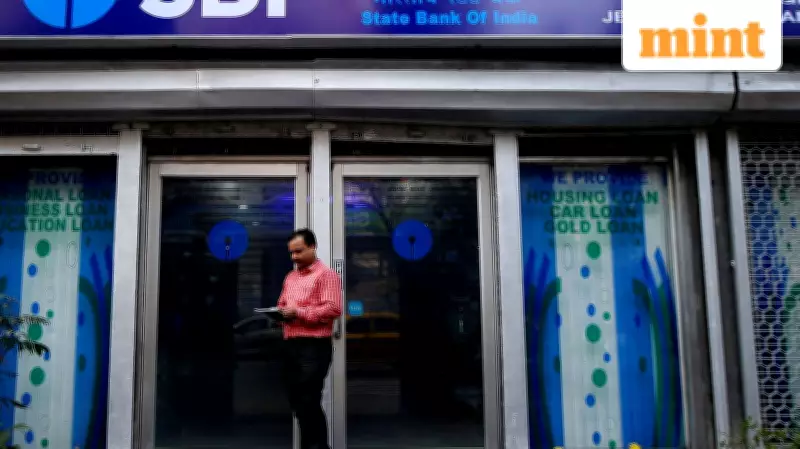
SBI Stock Achieves Historic Milestone with Sustained Rally
Shares of State Bank of India (SBI), the nation's largest public sector bank, have been experiencing significant momentum in the Indian equity markets, consistently breaking previous records as investor confidence remains robust. This surge follows the bank's impressive performance during the December quarter, which exceeded market expectations.
Record-Breaking Performance and Market Position
Continuing its upward trajectory for the second consecutive session, SBI's stock advanced by nearly 1% to establish a new all-time high of ₹1,154 per share. This remarkable achievement has propelled the bank's month-to-date returns to an impressive 6.20%. The current rally builds upon a substantial 10% increase recorded in January, marking the fifth straight month of positive gains for the banking giant.
Examining the broader timeline, SBI's stock initiated its upward movement approximately one year ago and has since witnessed an extraordinary 67.5% appreciation. This performance positions SBI as one of the standout performers among Nifty 50 constituents. The sustained rally has been primarily driven by the bank's consistently strong quarterly results, accelerating credit growth, and steady improvements in asset quality metrics.

Market Capitalization Milestones and Banking Sector Standing
The persistent upward movement has propelled SBI's market capitalization beyond the historic ₹10 lakh crore threshold for the first time in recent trading sessions. This achievement places the state-owned lender among an exclusive group of Indian companies. With today's record high, SBI's market capitalization has further climbed to approximately ₹10.65 lakh crore, establishing it as the sixth most valuable company in the Indian stock market landscape.
In the banking sector hierarchy, SBI has reclaimed its position as the second-most valuable bank by market capitalization, surpassing ICICI Bank. HDFC Bank continues to maintain its leadership position as the most valuable banking entity, with a market capitalization of ₹14.35 lakh crore according to BSE data.
LIC's Substantial Investment Gains
The sustained rally has generated substantial wealth creation not only for retail investors—who collectively held a 7% stake in the bank at the end of the December quarter—but has also significantly enhanced the investment portfolio of Life Insurance Corporation of India (LIC). As the country's largest insurer and asset manager, LIC maintains a 9.23% ownership stake in SBI, making it the single largest institutional shareholder.
The 67.5% appreciation in SBI's share price over the past year has added approximately ₹39,648 crore to the value of LIC's holdings. This substantial increase brings the total value of LIC's investment in the banking behemoth to around ₹98,353 crore. LIC has remained one of SBI's most significant shareholders for over a decade, with Trendlyne data indicating that the insurance major has maintained a stake in the bank since 2015, never allowing its ownership to fall below the 8% threshold.
December Quarter Financial Performance Highlights
SBI reported exceptionally strong results for the December quarter, achieving an all-time high net profit of ₹21,028 crore. The bank's net interest income (NII) during this period increased to ₹45,190 crore from ₹41,446 crore in the corresponding quarter of the previous year. On the profitability front, domestic net interest margin (NIM) stood at 3.12% in Q3FY26, while the whole bank NIM registered at 2.99%.
Asset quality demonstrated marked improvement, with gross non-performing assets (NPAs) declining to 1.57%. The net NPA ratio experienced a reduction of 14 basis points, settling at 0.39%. In a strategic move reflecting confidence in future growth prospects, SBI has revised its FY26 credit growth guidance upward to 13–15% from the previous range of 12–14%.
Disclaimer: Investors are advised to consult with certified financial experts before making any investment decisions.