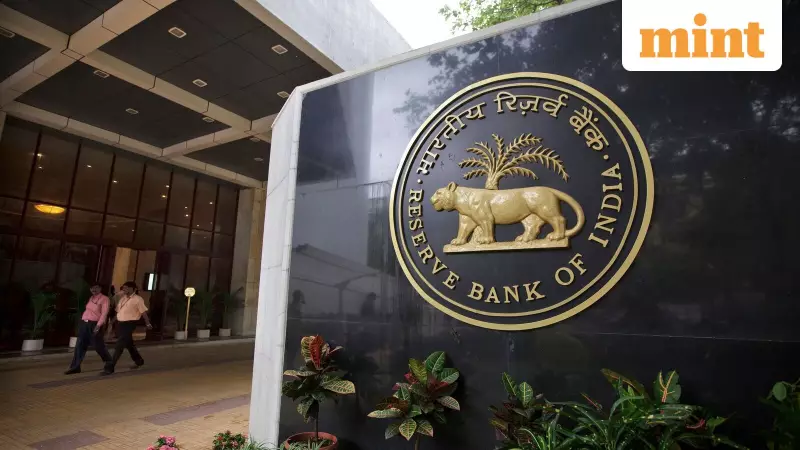
The Reserve Bank of India (RBI) has unveiled its third major liquidity infusion package in recent months, announcing a substantial stimulus ahead of the upcoming Monetary Policy Committee (MPC) meeting. This move comes as the Indian rupee plunged to a fresh all-time low against the US dollar, intensifying pressure on the financial system.
RBI's Liquidity Measures: Details and Timeline
In response to persistent tightness in liquidity conditions, the central bank will conduct open market operations (OMOs) for the purchase of government securities worth ₹1 trillion. Specifically, RBI will purchase government securities worth ₹50,000 crore each on 5 February and 12 February. Additionally, the bank will auction dollar-rupee buy/sell swaps of three years on 4 February, with a total value of $10 billion.
"The Reserve Bank will continue to monitor evolving liquidity and market conditions and take measures as appropriate to ensure orderly liquidity conditions," the central bank stated in its official release.

Additional Short-Term Liquidity Injection
In a complementary move, RBI also announced a 90-day Variable Rate Repo (VRR) operation of ₹25,000 crore to be conducted on 30 January. This variable-rate repo auction serves as a crucial liquidity tool, allowing the central bank to inject short-term funds into the banking system. Unlike fixed repo rates, banks borrow funds at market-determined rates through this auction process.
Context: Third Tranche in Series of Measures
This announcement marks the third such tranche of liquidity measures introduced by RBI since December 2025. The first package was announced alongside the monetary policy statement in December 2025, featuring OMO purchases worth ₹1 trillion and a dollar-rupee buy/sell swap of $5 billion.
During the post-policy conference, Governor Sanjay Malhotra had reiterated RBI's commitment to supporting system liquidity without providing explicit guidance on future measures. Subsequently, in late December, RBI doubled the scale of operations, announcing OMO purchases of ₹2 trillion and a $10 billion dollar-rupee buy/sell swap auction for January 2025.
Rupee Under Severe Pressure
The regulatory announcement follows hours after the Indian rupee touched a record intraday low of 91.97 against the US dollar. A selloff in domestic equities compounded ongoing pressures from dollar outflows and importer payments. Although the domestic currency pared some losses to close slightly higher at 91.96, it had previously hit an all-time low of 91.75 on 21 January.
So far in 2025, foreign institutional investors (FIIs) have net sold shares worth ₹36,587 crore, with selling intensifying over the past week. Benchmark indices ended nearly 1% lower, recording weekly losses of around 2.5%, further exacerbating pressure on the rupee.
Persistent RBI Interventions
These developments have necessitated persistent RBI interventions in the foreign exchange market to curb excessive rupee volatility. Market participants have been urging the central bank to infuse more durable liquidity into the system, as conditions remain tight despite previous measures.
Systemic Liquidity Challenges
System liquidity has faced additional strain due to heavy borrowing by central and state governments, expected to reach approximately ₹30 trillion. In a pre-policy interaction with RBI, economists and market participants emphasized the need to focus on easing banking system liquidity rather than further interest rate cuts.
Suggestions from market participants included:

- RBI publishing an indicative OMO calendar, potentially up to ₹5 trillion, for the next financial year to enhance predictability.
- Implementing longer-term variable-rate repos (VRRs), as short-duration VRRs offer only transient relief.
- Considering targeted long-term repo operations (TLTROs) for more sustained liquidity support.
Upcoming Monetary Policy Committee Meeting
RBI's Monetary Policy Committee is scheduled to meet on 4-6 February for its final meeting of the current financial year. Since February 2025, the central bank has cut the policy repo rate by a cumulative 25 basis points. Today's liquidity measures represent a proactive step to stabilize financial markets ahead of this critical policy review.