Mumbai Court Grants Temporary Bail in NDPS Case After Forensic Report Finds No Drugs
In a significant development in a major narcotics case in Mumbai, four accused individuals have been granted temporary bail by a special NDPS court. This decision comes days after the court rejected a plea by the Mumbai Police Crime Branch to retest drug samples, following an initial forensic report that returned negative for contraband substances.
Background of the Case and Arrests
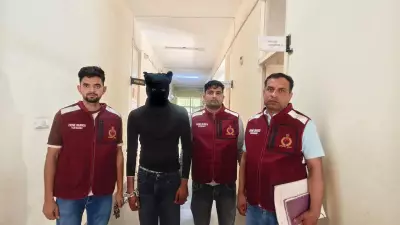
The accused, identified as Rajesh Pawar, Yogesh Singh, Rohan Avsare, and Pradeep Upadhyay, were arrested in July 2025. Their arrest stemmed from an incident on July 27, 2025, when the Anti-Narcotics Cell (ANC) of the Mumbai Police intercepted a three-wheeler tempo near Amar Juice Centre in Andheri. During the operation, officers discovered three boxes containing approximately 1.11 lakh tablets marked as ‘Tramadol Hydrochloride,’ leading to the arrest of ten individuals in total.
Forensic Report and Legal Implications
The prosecution's case faced a critical setback when the Chemical Analysis (CA) report revealed that Tramadol was not detected in the samples. Instead, the tests identified Diclofenac artifact, a substance that is not listed as a narcotic drug or psychotropic substance under the Narcotic Drugs and Psychotropic Substances (NDPS) Act. Special judge Arvind M Bhandarwar emphasized that this negative report fundamentally undermined the legal basis for the charges.

"When the chemical analysis report categorically states that the seized material is not a narcotic drug or psychotropic substance, the statutory ingredients of offences under the NDPS Act are not satisfied," stated Judge Bhandarwar. He further noted that the law is specific to certain substances, and a negative report "removes the essential factual foundation" of the alleged crime.
Court's Reasoning for Granting Bail
The judge based the bail decision on the forensic report, highlighting that continued detention of the accused would violate Article 21 of the Constitution, which guarantees protection of life and personal liberty. "Therefore, continued detention of the accused would amount to violation of Article 21 of the Constitution," the judge said. He also pointed out that the prosecution had not challenged the rejection order for retesting and had left it to the court's discretion, indicating no further incriminating material was forthcoming.
Defence advocates Pranay Saraf and Mangesh Singh argued that the negative reports broke the very foundation of the prosecution's case, rendering the custody illegal. "Since no prohibited substance has been recovered from any of the accused, the question of determining quantity under the NDPS Act does not arise," Saraf submitted. The court agreed, noting that the stringent bail conditions typically associated with drug cases, such as those under section 37 of the NDPS Act, do not apply when the material is not a prohibited drug.
Temporary Nature of Bail and Prosecution's Opposition
However, the judge clarified that the bail is "temporary" to safeguard the prosecution's interests. Should further incriminating material surface during ongoing investigations, the court may order the accused to return to judicial custody. The prosecution opposed the bail, citing ongoing probes into an alleged international smuggling racket. Despite this, the judge issued four separate orders, stating, "However, considering the quantity of material seized and the fact that chargesheet has not yet been filed, this court is of the view that the accused is entitled to be released on temporary bail, subject to appropriate conditions to secure his presence and ensure the fairness of trial."
This case underscores the critical role of forensic evidence in narcotics prosecutions and the legal protections afforded to individuals when such evidence fails to substantiate charges under the NDPS Act.