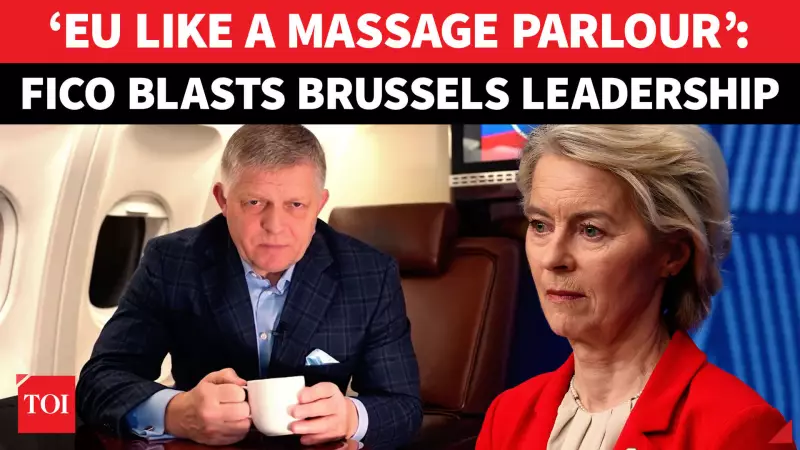
Slovak PM Robert Fico Mocks EU Summit as 'Very Expensive Dinner', Torches Brussels Elites
In a blistering verbal assault that has sent shockwaves across the continent, Slovak Prime Minister Robert Fico has openly mocked European Union leadership, dismissing a recent emergency Brussels summit as nothing more than a "very expensive dinner." The provocative remarks, delivered with characteristic bluntness, have laid bare the growing fissures within the European project and signaled a mounting revolt against the power structures centered in Brussels.
A Scathing Critique of EU Leadership and Unity
Fico's explosive commentary did not stop at mere mockery of the summit's cost and perceived ineffectiveness. He escalated his critique by likening the entire European Union apparatus to a "massage parlour that needs new staff," a metaphor dripping with contempt for the current bureaucratic and political leadership. This incendiary language goes beyond typical diplomatic disagreement, directly challenging the competence and legitimacy of EU elites at a time of significant geopolitical strain.
The Slovak leader's outburst is not an isolated incident but rather a symptom of a deeper malaise. It exposes a palpable sense of leadership fatigue and rising dissent among member states who feel increasingly alienated by top-down decisions emanating from Brussels. Fico's words resonate with a growing faction within Europe that questions the centralized authority of the EU, advocating for greater national sovereignty and a fundamental recalibration of power.

Widening Cracks in European Solidarity
This incident underscores the severe and widening cracks in European unity. The emergency summit, ostensibly called to address pressing continental issues, has instead become a focal point for internal discord. Fico's rhetoric amplifies long-simmering frustrations over issues ranging from migration policy and fiscal rules to foreign policy alignment, particularly regarding conflicts like the war in Ukraine.
The call to "change your staff, not only beds" is a direct challenge to the personnel and political figures steering the EU ship. It suggests that superficial reforms are insufficient and that a wholesale change in leadership and approach is necessary to address the bloc's crises. This sentiment reflects a broader, populist-driven skepticism towards established EU institutions, which are often portrayed as out-of-touch and unaccountable.
The Implications for EU Cohesion and Global Stance
Fico's very public denunciation poses serious questions about the future cohesion of the European Union. When a sitting head of government from a member state employs such vitriolic language, it weakens the bloc's ability to present a united front on the global stage. It emboldens other dissenting voices and could potentially unravel the fragile consensus needed for collective action on security, economic, and diplomatic matters.
The attack also highlights the personal and political style of Robert Fico, a figure known for his confrontational approach and willingness to defy Brussels orthodoxy. His comments are likely calculated to bolster his domestic political standing while positioning Slovakia as a defiant voice against federalist overreach. As Europe grapples with multiple overlapping challenges, from economic instability to external security threats, this episode of internal strife signals a turbulent period ahead for the EU's leadership and its foundational principle of ever-closer union.