

OMCs Implement Discounts on Refinery Payments to Mitigate Financial Strain
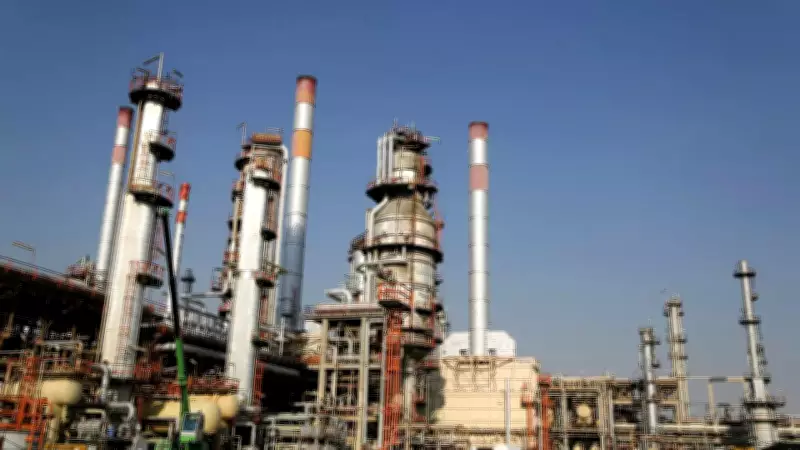
In an unprecedented move since the deregulation of fuel prices, state-run oil marketing companies (OMCs) have initiated discounted rates for payments to refineries on petrol, diesel, aviation turbine fuel (ATF), and kerosene. This strategic decision aims to limit escalating losses resulting from a self-imposed freeze on retail fuel prices, as confirmed by sources to PTI.
Revised Pricing Structure and Its Immediate Impact
On March 26, OMCs established fixed rates for petroleum products, applying discounts of up to Rs 60 per litre relative to their imported costs. These revised prices, effective from March 16, are anticipated to disproportionately affect standalone refiners such as Mangalore Refinery and Petrochemicals Ltd (MRPL), Chennai Petroleum Corporation Ltd (CPCL), and HPCL-Mittal Energy Ltd (HMEL).
The action follows a significant surge in international crude oil prices, which have risen from approximately $70 per barrel prior to the Middle East conflict to over $100 per barrel. Concurrently, domestic petrol and diesel prices have remained static, compelling OMCs to absorb the financial impact internally.

Detailed Breakdown of Discounts on Refinery Transfer Prices
With no immediate resolution to the conflict in sight, OMCs have opted to apply substantial discounts on the refinery transfer price (RTP)—the internal rate at which refineries sell fuels to their marketing divisions. This effectively reduces payouts to refiners below import-parity levels.
For the latter half of March, a discount of Rs 22,342 per kilolitre (equivalent to Rs 22.34 per litre) was imposed on diesel, lowering the RTP from Rs 85,349 per kl to Rs 63,007 per kl. In the first fortnight of April, this discount widened sharply to Rs 60,239 per kl, reducing the RTP from Rs 146,243 per kl to Rs 86,004 per kl.
On ATF, the RTP has been cut to Rs 76,923 per kl from Rs 127,486 per kl after incorporating a discount of Rs 50,564 per kl. Similarly, kerosene RTP has been reduced to Rs 77,534 per kl from Rs 123,845 per kl with a discount of Rs 46,311 per kl, according to sources.
Response from Major OMCs and Broader Industry Implications
Indian Oil Corp, Bharat Petroleum Corp, and Hindustan Petroleum Corp have not provided immediate comments on the development. The discounted pricing mechanism prevents refiners from fully passing on increased crude costs through RTP, forcing them to shoulder part of the burden from elevated global oil prices.
While integrated public sector entities like Indian Oil Corporation Ltd (IOC), Bharat Petroleum Corporation Ltd (BPCL), and Hindustan Petroleum Corporation Ltd (HPCL) may partially offset impacts through combined refining and marketing operations, standalone refiners reliant on market-linked RTP for revenue face a more severe margin squeeze.
Mangalore Refinery and Petrochemicals Ltd (MRPL), Chennai Petroleum Corporation Ltd (CPCL), and HPCL-Mittal Energy Ltd (HMEL)—which have limited retail presence and sell most output to OMCs—are expected to bear the brunt of these changes.
Potential Effects on Private Refiners and Historical Context
The adjustments could also influence private refiners such as Nayara Energy and Reliance Industries Ltd if similar discounts are extended, as they sell a significant portion of their petrol and diesel production to OMCs. These companies operate approximately 90% of India's over one lakh fuel retail outlets.
Historically, petrol and diesel pricing in India has been based on import parity, where fuels are valued as if imported, despite domestic crude refining. RTP was linked to import parity price (IPP) until June 2006, after which the government adopted trade parity pricing (TPP), assigning 80% weight to import parity and 20% to export parity.
This framework previously safeguarded refinery margins, especially for standalone refiners lacking marketing margin cushions. Although petrol and diesel prices were deregulated in 2010 and 2014 respectively, retail prices have remained largely frozen since April 2022, with OMCs absorbing losses during periods of high crude prices.

Current Under-Recoveries and Government Stance
The current RTP discounts coincide with widening under-recoveries on petrol and diesel. Unlike liquefied petroleum gas (LPG), where the government compensates for losses, no such support exists for auto fuels.
The Ministry of Petroleum and Natural Gas stated in a social media post on April 1, "With global petroleum prices up by up to 100 per cent in the last one month, PSU OMCs are incurring under-recoveries of Rs 24.40 per litre on petrol and Rs 104.99 per litre on diesel at retail selling price (RSP) level as on 01.04.2026."
Analyst Perspectives and Future Outlook
OMCs assert that freezing RTP will help distribute financial burdens across the refining ecosystem. However, analysts warn that this move may disproportionately impact independent refiners with limited downstream presence and distort market-linked pricing signals, sources added.





