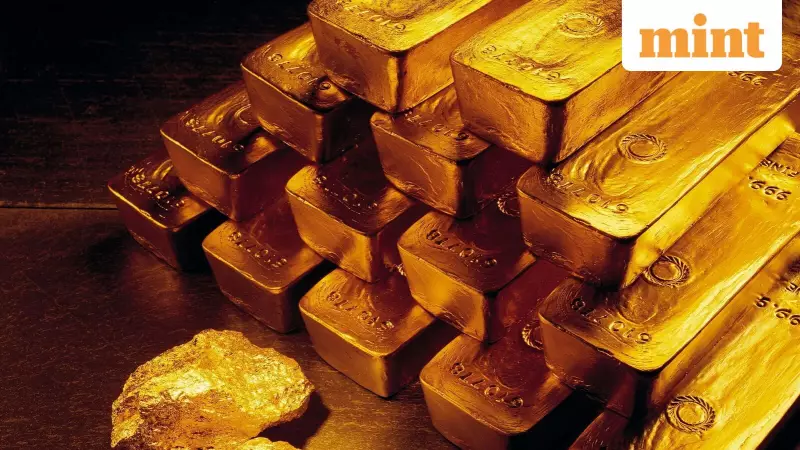
Global Gold Reserves Hit Record Highs as Central Banks Accelerate Purchases
Gold has once again become the centerpiece of central bank strategies worldwide as prices soared to unprecedented levels in early 2025. The sustained buying spree that began several years ago shows no signs of abating, according to the latest data from BullionVault, which meticulously tracks official central bank holdings.
The comprehensive figures reveal a fascinating concentration of global gold reserves across specific geographical regions, with traditional financial powerhouses maintaining their stronghold while emerging economies steadily build their positions.
The Western Gold Fortresses: US and Europe Dominate
The United States continues to maintain an unassailable lead in global gold reserves, sitting comfortably ahead of all other nations with official holdings of 8,133.5 tonnes. This massive stockpile has remained virtually unchanged for decades, stored primarily within the secure vaults of Fort Knox and the New York Federal Reserve.

At current market valuations, this American gold treasure is worth substantially more than $1 trillion, as reported by Visual Capitalist. The sheer scale of US holdings represents a significant portion of the world's documented gold reserves.
When considered as a collective entity, European nations present a formidable challenge to American dominance. Germany maintains 3,351.6 tonnes, followed closely by Italy with 2,451.9 tonnes and France holding 2,437 tonnes. Their combined total nearly matches the American stockpile, creating a Western stronghold in the global gold landscape.
Much of Europe's gold accumulation dates back to the Bretton Woods era, when the precious metal served as the foundation of the postwar monetary system. These historical holdings continue to shape global financial dynamics decades later.
Asia's Strategic Accumulation and Emerging Market Moves
China has been systematically increasing its gold reserves as part of a broader strategy to diversify away from US Treasury bonds. Between 2019 and 2024, Beijing added 331 tonnes to its official holdings, bringing its total to 2,279.6 tonnes. This steady accumulation reflects China's long-term vision for financial security and currency stability.
India, now recognized as the world's fifth-largest economy, holds 876.2 tonnes of gold in its reserves. This positions the country as a significant player in the global gold market, with Japan trailing slightly behind at 846 tonnes.
Several emerging markets have dramatically expanded their gold positions since 2019. Turkey increased its holdings to 595.4 tonnes, while Poland built up its reserves to 448.2 tonnes. These strategic moves highlight a growing trend among developing economies to use gold as a hedge against economic uncertainty.
Beyond the Major Players: Smaller Nations Build Reserves
The gold accumulation trend extends beyond the largest economies. Switzerland maintains substantial reserves of 1,039.9 tonnes, while Uzbekistan holds 382.6 tonnes and Saudi Arabia possesses 323.1 tonnes.
According to Visual Capitalist, numerous developing countries including Thailand, Kazakhstan, and Singapore have cited multiple reasons for increasing their gold reserves. Inflation risks, currency volatility, and geopolitical uncertainties are driving this global shift toward the timeless security of gold.
The United States and Europe collectively control more than 60% of all reported gold holdings, creating a significant concentration of the world's monetary gold. While China, India, and other emerging markets are gradually closing the gap, the disparity remains substantial.
The current distribution of global gold reserves continues to heavily favor established financial centers, even as newer economic powers consistently add to their stockpiles year after year. This dynamic creates an interesting tension between traditional financial strength and emerging economic ambition in the global financial system.