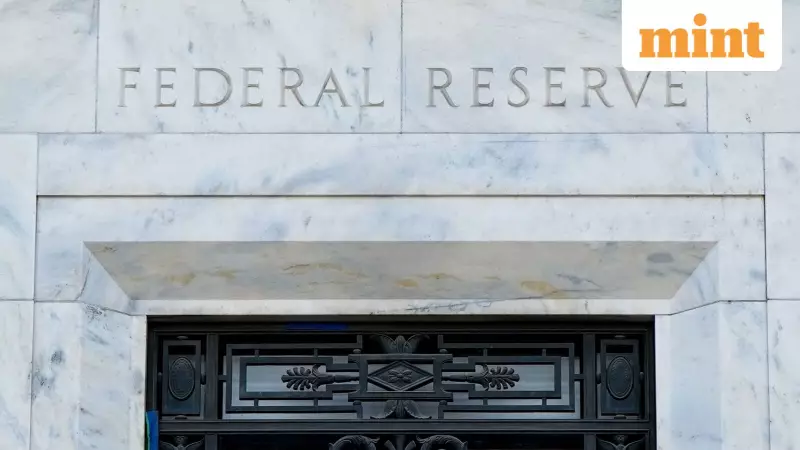
The Fed's Quiet Crisis: A $110 Billion Solution Banks Won't Embrace
Wall Street banks are facing a peculiar dilemma. The Federal Reserve has created a special facility to provide them with cheap, readily available cash during times of market stress, yet most financial institutions would rather not use it. This reluctance persists even as multiple risks bubble up across global markets and bank reserves hit their lowest level in four years.
The Stigma of Borrowing
The Federal Reserve's Standing Repo Facility (SRF), launched in 2021, represents a crucial safety net for the banking system. Designed to ensure lenders have access to sufficient cash, the facility prevents the broader financial system from running dry when banks grow cautious about lending to each other.
However, U.S. lenders borrowed $110 billion from the SRF last month – the highest since its introduction – this figure remains surprisingly small compared to the $3 trillion in repo transactions that U.S. dealers conduct daily. The core issue appears to be perception: banks fear that utilizing the Fed's facility might signal financial weakness to the market.

Roberto Perli, who manages the System Open Market Account for the New York Fed, recently noted that despite increased SRF usage, many repo transactions still occur at rates above the facility's minimum bid rate. This suggests banks are paying more for funding elsewhere rather than facing potential stigma.
Mounting Pressure Behind the Scenes
The situation has become concerning enough that New York Fed President John Williams recently met with several Wall Street banks at a Treasury market event. His mission: to reduce the stigma associated with using the SRF as money market and repo borrowing rates continue to climb.
Williams highlighted a critical transition in the market's foundation, stating he expects the system will soon move from abundant to ample reserves. This distinction matters significantly for the financial system's ability to absorb shocks. Bank reserves not only protect individual balance sheets from unexpected risks but also maintain overall market liquidity.
The challenge has intensified due to the Fed's quantitative tightening program, which has reduced overall bank reserves to approximately $2.85 trillion – the lowest level in four years. Meanwhile, Bank of America data suggests commercial banks might be hoarding liquidity to avoid recognizing around $400 billion in unrealized securities losses.
Broader Market Risks and the Path Forward
While current bank liquidity levels don't represent an immediate crisis – reserves remain more than double the $1.4 trillion that triggered a repo market meltdown in 2019 – several concerning factors are emerging globally. Fiscal risks in Japan and the United Kingdom, volatility in cryptocurrency markets, and growing concerns about U.S. private credit markets all contribute to a complex risk landscape.
Fortunately, investors likely don't need to worry about a repeat of the spring 2023 funding crisis that followed Silicon Valley Bank's collapse. The Fed's decision to end its quantitative tightening in December should provide substantial relief. This move could ultimately lead to the re-expansion of the central bank's $6.6 trillion balance sheet.
Lawrence Gillum, chief fixed income strategist at LPL Financial, believes this development will reintroduce liquidity into the system in ways that support risk assets. He noted that with the conclusion of quantitative tightening approaching without a repeat of 2019's repo rate spike, an immediate threat to funding markets has been eliminated.
The entire process is unfolding quietly – exactly how Wall Street prefers it. As the Fed continues its behind-the-scenes efforts to maintain stability, the banking sector's delicate dance between accessing necessary liquidity and maintaining market confidence continues.