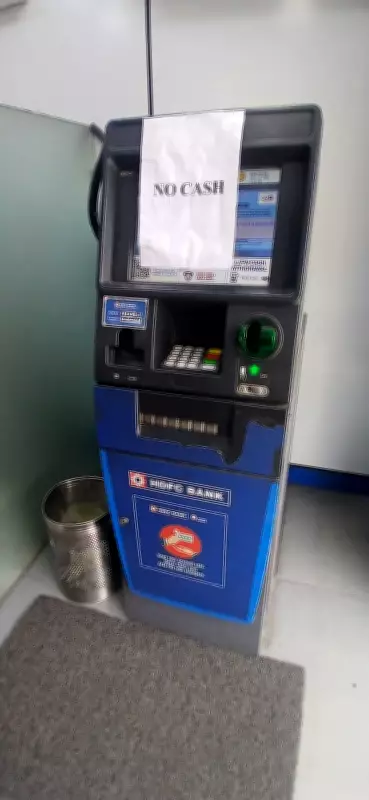
Banks across Punjab are grappling with a severe currency shortage, causing anxiety among customers who find themselves unable to withdraw their own money. Automated teller machines (ATMs) in several areas have run dry, and the time taken to reload them has stretched from a few hours to several days.
Panic Among Residents and Businesses
This situation has sparked panic, with many questioning why they are denied access to their funds despite having sufficient balances. Amit Kapur, who runs a pharmaceutical unit in Amritsar, noted that the shortage has worsened since the onset of the West Asia conflict. “It has impacted our purchases, and most pharma units in Amritsar are operating at half capacity,” he said.
Bank Officials Blame High Demand
Senior bank officials describe the problem as temporary and have urged the Reserve Bank of India (RBI) to inject more currency into the state. “Cash withdrawals in Punjab hit record highs in April and May. Typically, the cash supplied against the indent sent to the RBI is 5-10 percent, leading to shortages at some banks. The situation is gradually improving, and more cash will be pumped in during June,” a senior banker explained.

Aparna Sharma, lead district manager at Punjab National Bank in Amritsar, acknowledged the issue in Punjab and Chandigarh due to restricted cash flow.
Political Allegations of Deliberate Slowdown
Politicians suspect that the cash flow is being deliberately slowed down ahead of the 2027 Assembly elections. A property dealer in Muktsar revealed that several banks had set daily withdrawal limits of Rs 15,000 to Rs 20,000 until the end of May. “The limit has now been increased to a maximum of Rs 1 lakh per day, but this is still a huge problem for businesses like ours that rely on cash transactions,” he said.
Farmers and Manufacturers Affected
Ajay Wadhwa, a farm leader from Abohar, shared his ordeal: “I had to visit different ATMs on a single day to withdraw cash to pay wages to laborers.” In Jalandhar, sports goods manufacturer Chetan Dhir reported reduced cash flow in the market.
The Tribune, with inputs from Neeraj Bagga and Archit Watts.