

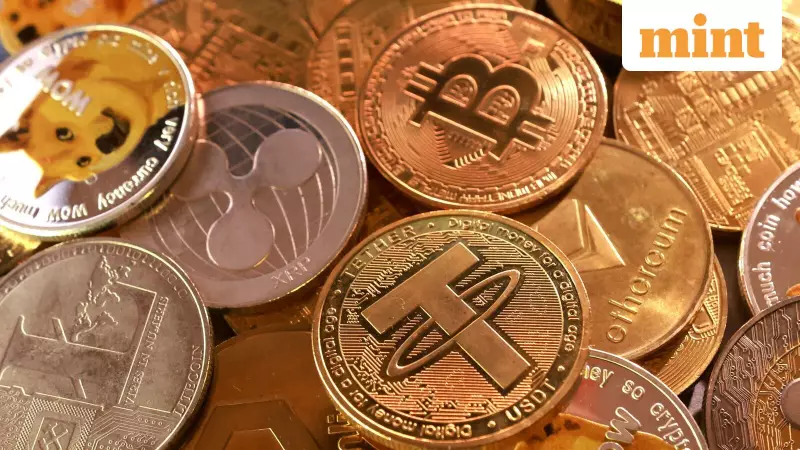
Crypto's Big Bang: A Financial Revolution Unfolds
For years, the strait-laced veterans of Wall Street have often discussed cryptocurrency's practical applications with a knowing smirk. Having witnessed numerous digital asset bubbles burst, from memecoins to NFTs, they've largely viewed crypto as a tool for speculation rather than substantial financial innovation. However, the current wave of excitement sweeping through global markets is fundamentally different, signaling a potential transformation of the very backbone of the global financial system.
The Regulatory Catalyst: GENIUS Act and the Stablecoin Surge
The landscape shifted dramatically on July 18th, when President Donald Trump signed the GENIUS Act into law. This landmark legislation provides stablecoins—crypto tokens backed by conventional assets like the US dollar—with the regulatory clarity the industry has long sought. The impact was immediate and profound, with Wall Street institutions now scrambling to participate in a booming market.
Today, there is a staggering $263 billion in stablecoins circulating globally, representing a 60% increase from just one year ago. Analysts at Standard Chartered project this market could balloon to $2 trillion within three years. Even traditional banking giants, once vocal crypto sceptics, are joining the movement. JPMorgan Chase, led by the long-time crypto critic Jamie Dimon, recently announced plans for its own stablecoin-like product, the JPMorgan Deposit Token (JPMD).

The GENIUS Act confirms that stablecoins are not securities and mandates they must be fully backed by safe, liquid assets. This regulatory certainty is attracting major retail players. Companies like Amazon and Walmart are reportedly considering launching their own coins, which could function like advanced gift cards, allowing consumers to make purchases directly while potentially bypassing traditional payment processors like Visa and Mastercard.
Tokenisation Takes Center Stage: From Stocks to Private Equity
Parallel to the stablecoin boom, tokenisation is rapidly gaining traction. This process involves creating digital representations of real-world assets—stocks, money-market funds, private-equity stakes, and debt—on a blockchain. Although the market for tokenised assets is currently valued at $25 billion, it has more than doubled in size over the past year.
In a significant move, the digital-assets broker Robinhood launched over 200 new tokens for European investors on June 30th. These tokens enable trading of American stocks and ETFs outside standard market hours. Vlad Tenev, Robinhood's CEO, believes this technology can "lay the groundwork for crypto to become the backbone of the global financial system."
However, the most transformative potential lies in tokenising illiquid private assets. This could open cloistered markets to millions of retail investors, allowing them to buy fractional shares of exciting private companies previously beyond their reach. Yet, this also presents a significant regulatory challenge, effectively turning private firms into public ones without the standard disclosure requirements.
Disruption, Risks, and the Road Ahead
The rise of stablecoins and tokenised assets is not without its disruptors and sceptics. Christine Lagarde, President of the European Central Bank, has expressed concern that the flood of new stablecoins represents "the privatisation of money."
The combination of stablecoins and tokenised money-market funds poses a direct threat to traditional banks. The American Bankers Association estimates that if banks lost just 10% of their $19 trillion in retail deposits, their average funding cost would rise significantly, squeezing profit margins.
Legal and regulatory risks also loom large. Holders of tokenised stocks, for example, often own a derivative that tracks the asset's value, not the stock itself, meaning they forfeit voting rights. In a bankruptcy scenario, like the recent case of fintech startup Linqto, token holders can find themselves in a complex legal battle over the underlying assets.

Regulators are taking note. Hester Peirce, an SEC commissioner known as "crypto mom," emphasised on July 9th that "tokenised securities are still securities," and disclosure rules will be enforced regardless of the new crypto packaging.
Therein lies the paradox: the more useful and attractive these new digital assets become, the more disruptive they will be to the established financial order. The era of dismissing crypto as a novelty is over. The big bang has occurred, and its shockwaves are only just beginning to reshape the world of finance.





