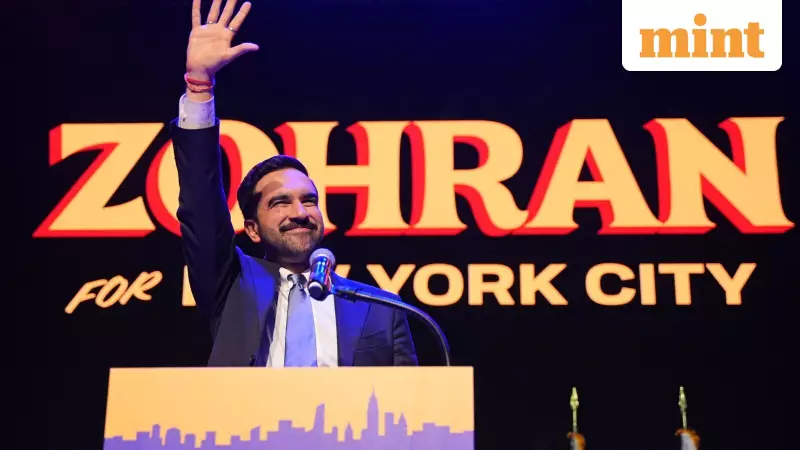
The political ascent of Zohran Mamdani in New York has sparked an uncomfortable but crucial debate about privilege, power, and social change. As a progressive politician campaigning on platforms of economic justice and equality, Mamdani represents a fascinating paradox that challenges conventional assumptions about who can effectively drive systemic reform.
The Privileged Reformer Paradox
Mamdani's background reveals the complex reality facing many modern social justice advocates. Born in Uganda to Indian parents who eventually secured US citizenship, his family's journey itself indicates a level of privilege that separates them from the average immigrant experience. The process of obtaining American citizenship, particularly for Indian families, requires substantial resources and social capital that many cannot access.
Despite declaring relatively modest personal assets estimated around $200,000, Mamdani has openly acknowledged his privileged upbringing. In his own words, "I never had to want for something, and yet I knew that was not in any way the reality for most New Yorkers." This self-awareness distinguishes him from many political figures, yet it doesn't necessarily resolve the fundamental question about his ability to dismantle systems that benefited people like him.

The Practical Vision for Social Justice
Mamdani's campaign platform focuses on tangible, achievable social justice measures rather than abstract ideals of absolute equality. His proposals include ensuring every New Yorker has access to affordable housing, providing free childcare for children aged six weeks to five years, and making public bus transportation free for all residents.
These practical initiatives aim to create what Mamdani describes as a society where everyone in New York is treated as middle-class in an affluent nation. This approach contrasts sharply with how India typically views its citizens, where most are considered poor unless they're wealthy enough to travel through airports.
The distinction between social justice and equality becomes crucial in understanding Mamdani's political philosophy. While social justice measures like affordable housing and free childcare benefit society broadly without necessarily threatening existing power structures, true equality would require dismantling the very advantages that privileged classes enjoy.
The Inevitable Constraints of System Beneficiaries
The fundamental challenge facing reformers like Mamdani lies in the inherent conflict between their privileged positions and their reformist ambitions. As beneficiaries of inequality, even well-intentioned individuals may unconsciously preserve elements of the system that advantages them.
Higher education institutions, intellectual circles, and professional networks that people like Mamdani inhabit often serve as gatekeeping mechanisms that maintain social stratification. True equality would necessarily diminish the quality of life and competitive advantages currently enjoyed by the privileged classes, creating an inherent tension for any reformer emerging from those same classes.
This dynamic explains why millionaires often position billionaires as the primary antagonists in inequality narratives, despite millionaires themselves benefiting significantly from systems that disadvantage the middle and working classes. In the competition for college admissions, political office, business opportunities, and social influence, millionaires compete directly with the middle class using their substantial head starts.
The Implementation Challenge
Beyond philosophical questions about privilege and reform, Mamdani faces substantial practical obstacles in implementing his agenda. Funding his proposed social programs in an already high-tax jurisdiction like New York presents significant financial challenges. The city already imposes substantial taxes on corporations and wealthy residents, leaving limited room for additional revenue generation.
Furthermore, the practical limits of mayoral power in New York's complex governance structure may prevent Mamdani from implementing some of his most ambitious proposals. Even with genuine commitment to reform, structural and political constraints could undermine his ability to deliver meaningful change.

Despite these challenges, Mamdani has succeeded in shifting New York's political conversation toward more progressive policies. His election represents a victory for advocates of expanded social services and greater economic equality, even if the ultimate implementation of his vision remains uncertain.
The case of Zohran Mamdani ultimately raises profound questions about social change and the agents best positioned to drive it. While privileged reformers can advance important social justice measures, whether they can fundamentally transform systems that created their privilege remains an open and deeply challenging question.