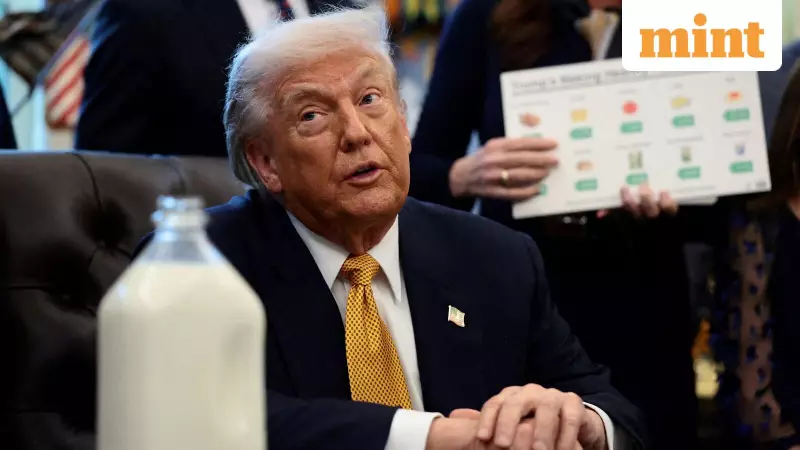
Whole Milk Makes a Comeback in US School Cafeterias
American children could soon enjoy whole milk in their school lunches once more. This change comes after a ban lasting nearly fifteen years. President Donald Trump signed the Whole Milk for Healthy Kids Act into law on Wednesday, January 14. The new legislation permits schools to offer whole milk alongside low-fat and fat-free varieties.
A Major Shift for School Meal Programs
The law is set to significantly expand milk choices for students. It impacts close to thirty million children who participate in national school meal programs. President Trump celebrated the signing as a win for the dairy industry. He made his remarks during a ceremony at the White House.
"These changes will be major victories for the American dairy farmers," Trump stated. "We love them, and they voted for me in great numbers." The Act fulfills a long-term goal for dairy producers. This push began during the Obama administration and has now reached its conclusion.

Alignment with MAHA Health Initiative
The new law also supports the administration's Make America Healthy Again agenda. Health Secretary Robert F. Kennedy Jr. champions this MAHA initiative. The program has backed other measures too. These include limiting childhood vaccines and reducing artificial food dyes in diets.
Kennedy spoke at the signing event. "This is exactly the kind of practical change that will make America healthy again," he said. The return of whole milk fits neatly into this broader health strategy.
Reversing a Decade-Long Policy
Since 2012, schools faced strict rules on milk. They could only serve low-fat or fat-free milk to students. This requirement came from the 2010 Healthy, Hunger-Free Kids Act. Former First Lady Michelle Obama spearheaded that school meal reform. Its primary aim was fighting childhood obesity across the nation.
Farm and dairy groups have long opposed this restriction. They argued it led to a drop in milk consumption among children. These organizations also claimed that higher-fat milk does not pose health risks to kids. The new law addresses these concerns directly.
Implementation and Updated Nutrition Standards
Under the freshly signed Act, schools now have the option to serve whole milk. They can also continue offering reduced-fat and lower-fat milk. Agriculture Secretary Brooke Rollins expects implementation to take several weeks. Schools will need time to adjust their meal plans and supply chains.
School meals must still meet USDA nutrition standards to receive federal funding. This requirement remains unchanged. Last week, the USDA and the Department of Health and Human Services released new Dietary Guidelines for Americans. These updated guidelines now encourage the consumption of full-fat dairy products. This marks a substantial shift from decades of official advice promoting low-fat options.
The return of whole milk represents a notable policy reversal. It reflects evolving views on nutrition and responds to sustained lobbying from the agricultural sector. Millions of American schoolchildren will soon experience this change firsthand in their daily lunches.