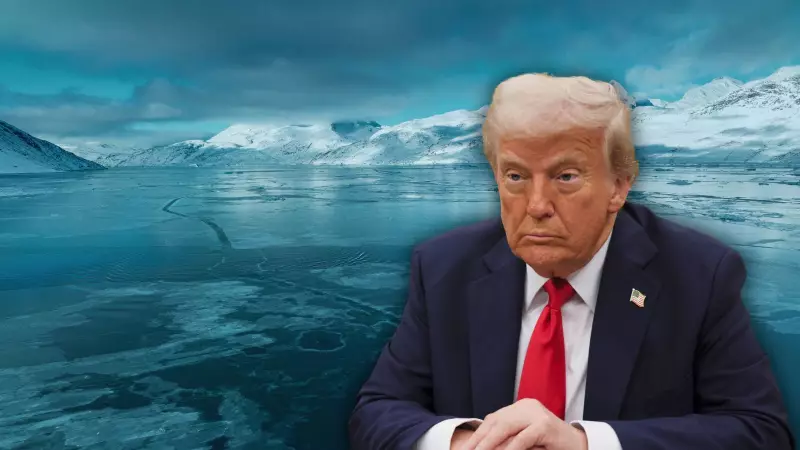
In a revelation that has reignited discussions about unconventional geopolitical strategies, the White House has officially confirmed that former President Donald Trump actively engaged in discussions about the United States purchasing Greenland. This confirmation sheds new light on a bold and controversial idea that captured global attention during his presidency.
The White House Confirmation and Strategic Rationale
A senior White House official, speaking on the condition of anonymity, stated that the proposition was "seriously discussed" at high levels within the Trump administration. The idea, while seemingly fantastical to many, was rooted in a clear strategic vision. Proponents within the administration viewed Greenland not as a mere frozen landmass but as a territory of immense geopolitical and economic value.
The primary motivations centered on the island's vast natural resources and its critical location in the Arctic region. As climate change opens new shipping routes and access to previously inaccessible mineral deposits, the Arctic has become a zone of intense global competition. The United States, through the acquisition of Greenland, sought to significantly bolster its strategic footprint in this emerging theater, countering the influence of rivals like Russia and China.

Historical Precedent and Modern Rejection
While the notion of buying Greenland was widely mocked and criticized in 2019, it is not without historical precedent. The United States has a history of territorial acquisition through purchase, most notably the Louisiana Purchase in 1803 and the acquisition of Alaska from Russia in 1867. The Trump administration's interest was framed within this tradition of expanding national territory through diplomatic and financial means.
However, the modern reality was starkly different. The proposal was met with swift and unequivocal rejection from Greenland and Denmark. The government of Greenland, which has self-rule but whose foreign and defense policy is managed by Denmark, declared the island "not for sale." Danish leaders labeled the idea "absurd," leading to a diplomatic spat where President Trump postponed a state visit to Denmark in response.
Lasting Implications and Future of Arctic Ambitions
The confirmation of these serious discussions leaves a lasting mark on international relations and highlights the shifting priorities of great powers. It underscores the increasing strategic importance of the Arctic in global politics. Even if the purchase never materialized, the episode signaled a more assertive and transactional U.S. approach to foreign policy under the Trump administration, one that viewed sovereign territory through a lens of national interest and deal-making.
Furthermore, the incident strained relations with key NATO ally Denmark and highlighted the aspirations of Greenland itself. For Greenlanders, the episode reinforced their desire for greater autonomy and control over their future, even as they navigate their relationship with Copenhagen and the economic benefits provided by the annual subsidy from Denmark.
The legacy of this discussion is a clear indicator that the Arctic will remain a contested space. While a literal purchase may be off the table, the United States, along with other nations, will continue to seek ways—through investment, partnerships, and military presence—to secure influence and access in this rapidly changing region. The idea of buying Greenland may have been shelved, but the strategic competition it represented is only intensifying.