In a significant geopolitical development, former US President Donald Trump has announced a prospective agreement involving Venezuela's interim government. The deal would see a massive volume of Venezuelan crude oil, currently under international sanctions, redirected to the United States.
The Core of the Trump Announcement
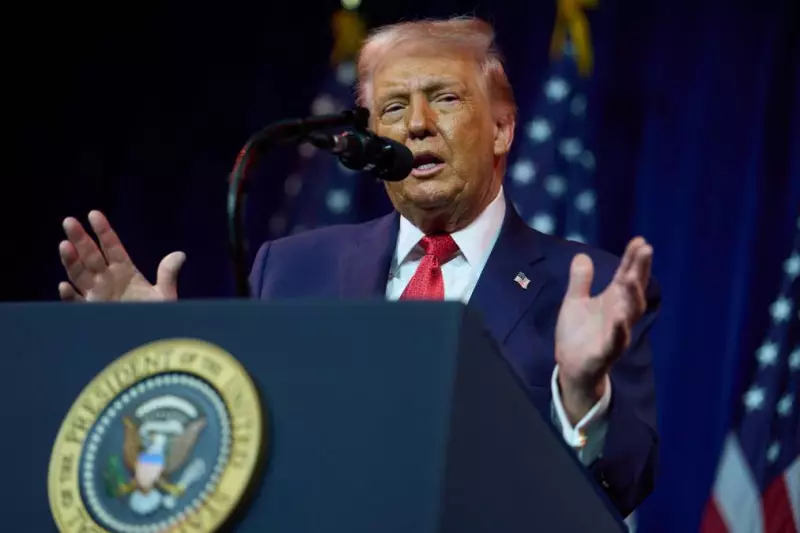
Speaking at a campaign event, Donald Trump disclosed that interim Venezuelan authorities are prepared to turn over a substantial amount of oil to the US. The quantity mentioned is between 30 to 50 million barrels of sanctioned oil. This announcement, made on January 7, 2026, points to a major shift in the complex relationship between Washington and Caracas.
The plan hinges on the recognition of Venezuela's interim government, which was established during Trump's previous term. This government, led by opposition figure Juan Guaido, was recognized by the US and several other nations as the legitimate authority following the disputed 2018 elections that kept Nicolas Maduro in power.

Unpacking the Geopolitical and Economic Implications
This proposed move carries heavy consequences for global oil markets and diplomatic relations. Venezuela sits on the world's largest proven oil reserves, but its production has collapsed due to years of mismanagement, corruption, and, critically, sweeping US sanctions designed to oust Maduro.
The redirection of 30-50 million barrels would represent a notable injection of crude into the US market. It could help bolster American energy security and potentially influence global oil prices. For the US-backed interim authorities, this deal would provide a crucial source of legitimate revenue, strengthening their position against Maduro's regime.
However, the plan faces immediate and substantial hurdles. The Maduro government still physically controls the oil fields, ports, and infrastructure. Any attempt to take possession and ship such a vast quantity of oil without the consent of the de facto authorities in Caracas would be logistically fraught and could escalate tensions.
Reactions and the Road Ahead
The announcement has been met with skepticism by many analysts. They view it as a campaign trail statement that outlines a desired policy outcome rather than a concrete, executable agreement. The legal and physical mechanisms for transferring this oil remain unclear.
Furthermore, the current US administration's stance on Venezuela policy may differ from Trump's proposed approach. The sustainability of such a deal and its alignment with broader international efforts regarding Venezuela are subjects of intense debate.
Key facts from the announcement remain central: the involvement of interim authorities recognized by Trump, the staggering volume of 30-50 million barrels, and the explicit goal of diverting sanctioned Venezuelan oil to American shores. This proposition underscores the enduring role of Venezuela's oil wealth as a pivotal chess piece in international politics and the ongoing struggle for power within the country.