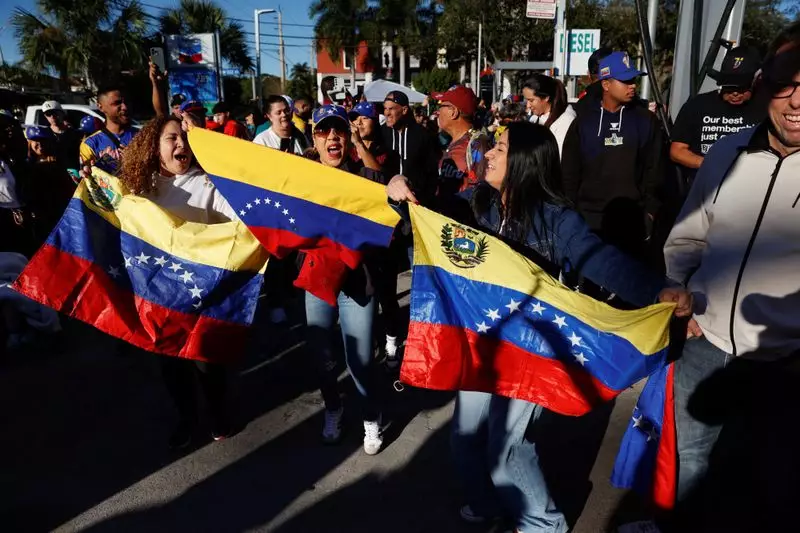
The streets of Doral, a city in South Florida often called 'Doralzuela' for its large Venezuelan population, were filled with the sounds of car horns and jubilant cheers. This outpouring of emotion came not from a sports victory, but from a seismic political development back in their homeland. The Venezuelan Supreme Tribunal of Justice issued a ruling that paves the way for the potential removal of President Nicolás Maduro, a figure long blamed for the country's profound economic and humanitarian crisis.
A Landmark Ruling Sparks Diaspora Celebrations
The celebrations were a direct response to a judicial decision from Caracas. Venezuela's highest court, the Supreme Tribunal of Justice (TSJ), made a historic ruling. It stated that the current head of the National Electoral Council (CNE) is illegitimate. More critically, the court asserted that the opposition candidate who won the 2024 primary, María Corina Machado, was unjustly barred from running. The TSJ declared that the ban against her holds "no legal effect."
This legal maneuver effectively clears a significant hurdle. It allows for the appointment of new CNE leadership and opens the door for Machado, or a candidate chosen by the opposition coalition, to challenge Maduro in a future election. For the exiled community in Florida, this was interpreted as the beginning of the end for Maduro's controversial tenure, which began in 2013 following the death of Hugo Chávez.

Voices from the Heart of Exile: Hope and Caution
The reaction among Venezuelans in the Doral and Weston areas was visceral and deeply personal. Many have fled the crippling hyperinflation, food and medicine shortages, and political repression that have defined Maduro's rule. Daniela Rojas, a 34-year-old resident, captured the collective sentiment, stating that the ruling felt like "the first concrete step toward freedom" after years of suffering and exile.
However, amidst the celebratory honking and flag-waving, a strong undercurrent of caution persisted. The Venezuelan diaspora is acutely aware of Maduro's history of consolidating power. Previous attempts at political transition have been thwarted. Several community leaders emphasized that while the court's decision is unprecedented, the international community must maintain pressure to ensure it is not reversed. Their hope is pinned on a transparent electoral process leading to what they call a "transitional government" to restore democracy.
The Road Ahead: Uncertainty and International Scrutiny
The path forward remains fraught with uncertainty. The ruling itself is complex and its implementation is not guaranteed. Key questions linger about the timeline for new CNE appointments and the scheduling of a presidential election. The opposition, though emboldened, remains fragmented and will need to present a united front.
International observers, including the United States government which has imposed heavy sanctions on Venezuela's oil sector, are watching closely. The Biden administration had previously hinted at relaxing some sanctions in exchange for democratic concessions. This court ruling is likely seen as a major step in that direction. The global response and continued diplomatic engagement will be crucial in determining whether this judicial decision translates into genuine political change on the ground.
For now, the Venezuelan community in South Florida has allowed itself a moment of unbridled optimism. Their celebration is a powerful testament to the enduring hope for their homeland's recovery, even from thousands of miles away. The coming weeks will reveal whether this hope is the dawn of a new chapter or another fleeting moment in Venezuela's turbulent politics.