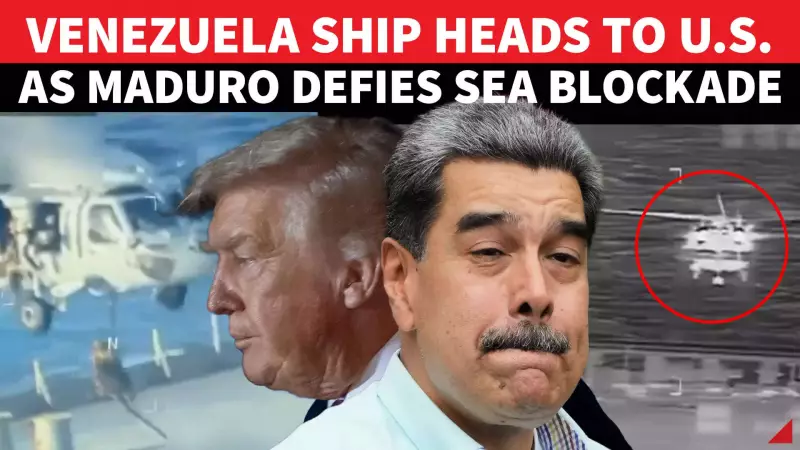
In a bold move that defies escalating pressure from Washington, an oil tanker owned by energy giant Chevron has set sail from Venezuela carrying a significant cargo of crude oil bound for the United States. The vessel, loaded with 500,000 barrels of Venezuelan crude, departed for a refinery in Texas on December 22, 2025, navigating through heightened maritime tensions in the Caribbean Sea.
US Intensifies Naval Pressure in Caribbean Waters
This shipment comes at a critical time. The United States has significantly increased its military and coast guard operations near Venezuelan waters. President Donald Trump had recently issued a stark warning, threatening a full-scale 'blockade' on vessels that are under American sanctions. Following this warning, the US Coast Guard has conducted multiple interception operations in the region, creating a volatile environment for commercial shipping.
The stated reasons from US officials for these aggressive actions are multi-fold. They cite the need to enforce existing economic sanctions against the Venezuelan government, address potential security threats, and combat alleged drug trafficking activities that they claim use maritime routes. This has turned the Caribbean into a zone of intense geopolitical friction.

Caracas Claims Legal Ground, Washington Sees Violation
Venezuela, under the leadership of President Nicolás Maduro, has firmly defended the legality of the oil shipment. The government in Caracas asserts that the crude transfer fully complies with all relevant international agreements and laws. They frame the US actions as an unlawful infringement on Venezuela's sovereignty and its right to engage in legitimate trade.
On the other side, American authorities view the movement of sanctioned oil as a direct challenge to their policy. The interception efforts are positioned as necessary enforcement actions. This clash is not just about oil; it's a broader struggle over international law, national sovereignty, and power projection at sea.
Broader Implications for Global Energy and Politics
The departure of the Chevron tanker towards Texas amidst US naval activity highlights the fragile and complex relationship between the two nations. It underscores how energy resources remain a central tool and point of conflict in international diplomacy. For global markets, such incidents contribute to uncertainty, potentially affecting oil prices and shipping security in a key regional corridor.
This event is a clear indicator of the rising tensions between Washington and Caracas. The situation remains fluid, with the potential for further escalations as the tanker continues its journey and the US maintains its heightened maritime posture. The world is watching to see if this incident culminates in a dramatic confrontation or becomes another chapter in the prolonged standoff.