US Vice President JD Vance Defends Controversial Immigration Operation in Minneapolis
US Vice President JD Vance has publicly defended thousands of federal agents conducting an aggressive immigration enforcement operation in Minneapolis, placing blame squarely on "far-left agitators" and uncooperative local officials for the resulting chaos on city streets. Vance's strong statement comes amid growing controversy over Immigration and Customs Enforcement (ICE) tactics that have reportedly led to the detention of multiple children, including a five-year-old boy.
Children Detained in Columbia Heights Suburb
According to reports, US immigration officials have detained at least four children from the Minneapolis suburb of Columbia Heights this week. Zena Stenvik, superintendent of the Columbia Heights Public School District, confirmed to Reuters that armed and masked ICE officers apprehended four students, listing two 17-year-olds, a 10-year-old, and the five-year-old boy, Liam Conejo Ramos.
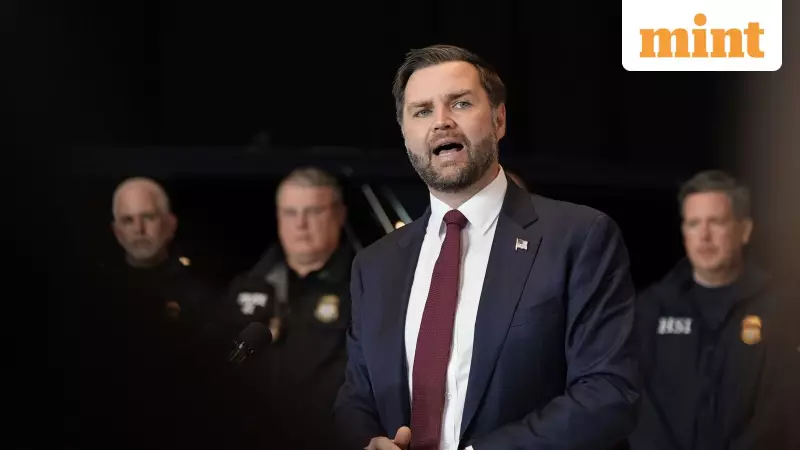
Vance made his remarks while flanked by federal officers and two Immigration and Customs Enforcement patrol cars bearing the slogan "Defend the Homeland." During his statement, he repeated his controversial assertion that Renee Good "rammed" her car into an ICE officer before being fatally shot on January 7, an incident that sparked weeks of unrest in the community.

"I think that Renee Good's death is a tragedy," Vance stated. "I also think that she rammed an ICE officer with her car."
Five-Year-Old Boy's Detention Sparks Outrage
In an incident that has provoked fresh outrage, school officials in Columbia Heights revealed on Wednesday that immigration officers had detained a five-year-old boy on Tuesday. Vance accused media outlets of misrepresenting the circumstances, claiming the boy was left behind when his father attempted to flee from federal agents.
"What are they supposed to do?" Vance questioned. "Are they supposed to let a 5-year-old child freeze to death?"
According to Rachel James, a city council member who witnessed the incident, the child watched masked agents take his father from their home driveway before officers pointed the boy to the back door of the house and motioned for him to knock. The boy was eventually taken from the scene by authorities.
Conflicting Accounts of Legal Status
The Department of Homeland Security stated that the boy's father, Adrian Alexander Conejo Arias, was in the country illegally but provided no details about criminal history. However, a lawyer representing the family presented a contradictory account, telling Reuters that his clients from Ecuador were in the US legally and had applied for asylum in 2024.
According to attorney Marc Prokosch, both the Ecuadorean boy and his father were legally in the country as asylum applicants before being transported to a family detention facility in Dilley, Texas. Prokosch is currently attempting to secure their release from detention.
The family's lawyer strongly denied that the father had tried to flee from authorities and revealed that school officials had offered to take in the boy during the operation. He explained that the mother remained inside the house at her husband's urging, fearing she would also be detained if she emerged.
ICE Procedures for Children During Operations
A Department of Homeland Security spokesperson clarified standard procedures during ICE operations, stating that parents targeted by enforcement actions are asked whether they want their children taken with them or placed with a designated person. This protocol has come under scrutiny following the Columbia Heights incidents, raising questions about its implementation during high-stress enforcement operations.
The Minneapolis immigration operation continues to generate significant controversy, with Vance's defense of federal tactics contrasting sharply with local officials' accounts of children being detained and families separated. The situation highlights ongoing tensions between federal immigration enforcement priorities and community concerns about enforcement methods affecting vulnerable populations.