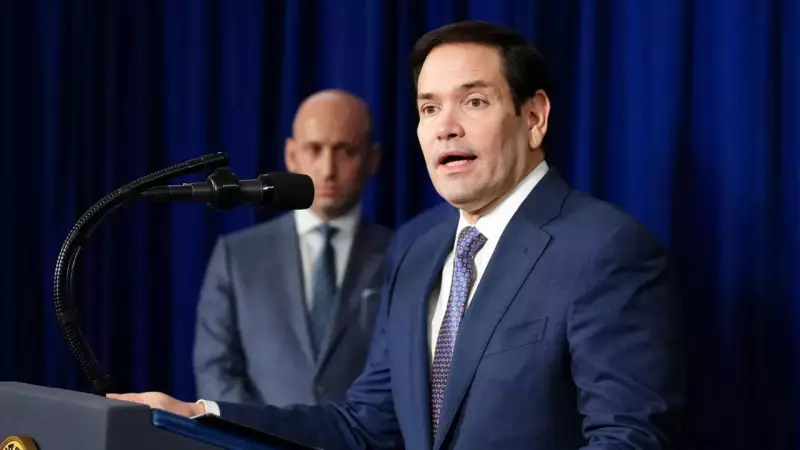
In a significant clarification, the United States government has stated it will not assume direct, day-to-day control over Venezuela's governance following the dramatic capture of its former president, Nicolás Maduro. The statement from Secretary of State Marco Rubio on Sunday sought to clarify earlier remarks by President Donald Trump about the US role in the South American nation.
Clarifying the US Stance on Venezuelan Governance
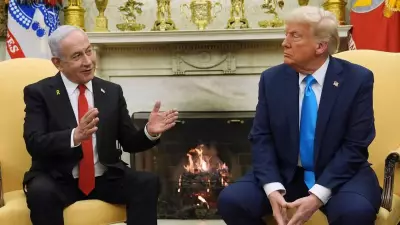
Secretary of State Marco Rubio explicitly stated that the United States would not take a hands-on, daily role in running Venezuela. This clarification came after President Donald Trump's comments that the US would "run" the country to ensure a "safe, proper and judicious transition." Trump had also suggested American oil companies could help fix Venezuela's infrastructure.
Rubio emphasized that the primary US leverage would remain the enforcement of the existing "oil quarantine" on sanctioned Venezuelan tankers. The strategy involves using this economic pressure to push for policy changes within the country, rather than imposing direct American administration.

The Operation and Charges Against Maduro
The clarification follows Operation Absolute Resolve, an intense US military operation executed on Saturday. The operation led to the capture of Nicolás Maduro and his wife, Cilia Flores, in Caracas. US forces removed the pair from the Venezuelan capital, flew them aboard the USS Iwo Jima in the Caribbean, and subsequently transported them to the Metropolitan Detention Center in Brooklyn, New York.
Maduro and Flores now face a series of serious charges in the Southern District of New York. The indictment includes conspiracy to commit narco-terrorism, cocaine importation, and weapons charges related to machine guns and destructive devices. Maduro has consistently denied allegations of being a cartel leader, accusing the US of using the drug war as a pretext to seize Venezuela's vast oil reserves, estimated at nearly 20% of the world's total.
Political Fallout and Future Uncertainty
In the immediate aftermath of Maduro's removal, Venezuela's Vice President, Delcy Rodríguez, was sworn in as the interim president by the nation's Supreme Court. Rodríguez stated she would comply with US requests but also referred to Maduro as the "only one president in Venezuela" on state television, highlighting the complex political landscape.
Despite the forceful operation and Trump's strong rhetoric, the US administration has not yet detailed a concrete plan for what form its involvement or any potential regime change will ultimately take. The future governance structure of Venezuela, holding the world's largest proven oil reserves, remains a critical and unresolved international question.