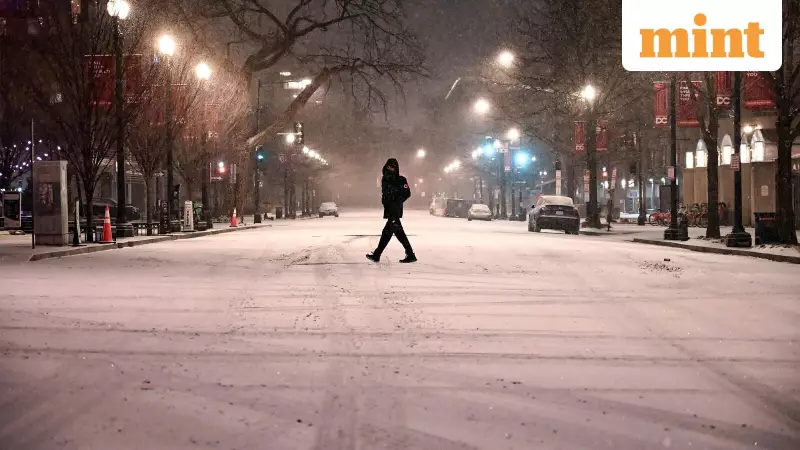
A historic and massive winter storm has swept across the United States, triggering widespread states of emergency, crippling power outages, and severe travel disruptions. Dangerously cold temperatures, combined with heavy snowfall and ice accumulation, threaten to paralyze large portions of the nation, affecting nearly half of the US population.
Federal and State Emergency Declarations Enacted
President Donald Trump approved federal emergency disaster declarations on Saturday for a dozen states, including South Carolina, Virginia, Tennessee, Georgia, North Carolina, Maryland, Arkansas, Kentucky, Louisiana, Mississippi, Indiana, and West Virginia. He characterized the storms as "historic" in nature. According to the Department of Homeland Security (DHS), at least 17 states and Washington, D.C., have declared weather emergencies in response to the severe conditions.
"We will continue to monitor, and stay in touch with all States in the path of this storm. Stay Safe, and Stay Warm," President Trump stated on Truth Social, underscoring the federal government's active involvement in the crisis management efforts.

Authorities Issue Extreme Cold Warnings and Precautions
DHS Secretary Kristi Noem urged residents to take immediate precautions, warning of prolonged periods of extreme cold and significant disruptions to daily life. "It's going to be very, very cold," Noem emphasized, advising Americans to stock up on essential supplies such as food and fuel. Utility crews are working tirelessly to restore power, but the scale of the outages presents a formidable challenge.
Nationwide Power Outages Mount to Over Half a Million
As of Sunday morning, January 25, more than 500,000 customers were without electricity across the country, according to data from PowerOutage.us. The states experiencing the largest outages include:
- Mississippi, with over 100,000 customers affected
- Texas, also reporting more than 100,000 customers without power
- Tennessee, similarly impacted with over 100,000 outages
Louisiana and New Mexico have also reported significant power disruptions, compounding the emergency situation.
US Power Grids Under Severe Strain and Emergency Measures
US grid operators have escalated emergency measures to prevent widespread blackouts as freezing temperatures place immense strain on generation and transmission systems. The Department of Energy (DOE) has issued emergency orders, authorizing grid operators to deploy backup generation resources to maintain stability.
Specific actions include:
- In Texas, ERCOT has been permitted to tap into backup power sources at data centers and major facilities.
- In the mid-Atlantic region, PJM Interconnection has been authorized to operate specified resources, overriding environmental or state law limitations to ensure grid reliability.
Energy and Industrial Operations Disrupted
The severe weather has forced energy companies, including Exxon Mobil and Celanese, to curtail operations at their Texas facilities due to the freezing conditions. Additionally, the Houston Ship Channel has been closed to vessel traffic as weather conditions continue to deteriorate, further impacting industrial and logistical activities.
Crippling to Catastrophic Weather Impacts Forecast
The National Weather Service has issued warnings that the storm is unusually expansive and long-lasting, affecting close to 180 million people across the nation. Forecasters predict:
- Heavy snow, sleet, and freezing rain across the eastern two-thirds of the country.
- Snow accumulations of 1 to 2 feet expected from Washington, D.C., to New York and Boston.
- Catastrophic ice accumulation in parts of the Southeast, posing severe threats to roads, trees, and power lines.
Nationwide Flight Cancellations and Travel Chaos
Air travel has been severely disrupted, with more than 13,500 US flights canceled since Saturday, including over 9,600 on Sunday alone, according to FlightAware. Nearly 97% of departing flights at Ronald Reagan Washington National Airport were canceled, highlighting the extent of the travel paralysis.
Major airlines have canceled thousands of flights, including:

- American Airlines: over 1,400 flights canceled
- Delta Air Lines and Southwest Airlines: approximately 1,000 flights each scrapped
- United Airlines: more than 800 flights canceled
- JetBlue: over 560 flights canceled, representing about 70% of its schedule
Airlines have warned passengers to anticipate further delays and cancellations as weather conditions continue to evolve.
Frigid Conditions to Linger After Storm Subsides
Officials have cautioned that dangerously cold conditions will persist even after the snowfall eases. Forecasts indicate that Washington, D.C., could see temperatures plummet to 5°F (-15°C), while New York City may experience lows near 8°F. Dangerous wind chills are expected to linger into the upcoming week, prolonging the risk to public safety and infrastructure.