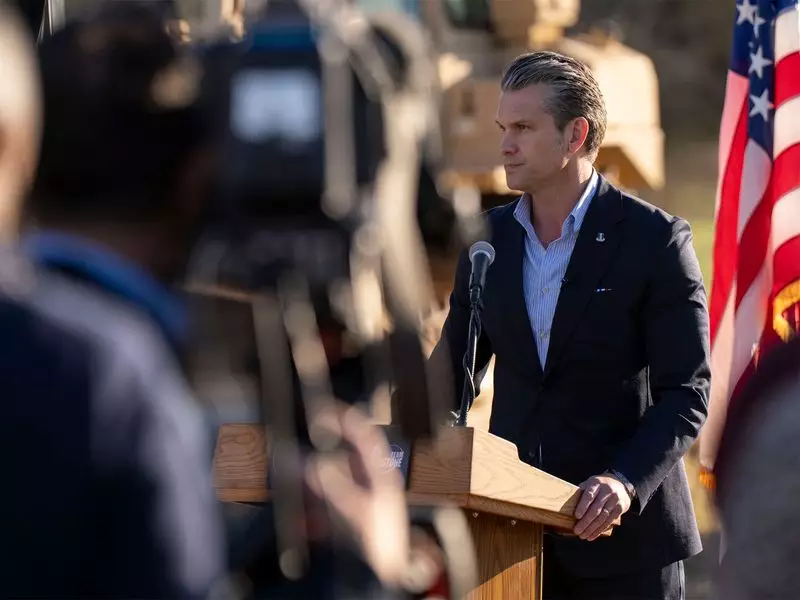
In a significant clarification of American foreign policy, the United States Secretary of the Army, Christine Wormuth, has drawn a stark contrast between potential actions in Venezuela and the 2003 invasion of Iraq. Wormuth emphasized that any U.S. involvement in the South American nation would be fundamentally different from the military campaign launched two decades ago under President George W. Bush.
A Deliberate Distinction from Past Military Action
Secretary Wormuth made these remarks during a recent discussion at the American Enterprise Institute, a prominent think tank in Washington D.C. Her comments come amidst ongoing political and humanitarian crises in Venezuela under the leadership of President Nicolás Maduro. The U.S. and numerous other nations recognize opposition figure Juan Guaidó as the country's legitimate interim president.
The core of Wormuth's argument rested on the nature of the potential intervention. She described the situation in Venezuela as "the exact opposite" of the rationale used for the Iraq War. Instead of a large-scale, unilateral military invasion, the U.S. approach, as outlined by the Army Secretary, focuses on supporting regional partners and Venezuelan democratic forces. This suggests a strategy built on diplomacy, sanctions, and backing for internal opposition, rather than direct combat deployment.

The Shadow of Iraq and Lessons Learned
The 2003 invasion of Iraq, based on disputed intelligence about weapons of mass destruction, resulted in a prolonged war, significant loss of life, and regional instability whose effects are still felt today. Wormuth's explicit reference to Iraq appears to be a deliberate effort to address these historical ghosts and reassure both domestic and international audiences.
This distinction is crucial for the Biden administration's foreign policy narrative. By distancing current strategies from the controversial Iraq model, officials like Wormuth aim to frame U.S. actions as more collaborative and legally grounded. The approach underscores a preference for working within multilateral frameworks and alongside Latin American allies to address the Venezuelan situation.
Implications for Regional Stability and U.S. Policy
Wormuth's statement has several important implications. Firstly, it signals to the Maduro regime that while all options might technically remain on the table, a direct U.S.-led military overthrow is not the current plan. Secondly, it aims to bolster the confidence of Venezuela's opposition and neighboring countries by affirming U.S. support, albeit of a specific kind.
Furthermore, this position helps the administration manage political pressures at home, where there are factions advocating for both stronger and more cautious actions. By ruling out an "Iraq-style" invasion, the administration sets clear public expectations. The focus, therefore, remains on economic pressure, diplomatic isolation of the Maduro government, and humanitarian aid, with the U.S. military's role likely confined to logistical or advisory support for partners.
In conclusion, Secretary Christine Wormuth's comments provide a clear window into the current U.S. strategic thinking on Venezuela. The explicit rejection of the Iraq template highlights a conscious effort to apply lessons from past foreign policy controversies. The path forward, as articulated, prioritizes regional cooperation and support for democratic forces within Venezuela over unilateral military action, marking a distinct chapter in how the United States engages with geopolitical crises in the 21st century.