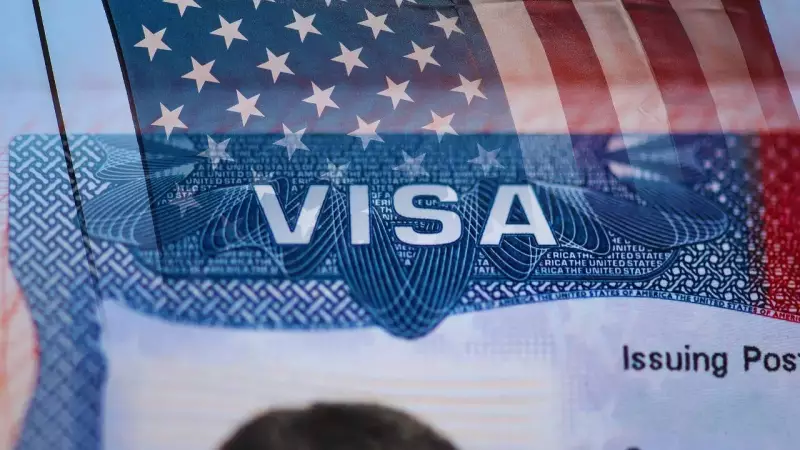
In a significant shift for international travel, the United States has dramatically expanded a pilot programme requiring certain foreign visitors to pay a hefty, refundable financial bond to obtain a temporary visa. The policy, which now encompasses 38 additional countries, mandates deposits of $5,000, $10,000, or even $15,000 as a guarantee that travellers will leave the country before their visa expires.
What is the US Visa Bond Programme?
The visa bond is a mandatory financial deposit tied primarily to B-1 (business) and B-2 (tourism) visas. Launched as a 12-month pilot by the U.S. State Department in August 2025, it acts as a financial guarantee for compliance with U.S. immigration laws. The required sum is determined during the visa interview and must be paid before a visa is issued, though payment does not guarantee approval.
The bond is fully refunded if the traveller departs the U.S. on time, does not travel after receiving the visa, or is denied entry at the port of arrival. However, the entire amount is forfeited if the traveller overstays their visa, fails to depart on time, or applies for asylum or refugee status. U.S. authorities frame the bond as a tool to encourage timely departure through financial accountability.

Major Expansion: Which Countries Are Now Affected?
Following recent additions like Turkmenistan and Bhutan, the U.S. State Department has now brought 38 more countries under the programme's scope. This expansion marks a major shift, moving the policy beyond its initial focus on Africa into Central Asia, South Asia, and the Pacific.
In South Asia, citizens of Bangladesh, Bhutan, and Nepal will be subject to the bond requirement for tourist or business visas. In Central Asia, the programme now covers Kyrgyzstan, Tajikistan, and Turkmenistan. For the Pacific, citizens of Fiji, Tonga, Tuvalu, and Vanuatu will be impacted when the expanded list takes effect on January 21.
For Indian travellers, there is a key relief: India is not currently on the visa bond list.
Logistical Hurdles and Financial Burden
The policy introduces severe logistical and financial challenges. Travellers from affected countries are only permitted to enter and exit the United States through three designated airports: Boston Logan International, New York's John F. Kennedy International, and Washington Dulles International. This rule poses a major hurdle, especially for visitors from Pacific islands, who may face complex, multi-stop journeys.
The financial impact is even more stark. The bond amount often far exceeds the average annual income in many of the newly added nations. For instance, Fiji's gross national income per capita was $5,680 in 2024, yet its citizens could be asked for a bond as high as $15,000. In Tajikistan, with a per capita GNI of just $1,650, even the lowest $5,000 bond is prohibitively expensive for most.
This disparity means the policy disproportionately affects middle-class travellers—small business owners, tourists, conference attendees, and those visiting family. Critics argue it effectively puts a price on admission, making a U.S. trip unaffordable for many legitimate travellers from developing nations.
Rationale and Criticism
The pilot programme stems from an analysis of visa overstay data, targeting countries with higher overstay rates, gaps in screening information, or citizenship-by-investment schemes. The official stance is that financial bonds encourage compliance without imposing outright travel bans.
However, the policy faces sharp criticism for its irony. It was announced shortly after President Donald Trump's September 2025 proposal for a "Gold Card" immigrant visa, which offers residency options to individuals who make $1 million "gifts" to the U.S. Department of Commerce. This contrast has led many to question the fairness and underlying motives of the bond requirement.
As the expanded programme becomes active, travellers from the listed countries must carefully weigh the significant financial commitment, complex travel logistics, and personal risk before applying. While U.S. officials see it as a compliance mechanism, the visa bond may fundamentally alter global travel patterns, potentially placing the dream of a U.S. visit out of reach for ordinary people across vast regions of the world.