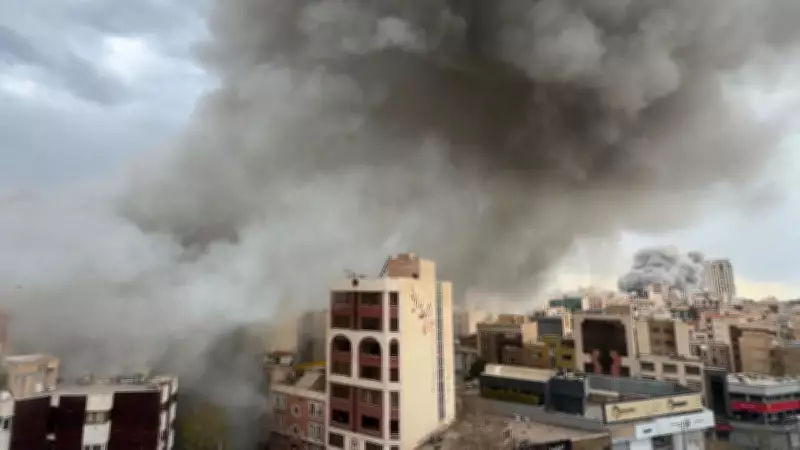
US Issues Urgent Travel Advisory for Middle East Amid Escalating Conflict
The United States has issued a stark warning to its citizens, urging them to "depart now" from more than a dozen countries across the Middle East. This urgent advisory comes as the intensifying conflict between Israel and Iran poses serious safety risks throughout the region.
Widespread Travel Warning Covers Multiple Nations
In an official statement posted online, Assistant Secretary Mora Namdar of the United States Department of State advised Americans to leave using available commercial transportation immediately. The comprehensive warning specifically covers Bahrain, Egypt, Iran, Iraq, Israel, the West Bank, Gaza, Jordan, Kuwait, Lebanon, Oman, Qatar, Saudi Arabia, Syria, the United Arab Emirates, and Yemen.
Those requiring assistance have been instructed to call emergency consular lines or enroll in the Smart Traveller program to receive critical updates from the nearest US embassy or consulate. This represents one of the most extensive travel advisories issued by the US government in recent years.

Military Operations Intensify Across Region
The travel alert coincides with US President Donald Trump's announcement that military operations against Iran could last "four to five weeks" and potentially longer. Washington and Israel have launched sustained strikes on Iranian military and nuclear-linked facilities, while Tehran and its regional allies have retaliated with missiles and drones targeting both Israel and Gulf states.
Secretary of State Marco Rubio emphasized the seriousness of the situation, telling reporters that "the hardest hits are yet to come." He added that the next phase would be "even more punishing on Iran," with White House objectives including dismantling Iran's missile capabilities, crippling its navy, and preventing it from obtaining nuclear weapons.
Conflict Spreads Beyond Israel-Iran Theater
The violence has already expanded beyond the immediate Israel-Iran confrontation. Saudi Arabia reported that drones targeted its Ras Tanura oil refinery, though air defenses successfully intercepted the attack. Qatar confirmed that its air force shot down two Iranian aircraft, while several ships have been struck in the strategically vital Strait of Hormuz, a critical artery for global oil supplies.
Additional reports indicate Israel has bombed Hezbollah targets in Beirut, while Gulf nations have vowed to defend themselves against further attacks. Unverified claims from Iranian state media suggest a US F-15 fighter jet was downed in Kuwait, with video purportedly showing a fighter jet engulfed in flames and pilots ejecting, though these reports remain unconfirmed by US authorities.
Mounting Casualties and Regional Impact
The escalating conflict has resulted in significant casualties on multiple sides. Iranian authorities report that hundreds have been killed in US-Israeli strikes, while in Israel, missile attacks have left civilians dead, including three siblings recently laid to rest in Jerusalem. The US military has confirmed that six American service members have died since the start of operations.
The situation remains fluid and dangerous, with diplomatic efforts struggling to contain the violence as military actions continue to escalate across the Middle East. The widespread travel advisory underscores the US government's assessment that the security situation in the region has deteriorated significantly and poses immediate risks to American citizens.