

Pentagon Orders 2,000 Paratroopers to Middle East as Iran Crisis Escalates
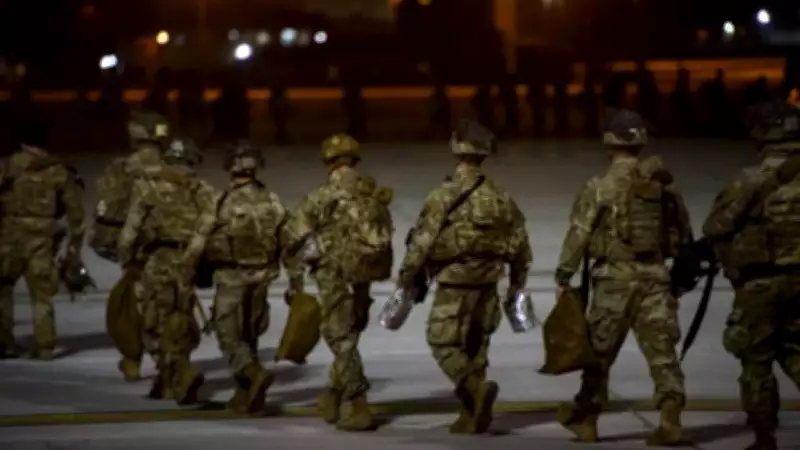
The United States Department of Defense has initiated a significant military movement, directing approximately 2,000 soldiers from the elite US Army 82nd Airborne Division to begin deployment to the Middle East region. This strategic decision provides President Donald Trump with expanded military capabilities as he evaluates a new diplomatic approach toward Iran, according to two senior Defense Department officials who disclosed the information on Tuesday.
Rapid Deployment Force Activated
The mobilized troops represent a crucial component of the division's "Immediate Response Force," a specialized brigade consisting of around 3,000 highly trained soldiers engineered for global deployment within an astonishing 18-hour window. The deployment contingent includes Major General Brandon Tegtmeier, the commanding officer of the 82nd Airborne Division, accompanied by dozens of essential staff members and two battalions each comprising about 800 paratroopers. Officials provided these details under strict anonymity due to the operational sensitivity surrounding the mission.
Escalating Military Presence in the Region
This latest troop movement coincides with the ongoing deployment of approximately 4,500 United States Marines already en route to the Middle East theater. Combined, these deployments elevate the total number of additional US ground forces dispatched since the commencement of the current conflict to nearly 7,000 personnel. This substantial reinforcement marks a clear escalation in military posture, with around 50,000 American troops currently assigned to the comprehensive operation designated as Epic Fury, which spans strategic locations across the Middle East, Europe, and the United States mainland.

Strategic Objectives and Potential Targets
While the precise final destination for the paratroopers remains officially undisclosed for security reasons, military analysts confirm their positioning will place them within effective operational range of Iran. One potential strategic objective under consideration is Kharg Island, Iran's primary oil export facility located in the northern Persian Gulf. This location has seen significant military activity, with US warplanes conducting strikes on more than 90 military targets on the island this month alone.
Simultaneously, about 2,300 Marines from the 31st Marine Expeditionary Unit are anticipated to arrive in the Middle East this week. Military commanders maintain multiple deployment options for these forces, including potential operations to secure Kharg Island or to assist in reopening the strategically vital Strait of Hormuz, which Iran has effectively blocked for most commercial maritime traffic. An additional Marine contingent of similar size from the 11th Marine Expeditionary Unit departed from Southern California last week and is projected to reach the region by mid-April, according to Pentagon officials.
Operational Roles and Capability Considerations
Military planners have identified specific roles for Marine units in potential early-phase operations, particularly focusing on repairing the damaged airfield infrastructure on Kharg Island following recent US airstrikes. Once restored to operational status, this airstrip could facilitate the United States Air Force in transporting additional troops and critical equipment using C-130 Hercules cargo aircraft, significantly enhancing logistical capabilities.
In such operational scenarios, paratroopers from the 82nd Airborne Division could be deployed to reinforce Marine units on the ground. However, defense officials have noted an important tactical consideration: while these rapid deployment forces offer exceptional speed and flexibility, they currently lack heavy equipment such as armored vehicles, which could prove essential for defense against potential Iranian counterattacks or sustained ground engagements.
The deployment of these elite forces underscores the United States' commitment to maintaining military readiness and strategic options in one of the world's most volatile regions, as diplomatic efforts with Iran continue to unfold amidst heightened tensions and complex geopolitical calculations.






