Bipartisan US Senate Delegation to Tour Key Asian Allies Ahead of Trump's Beijing Summit
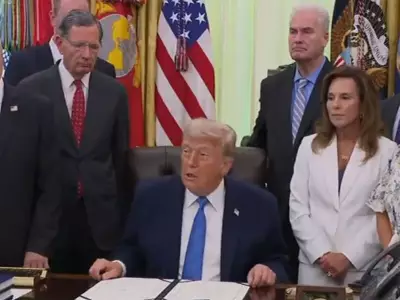
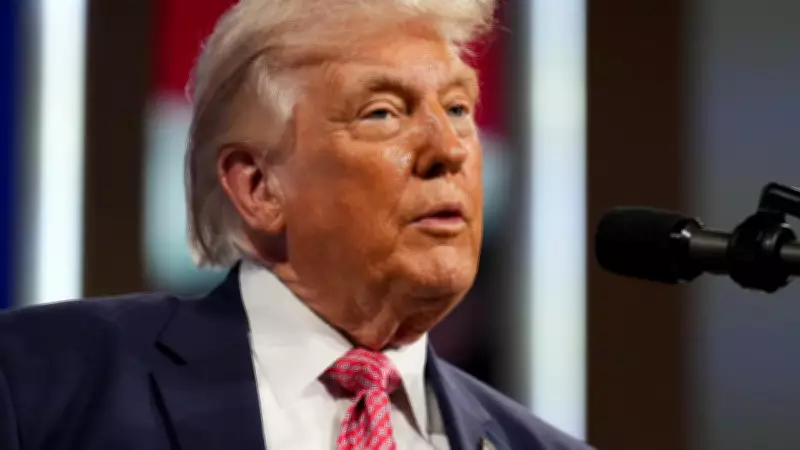
A bipartisan delegation of four influential United States senators is preparing to embark on a significant diplomatic tour of Taiwan, Japan, and South Korea in the coming days. This strategic visit is scheduled to occur just ahead of President Donald Trump's planned trip to Beijing in May, representing a concerted effort to reinforce and solidify American alliances across the critical Indo-Pacific region.
Delegation Composition and Itinerary Details
The high-level delegation is being led by Senator Jeanne Shaheen of New Hampshire, who serves as the top Democrat on the powerful Senate Foreign Relations Committee. She is joined by Republican Senators John Curtis and Thom Tillis, alongside Democratic Senator Jacky Rosen. According to official statements, the lawmakers are expected to engage in comprehensive meetings with political leaders, defense officials, and key stakeholders across all three destinations during their tour.
The primary objective of these discussions is to provide explicit reassurances of sustained United States support and to demonstrate the enduring nature of these crucial partnerships. "This bipartisan delegation demonstrates Congress' commitment to these alliances and partnerships is unwavering and will endure well beyond any one administration," Senator Shaheen emphasized in a statement that was widely quoted by the Associated Press.

Taiwan Visit Expected to Draw Significant Scrutiny from China
The delegation's scheduled stop in Taiwan is particularly noteworthy and is anticipated to attract intense scrutiny from the Chinese government. Beijing has consistently opposed such high-level engagements between United States officials and Taiwanese representatives, viewing them as direct challenges to China's longstanding claim over the self-governed island territory.
Taiwan continues to depend heavily on American backing for its security and international standing. However, recent policy moves by the Trump administration, including active discussions around potential arms sales and shifting diplomatic postures, have raised important questions about the future trajectory of United States policy toward Taiwan. Senator John Curtis underscored the significance of this relationship, stating, "Our alliance with Taiwan is one of the most strategically and morally significant partnerships America has in the Indo-Pacific."
Regional Context and Broader Strategic Implications
This diplomatic mission unfolds against a complex backdrop of regional tensions and global geopolitical maneuvering. Analysts in both Washington and Beijing believe that Chinese President Xi Jinping may potentially use the upcoming summit with President Trump to advocate for a softer United States stance on Taiwan and other sensitive regional issues.
Simultaneously, there are growing concerns among some United States lawmakers that American foreign policy actions in other volatile regions, such as Venezuela and Iran, could inadvertently create strategic openings for global rivals like China and Russia to expand their influence and presence across Asia and beyond.
Economic Dimensions and Trade Relations with Taiwan
Beyond security considerations, the economic relationship between the United States and Taiwan remains a critical area of focus. The United States relies heavily on advanced Taiwanese semiconductor production, which has contributed significantly to a substantial trade imbalance. Official data indicates that the trade deficit reached nearly USD 127 billion during the first eleven months of 2025 alone.
In a positive development for bilateral economic ties, Washington and Taipei reached a landmark agreement in February that effectively eliminates approximately 99 percent of existing trade barriers between the two economies. This agreement is viewed as a major step toward strengthening economic cooperation and reducing friction in this vital partnership.
The senators' visit represents a multifaceted effort to address security, diplomatic, and economic priorities while navigating the intricate dynamics of United States-China relations and reinforcing America's strategic posture across the Indo-Pacific region ahead of President Trump's important diplomatic engagements in Beijing.