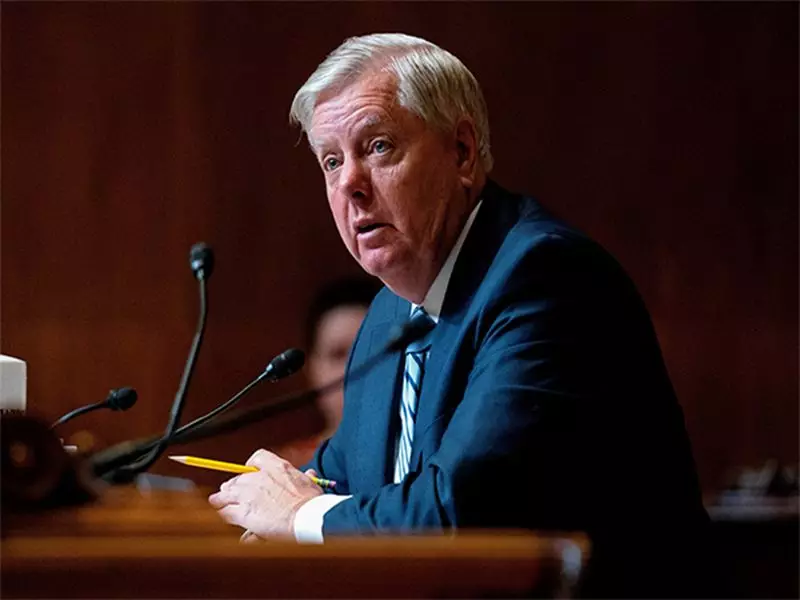
In a fiery condemnation that has escalated diplomatic rhetoric, prominent United States Senator Lindsey Graham has launched a scathing verbal attack on Iran's Supreme Leader, Ayatollah Ali Khamenei. The Republican senator from South Carolina branded Khamenei a "religious Nazi who kills his own people" during a television interview, signaling a sharp hardening of US political stance towards Tehran.
The Provocation Behind the Outburst
Senator Graham's explosive comments came in the direct aftermath of a tragic incident in Iran. On January 3, 2024, two powerful explosions ripped through a crowd commemorating the anniversary of General Qasem Soleimani's assassination in the city of Kerman. The blasts, which Iranian state media labeled a "terrorist attack," resulted in the deaths of at least 84 people, with many more injured. While no group immediately claimed responsibility, the Islamic State (ISIS) later stated it was behind the attack.
Graham connected this domestic violence to Iran's broader regional actions. He argued that the Iranian regime, which he accused of sponsoring terrorism across the Middle East, is now facing blowback within its own borders. "The religious Nazi, Khamenei, kills his own people," Graham stated, drawing a parallel between the Supreme Leader's governance and the atrocities of Nazi Germany. He emphasized that the people killed in Kerman were Iranians, allegedly victims of their own government's policies.

A Call for Decisive US Action Against Iran
The senator's rhetoric was not limited to condemnation. He used the platform to advocate for a significantly more aggressive American foreign policy. Graham explicitly called on the Biden administration to strike key targets inside Iran as a retaliatory measure. His proposed targets were symbolic of Iran's military and strategic apparatus: the oil refineries and the Islamic Revolutionary Guard Corps (IRGC), the country's powerful military force.
This call to action is rooted in a long-standing accusation from the US and Israel that Iran provides material support, including weapons and funding, to militant groups like Hamas in Gaza and Hezbollah in Lebanon. Graham framed a direct strike on Iranian soil as a necessary step to "break the cycle" of proxy warfare and to deter future attacks orchestrated by Tehran. He warned that failure to act decisively would only embolden the Iranian leadership and lead to further regional instability.
Context and Implications of the Escalating Language
Lindsey Graham's choice of words marks a significant intensification in the diplomatic discourse between the US and Iran. The term "religious Nazi" is historically charged and designed to portray the Iranian theocracy as fundamentally evil and genocidal. This language reflects the deep-seated hostility within a powerful faction of the US political establishment towards the Islamic Republic.
The timing of this statement is also critical. It comes amidst the ongoing Israel-Hamas conflict in Gaza, where Iran's support for Hamas is a major point of contention. Graham and other hawkish lawmakers are pressuring the White House to hold Iran directly accountable for the actions of its allied militias. However, such direct military action carries the immense risk of triggering a full-scale regional war, a scenario the Biden administration has so far sought to avoid through measured responses.
The international community is now watching closely. While the US has conducted strikes against Iran-backed militias in Iraq and Syria, it has stopped short of hitting mainland Iran. Graham's public advocacy for crossing that red line highlights the growing domestic political pressure for a more confrontational approach. The Iranian government, for its part, has consistently denied direct involvement in the October 7 Hamas attack and has vowed severe retaliation for any strike on its territory.
Ultimately, Senator Graham's blistering critique underscores a dangerous and volatile phase in US-Iran relations. The combination of a major terrorist attack inside Iran, ongoing proxy conflicts, and escalating rhetoric from Washington creates a tinderbox situation. The world waits to see whether words will translate into actions that could reshape the geopolitical landscape of the Middle East.