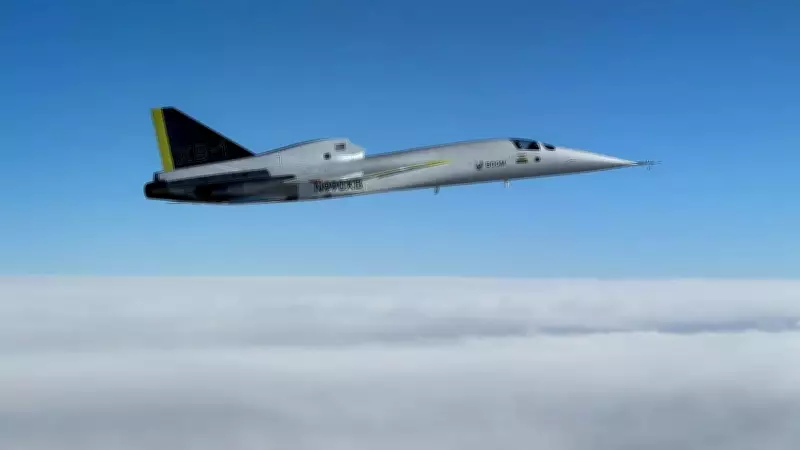
The United States Department of Transportation announced on Tuesday its intention to reverse a 53-year-old ban on supersonic flights over land, paving the way for a new era of commercial air travel. The move comes after NASA successfully tested the experimental X-59 aircraft, which can fly faster than the speed of sound without producing the loud sonic booms that have historically accompanied such flights.
Background of the Ban
The ban on supersonic flights over US land was enacted in 1973, effectively grounding commercial supersonic travel within the country. The restriction was primarily due to the disruptive sonic booms generated by aircraft breaking the sound barrier, which caused noise pollution and potential property damage. Since then, only limited supersonic flights have been permitted over water or in designated airspace.
NASA's X-59 Breakthrough
NASA's X-59 Quiet SuperSonic Technology (QueSST) aircraft, developed in collaboration with Lockheed Martin, achieved a significant milestone earlier this year. The X-59 is designed to produce a soft "thump" instead of a loud boom, reducing noise levels to about 75 perceived level decibels (PLdB), comparable to a car door closing. According to NASA officials, the successful test flights demonstrated that supersonic travel can be achieved without the disruptive noise that led to the original ban.

Impact on Commercial Aviation
The Department of Transportation's proposal would allow aircraft that meet new noise standards to operate supersonically over land. This could revolutionize commercial aviation by cutting transcontinental flight times in half. For example, a flight from New York to Los Angeles could take just over two hours instead of the current five. Airlines and manufacturers like Boom Supersonic and Aerion have already expressed interest in developing supersonic passenger jets.
Transportation Secretary said, "This is a historic step toward bringing supersonic travel to the American public. We are committed to ensuring that these flights are safe and environmentally responsible."
Environmental and Regulatory Considerations
The Federal Aviation Administration (FAA) will work with NASA and international partners to establish new noise certification standards. Environmental groups have raised concerns about increased fuel consumption and emissions, but proponents argue that newer supersonic aircraft designs are more fuel-efficient and could use sustainable aviation fuels. The FAA estimates that the new rules could take effect by 2027, pending public comment and final approval.
According to a NASA spokesperson, "The X-59 data shows that supersonic flight can be quiet enough for overland travel. We are excited to see this technology move from research to reality."
Next Steps
The Department of Transportation will publish a notice of proposed rulemaking in the coming weeks, inviting public feedback. The FAA will also conduct environmental assessments and noise impact studies. If approved, the new regulations could open the door for commercial supersonic flights by the early 2030s.