In a dramatic development, US President Donald Trump has declared that major American energy corporations will be permitted to enter Venezuela and exploit its enormous crude oil reserves. This announcement follows a US military operation that resulted in the capture of Venezuela's President, Nicolás Maduro.
Military Operation Precedes Economic Announcement
The bold statement from President Trump came just hours after Washington confirmed the successful capture of Nicolás Maduro in an overnight military raid. According to reports from AP, Maduro and his wife were taken from a military base and transported out of the country on a US warship. Trump stated they are en route to New York to face criminal charges.
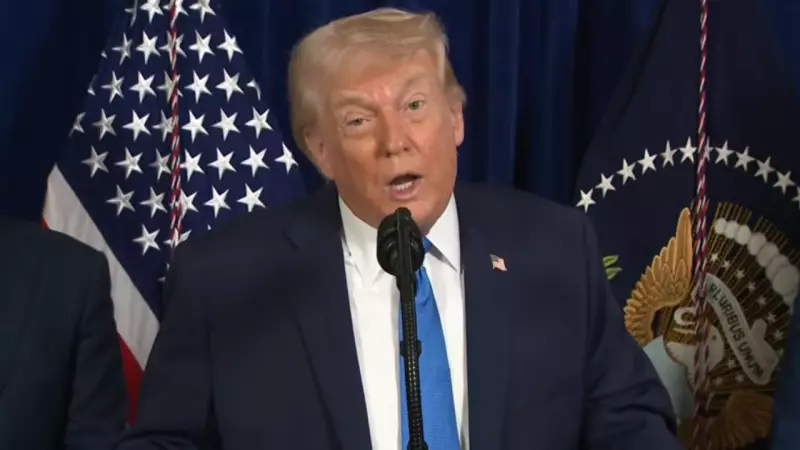
Speaking at a press conference on Saturday, Trump praised the operation, which he claimed to have watched in real-time, as "extremely successful." He added that US forces were ready for further action if needed. The President also issued a stark warning to other political and military figures in Venezuela, suggesting that "what happened to Maduro can happen to them."

Billions in Investment for a "Total Bust" Sector
Trump outlined a vision where US oil giants would pour billions of dollars into repairing Venezuela's severely damaged oil infrastructure to restart production. "We’re going to have our very large United States oil companies, the biggest anywhere in the world, go in, spend billions of dollars, fix the badly broken infrastructure, and start making money for the country," he said.
He described Venezuela's oil sector, which sits atop the world's largest proven crude reserves estimated at around 303 billion barrels, as a "total bust" for years. Despite these vast reserves, accounting for roughly 17% of the global total, the country currently produces only about one million barrels per day. Much of this output is sold on the black market at heavy discounts due to US sanctions imposed since 2019.
Sanctions Remain, But a New "Partnership" is Proposed
Interestingly, President Trump made it clear that the existing US oil embargo on Venezuela "remains in full effect." However, he proposed a new "partnership" that would see the United States sell "large amounts" of Venezuelan oil to other countries. He claimed this arrangement would make Venezuelans "rich, independent and safe."
Trump reiterated these points in a television interview, stating the US would be "very strongly involved" in Venezuela's oil industry, though specific details were not provided. The legal framework and timeline for US oil firms' entry remain unclear. This move signals a far deeper American involvement than the current limited operations by companies like Chevron, which operates under sanctions waivers.
The military pressure campaign preceding the raid included the US seizure of at least two oil tankers that Washington accused of violating sanctions. Trump again accused Caracas of using oil revenues to finance "drug terrorism, human trafficking, murder and kidnapping," allegations consistently denied by the Venezuelan government.
Finally, Trump stated that the US plans to administer Venezuela temporarily until a "safe, proper and judicious transition" of power can be achieved, marking a significant shift in the geopolitical and economic landscape of the region.