US Military Deploys Laser System to Down Government Drone Near Texas Border
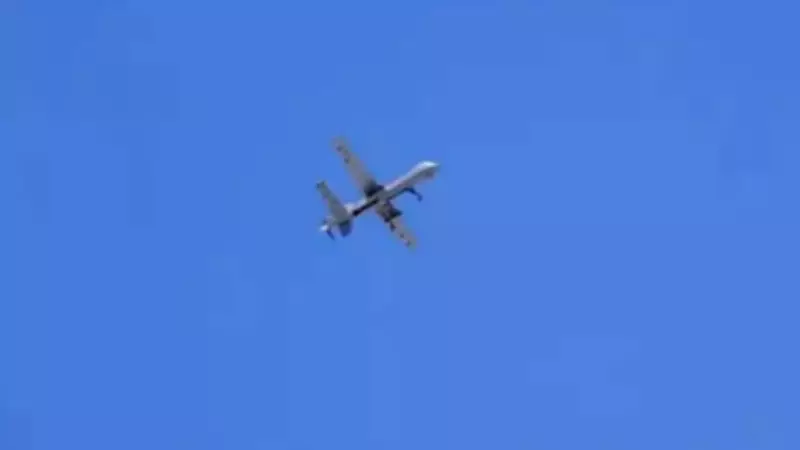
The United States military has utilized a high-energy laser system to shoot down a government-operated drone near Fort Hancock, Texas, according to a report from Reuters citing congressional aides. This incident has prompted temporary flight restrictions in the surrounding airspace, raising significant concerns about coordination among federal agencies.
Details of the Drone Shootdown and Airspace Impact
The aircraft that was brought down belonged to the Customs and Border Protection (CBP) agency. Lawmakers were informed that the Pentagon deployed a laser-based counter-drone system in the border region, an area frequently experiencing drone activity linked to Mexican drug cartels. In a joint statement, the Pentagon, the Federal Aviation Administration (FAA), and CBP confirmed that the military employed a "counter-unmanned aircraft system... to mitigate a seemingly threatening unmanned aerial system operating within military airspace."
The agencies emphasized that the episode "took place far away from populated areas and there were no commercial aircraft in the vicinity." They added that these organizations "will continue to work on increased cooperation and communication to prevent such incidents in the future."

Criticism Over Interagency Coordination and Policy Failures
Despite these assurances, the incident has exposed glaring coordination gaps between federal agencies. Senior House Democrats, including Representatives Rick Larsen, Bennie Thompson, and Andre Carson, who serve on committees overseeing aviation and homeland security, sharply criticized what they described as poor interagency communication. The lawmakers stated they had previously raised concerns about the administration’s handling of counter-drone policy.
In a statement, the trio noted they warned months ago that the White House's decision to sidestep a bipartisan proposal to train counter-drone operators and address coordination issues "was a short-sighted idea." According to Reuters, they declared, "Now, we're seeing the result of incompetence."
Expanded Flight Restrictions and Recent Airspace Disruptions
Following the shootdown, the FAA issued a notice citing "special security reasons" and broadened existing flight restrictions near the Mexican border, expanding the restricted radius "to ensure safety." The agency maintained that this move did not affect commercial air traffic due to the area’s remote location.
The Fort Hancock incident comes just weeks after another airspace disruption in nearby El Paso. Earlier this month, the FAA temporarily halted traffic at the city’s airport for ten days before abruptly lifting the restriction roughly eight hours later. Media reports indicated that concerns over testing of the same laser-based anti-drone system prompted the initial shutdown. Reuters and other sources reported that the FAA ultimately agreed to withdraw the El Paso restrictions after the Pentagon committed to pausing further laser testing pending a safety review.
Calls for Formal Inquiry and Ongoing Scrutiny
Congressional aides revealed that the Pentagon and CBP had earlier indicated they believed the laser system could be deployed without prior FAA approval. Senator Tammy Duckworth, who chairs the Senate aviation subcommittee for Democrats, has called for a formal inquiry into both the drone shootdown and the El Paso airspace episode. Duckworth told Reuters, "The Trump administration’s incompetence continues to cause chaos in our skies."
Lawmakers were reportedly briefed late Thursday about both developments, as questions mounted over how federal agencies coordinate when deploying emerging counter-drone technology in civilian airspace. This incident underscores the challenges in balancing national security measures with airspace safety and interagency collaboration.