US Justice Department Threatens Fed Chair Powell with Criminal Charges
The US Justice Department has taken the extraordinary step of threatening Federal Reserve Chair Jerome Powell with criminal indictment. This move has sparked a fresh and intense confrontation between the White House and America's central bank. The situation is raising serious concerns about the Federal Reserve's independence and the future direction of US monetary policy.
Subpoenas Target Powell's Testimony on Building Renovations
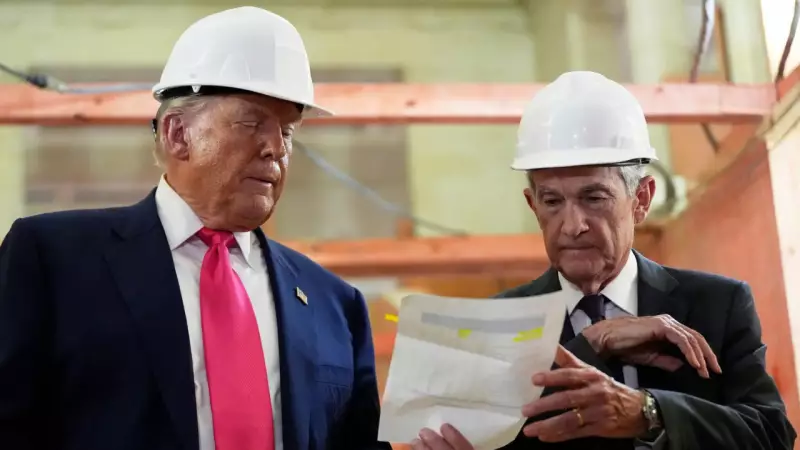
Federal authorities served subpoenas on Friday. These legal documents relate directly to Chair Powell's testimony from June. That testimony focused on the massive $2.5 billion renovation project for Federal Reserve buildings, including its iconic Washington headquarters. The Associated Press first reported this development.
Jerome Powell has responded forcefully. He claims the legal action is merely a pretext. Powell asserts the real goal is to pressure the Federal Reserve into complying with President Donald Trump's demands for sharp interest rate cuts.

"I have carried out my duties without political fear or favor," Powell stated in a video message released Sunday night. "My focus remains solely on our mandate of price stability and maximum employment. Public service sometimes requires standing firm in the face of threats."
Financial markets reacted immediately and negatively. US stock prices fell on Monday following Powell's disclosure about the subpoenas. Investors clearly expressed their worry over the escalating political pressure on the central bank.
Trump's Long-Running Pressure Campaign on the Fed
President Trump has criticized Jerome Powell repeatedly over the past year. His main complaint centers on Powell's resistance to aggressive interest rate reductions. Trump argues that inflation no longer poses a threat to the economy. He believes lower rates are essential to support continued economic growth.
Chair Powell maintains a different view. He points out that inflation remains elevated. Powell partly attributes this to the impact of tariffs imposed during the Trump administration. The Fed chair has consistently favored a more cautious and measured approach to monetary policy.
This conflict reveals a much deeper dispute. At its core is a fundamental question about how much influence the White House should wield over monetary policy decisions. Jerome Powell's current term as Fed chair concludes in May. However, he could potentially remain on the Federal Reserve's board of governors until January 2028. Such a move would prevent President Trump from immediately filling another vacancy on the board.
Kevin Hassett serves as director of the White House National Economic Council. He is also a potential candidate to succeed Powell. When asked whether Powell planned to stay on as a Fed governor, Hassett said he was unaware of Powell's intentions.
"I've not talked to Jay about that," Hassett stated simply.
President Trump signaled his intent to escalate this confrontation back in late December. He told reporters his administration would "probably" sue Powell over the costs of the Federal Reserve building renovations.
"He's just a very incompetent man," Trump said of Powell. "But we're going to probably bring a lawsuit against him."
Economists Sound Alarm Over Fed Independence
The Justice Department's legal action has drawn sharp and immediate criticism from economists and former policymakers. This group includes several individuals who previously led the Federal Reserve themselves.
A bipartisan group of former Fed chairs and top economists issued a strong statement on Monday. They declared the White House's actions represent "an unprecedented attempt to use prosecutorial attacks to undermine" the central bank's cherished independence.
"This is how monetary policy is made in emerging markets with weak institutions," the statement warned. "The consequences are highly negative for inflation and the broader functioning of their economies. This approach has no place in the United States. Our greatest strength is the rule of law, which forms the very foundation of our economic success."

The statement carried significant weight. It was signed by former Fed chairs Ben Bernanke, Janet Yellen, and Alan Greenspan. Former Treasury secretaries Henry Paulson and Robert Rubin also added their names.
Even some of Powell's critics expressed discomfort. Republican Senator Kevin Cramer of North Dakota has frequently criticized the Fed chair. Yet he stated he does not believe Powell is "a criminal." Senator Cramer added he hopes "this criminal investigation can be put to rest quickly," according to a CNBC report.
Jerome Powell has largely avoided public confrontation since President Trump began attacking him last year. He now says the subpoenas are designed to undermine the Federal Reserve's ability to set policy independently. Powell once again described them as a "pretext" to force interest rate cuts.
Analysts view this episode as one of the most direct challenges to Federal Reserve autonomy in modern US history. The implications are far-reaching. They affect financial markets, borrowing costs for consumers and businesses, and the health of the broader American economy.