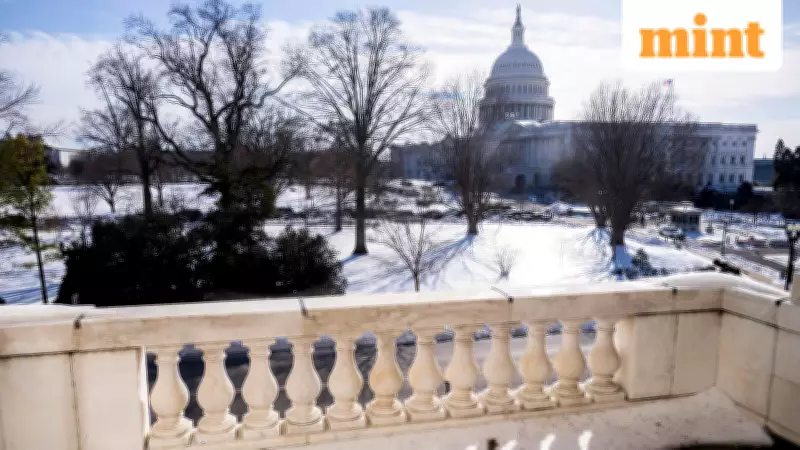
Partial US Government Shutdown Begins with Different Dynamics Than Previous Closure
The partial government shutdown that commenced on Saturday presents distinct characteristics when compared to last fall's record-long closure which extended for 43 days. While essential government operations will not cease entirely, federal employees face the prospect of going unpaid if the political standoff persists, with some workers potentially being placed on furlough status.
Immediate Impacts on Key Agencies and Functions
The temporary lapse in government funding significantly affects the Pentagon along with crucial agencies including the Department of Transportation and the Department of Homeland Security, which oversees the Federal Emergency Management Agency (FEMA).
Experts emphasize that FEMA should maintain adequate financial resources to address the ongoing winter storm impacting substantial portions of the country. The agency possesses approximately USD 7 to 8 billion specifically allocated for disaster response and recovery operations, complemented by personnel dedicated to managing these critical efforts. Nevertheless, an extended shutdown could potentially strain these resources, particularly if new emergency situations emerge during this period.

Other essential FEMA functions, such as issuing or renewing policies under the National Flood Insurance Programme, would be temporarily suspended during the funding lapse. One of the pending spending bills covers the Department of Transportation, which supervises the nation's air traffic control system and its operational staff.
Air traffic controllers would continue performing their vital duties, but they would not receive compensation until Congress passes the necessary funding legislation to restore normal operations.
Programmes Continuing Uninterrupted
Meanwhile, the legislation that concluded the previous shutdown provided funding for the Department of Agriculture and its associated programmes through the conclusion of the fiscal year on September 30. Consequently, full benefits for the Supplemental Nutrition Assistance Programme (SNAP) continue without disruption.
SNAP serves approximately 42 million individuals, representing about one in eight Americans residing in lower-income households, providing an average of around USD 190 per person each month for nutritional support.
Another major programme fully funded for the entire year is WIC, the federal supplemental nutrition program specifically designed for women, infants, and children. This initiative offers nutritious food provisions and guidance on healthy eating practices for pregnant women and young children throughout the funding period.
What Triggered This Funding Impasse?
The process of approving government funding had been progressing smoothly, with lawmakers in both the House of Representatives and Senate reaching bipartisan agreements. However, the recent shootings in Minneapolis, where federal agents tragically killed two US citizens named Alex Pretti and Renée Good, disrupted this legislative momentum.
In response to Pretti's death, Democratic legislators demanded that the funding bill for the Department of Homeland Security (DHS) and related agencies be separated from the broader legislative package approved by the House. They insisted that any DHS funding must incorporate reforms to immigration enforcement protocols, including establishing a formal code of conduct for federal agents and implementing requirements for officers to clearly display identification during operations.
To prevent another prolonged shutdown scenario, President Donald Trump's administration negotiated a temporary arrangement with Democratic leaders to maintain DHS funding at current levels for a two-week period while substantive discussions continued.
Although the Senate approved the five-bill funding package on Friday, it still requires House approval before becoming law. Since the House of Representatives will not reconvene until Monday, funding will expire for certain government segments at least temporarily.

What Comes Next in This Political Standoff?
When lawmakers return to Capitol Hill on Monday, the House plans to move expeditiously to pass the necessary funding legislation, which would effectively bring the current shutdown to a conclusion. Congress has already approved half of this year's funding bills, enabling numerous key federal agencies and programs to maintain operations through September.
Essential programmes like nutrition assistance initiatives are expected to remain unaffected by the current funding lapse, providing continued support to vulnerable populations across the nation during this period of political uncertainty.