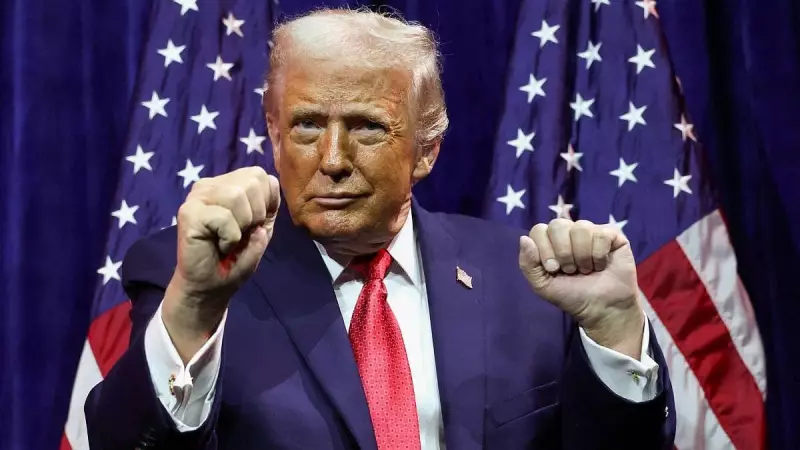
In a sweeping move that has redefined America's role on the global stage, the administration of former President Donald Trump completed its withdrawal from a staggering 66 international organizations and United Nations entities. This mass exit, finalized in the closing days of his term, represents one of the most significant shifts in modern US foreign policy, pulling back from decades of multilateral engagement.
The Full Scope of the Withdrawal
The formal notification of withdrawal was submitted to the United Nations Secretary-General, Antonio Guterres, on the final day of Trump's presidency, January 19, 2021. This action was the culmination of a four-year policy of "America First" that consistently questioned the value and cost of US participation in global forums. The list of exited entities is extensive and covers a wide range of cooperative endeavors.
Among the most prominent withdrawals were from the World Health Organization (WHO) and the Paris Climate Agreement. The exit from the WHO, initiated in July 2020 during the COVID-19 pandemic, drew intense criticism from global health experts. Similarly, the departure from the landmark Paris Agreement, a global pact to combat climate change, isolated the US from a nearly universal consensus. Beyond these headline exits, the US also left numerous specialized agencies and treaties.

Key Agencies and Treaties Affected
The Trump administration's disengagement targeted bodies across various sectors. In the cultural and educational sphere, the US withdrew from UNESCO (the United Nations Educational, Scientific and Cultural Organization), citing anti-Israel bias. On the diplomatic front, it exited the UN Arms Trade Treaty. The administration also pulled out of the UN Human Rights Council, labeling it a "hypocritical and self-serving" organization.
Other significant departures included:
- The Universal Postal Union (UPU), though the US later rejoined after renegotiating terms.
- The Treaty on Open Skies, which allowed for aerial surveillance between member nations.
- The Intermediate-Range Nuclear Forces (INF) Treaty with Russia.
- Various optional protocols and amendments to international conventions.
The driving rationale, repeatedly stated by Trump and his officials, was that these memberships were financially burdensome to American taxpayers and often undermined US sovereignty by subjecting the nation to decisions made by foreign bodies. The administration argued that many organizations were inefficient, politicized, or did not serve US interests.
Global Repercussions and the Road Ahead
The immediate consequence of this mass withdrawal was a significant power vacuum in global governance. The United States, traditionally a leading funder and political force in many of these institutions, abruptly ceded its influence. This created opportunities for other nations, notably China and Russia, to expand their own diplomatic and institutional clout. Allies in Europe and Asia expressed deep concern over the fragmentation of the international system, warning it could weaken collective responses to transnational threats like pandemics, climate change, and nuclear proliferation.
The financial impact was also substantial, as the US is typically the largest contributor to the UN budget and its affiliated agencies. The withdrawal from the WHO alone involved halting hundreds of millions of dollars in funding at a critical time. This forced other member states to scramble to fill the gaps or led to severe cuts in programmatic work.
However, this unilateral approach was not without its domestic supporters. Many within Trump's political base and some conservative think tanks applauded the moves as long-overdue assertions of national independence. They viewed the international system as bloated and often hostile to American values and strategic interests.

The election of President Joe Biden in November 2020 set the stage for a dramatic reversal. True to his campaign promises, President Biden moved swiftly to re-engage with the international community. On his first day in office, he signed executive orders to rejoin the Paris Climate Agreement and the World Health Organization. The process of rejoining other treaties and fully restoring funding and participation is complex and ongoing, signaling that the effects of the four-year withdrawal will linger.
This episode underscores a deep and ongoing debate in American politics about the nation's role in the world. The Trump administration's withdrawal from 66 international entities stands as a stark experiment in unilateralism, the full consequences of which will be studied by diplomats and historians for years to come. It highlights the fragility of international cooperation and how quickly decades of built-up trust and institutional framework can be dismantled by a shift in domestic political winds.