US Military Transforms Ageing Black Hawks into Autonomous Drones for Strategic Edge
The United States military is undertaking a significant technological overhaul, converting its ageing Cold War-era Black Hawk helicopters into fully autonomous drones. This strategic initiative, reported by the South China Morning Post, is viewed by defence experts as a potentially pivotal development in any future confrontation with China, particularly concerning the Taiwan Strait.
A New Era of Uncrewed Warfare Takes Flight
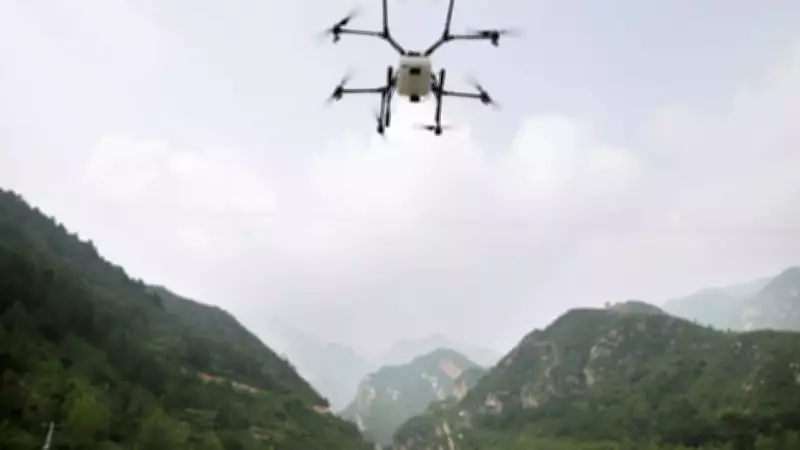
This conversion program marks a major step in the global shift towards uncrewed military systems. Last year, both the United States and China publicly unveiled similar drone conversion projects within a remarkably short timeframe of one month. The People's Liberation Army has been actively converting older, outdated aircraft into uncrewed platforms, signaling a new arms race in autonomous warfare technology.
Sikorsky, the renowned US helicopter manufacturer owned by Lockheed Martin, has been at the forefront of this American effort. The company has publicly showcased its S‑70UAS U‑Hawk, a fully autonomous helicopter derived from the iconic UH‑60 Black Hawk airframe. Demonstrations have taken place at high-profile events including the Singapore Airshow and a key US military exhibition last October.

Enhanced Capabilities of the Cockpitless U‑Hawk
The U‑Hawk represents a fundamental redesign of the classic Black Hawk. Ramsey Bentley, Sikorsky's Director of Advanced Concepts and Strategic Requirements, emphasized that the aircraft is completely "cockpitless." This removal of the traditional crew compartment provides a substantial operational advantage.
- The drone boasts an impressive payload capacity of up to 10,000 pounds (4,536 kilograms).
- Eliminating the cockpit has increased available cargo space by approximately 25 percent.
- Mission control is simplified through a tablet-based interface, allowing operators to pre-plan and execute complex missions remotely.
Bentley stated that in concessionary or high-risk logistics roles, the autonomous U‑Hawk offers "greater capability than a crewed Black Hawk would be," highlighting its value for dangerous resupply and tactical operations where pilot safety is a primary concern.
Strategic Implications for the Taiwan Strait and Beyond
The development comes amid intensifying great-power competition and a pronounced emphasis on drone capabilities within modern military doctrine. China's own rapid expansion of its drone fleet, including converting vintage 1950s Soviet-designed J‑6 fighters into drones, underscores the strategic importance both nations place on this technology.
Timothy Heath, a senior defence researcher at the Rand Corporation, provided critical analysis on the strategic benefits. He noted that drones converted from manned aircraft gain an "additional advantage" of increased operational range by utilizing the space previously dedicated to pilots and life-support systems. This makes such uncrewed helicopters particularly attractive for long-distance operations across vast theaters like the Pacific Ocean.
Heath elaborated on a key tactical application: the potential to "flood the battlespace with drones to overwhelm enemy defences." This concept of massed, low-cost autonomous systems could challenge traditional air defence networks.
Policy Backing and Future Conflict Scenarios
This technological push is reinforced by US policy. The 2026 National Defence Authorisation Act directs the Pentagon to engage with Taiwan on joint programs specifically for uncrewed systems and counter-drone capabilities. This legislative backing formalizes cooperation in a critical strategic area.
Timothy Heath concluded with a stark assessment of the potential role for these systems, suggesting they "could play a critical role in disrupting PLA operations and enabling US military forces to fight in the Taiwan Strait." The conversion of proven platforms like the Black Hawk into autonomous drones is therefore not merely a technical upgrade but a calculated move with profound implications for regional security dynamics and the future of aerial combat.