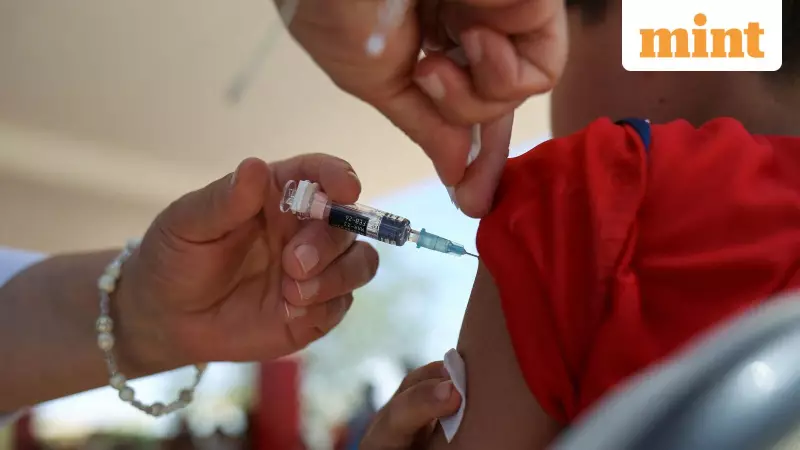
In a significant policy shift, United States health authorities have overhauled their guidelines for childhood immunisations, moving away from universal recommendations for several key vaccines. The changes, announced on Monday, now advise vaccination against specific diseases only for children deemed at high risk or after a detailed discussion between doctors and parents.
What Changed in the US Vaccine Schedule?
The updated schedule from the US Department of Health and Human Services marks a clear departure from the end-of-2024 guidelines, which recommended 17 immunisations for all children. The federal government has now reclassified several vaccines into two new categories.
Vaccines now recommended only for certain high-risk groups include those for Respiratory Syncytial Virus (RSV), Hepatitis A, Hepatitis B, Dengue, Meningococcal ACWY, and Meningococcal B.

Another set of immunisations has been placed under a "shared clinical decision-making" framework. This means doctors and families should make individual choices based on personal risk and circumstance. This list includes Rotavirus, COVID-19, Influenza, Meningococcal disease, Hepatitis A, and Hepatitis B.
Which Vaccines Remain Universally Recommended?
Despite the broad changes, the Centers for Disease Control and Prevention (CDC) continues to strongly advise that all children receive shots against 10 diseases where there is broad international agreement. This core list, which also includes the varicella (chickenpox) vaccine, comprises:
- Measles, mumps, and rubella (MMR)
- Diphtheria, tetanus, and pertussis or whooping cough (DTaP)
- Polio
- Chickenpox
- Human papillomavirus (HPV)
- Hib (Haemophilus influenzae type B)
- PCV (pneumococcal conjugate vaccine)
In a surprising specific change, the guidance for the HPV vaccine has been simplified. The number of recommended doses has been reduced from two or three shots down to just a single dose for most children.
Expert Reactions and Public Health Concerns
The rollback has drawn sharp criticism from many in the medical and public health community. Experts warn that the new policy could lead to a rise in preventable hospitalisations and even deaths.
Dr. Michael Osterholm, director of the University of Minnesota's Center for Infectious Disease Research and Policy, told Reuters that there should have been a transparent public discussion about the risks and benefits of dropping the universal recommendations before the changes were implemented.
Dr. Sean O'Leary, Chair of the American Academy of Pediatrics, emphasised that vaccination policies must be based on local evidence. He cautioned against comparing the US system directly with other nations. "Any decision about the US childhood vaccination schedule should be grounded in evidence, transparency and established scientific processes, not comparisons that overlook critical differences between countries or health systems," O'Leary stated.
He highlighted a key structural difference: unlike many other developed nations with government-funded universal healthcare, the United States primarily relies on a private system, which can affect access and implementation of vaccine guidelines.